
Ecological harmlessness & non-toxicity
The water that leaves the road does not pollute

Summary of technical dossier PRV-05LL-TEQ™ pavement system
No acute toxicity to aquatic life — demonstrated by a bioassay in an accredited laboratory
The proof: the direct biological response
Safety is not judged by a list of ingredients, but by what living organisms actually do
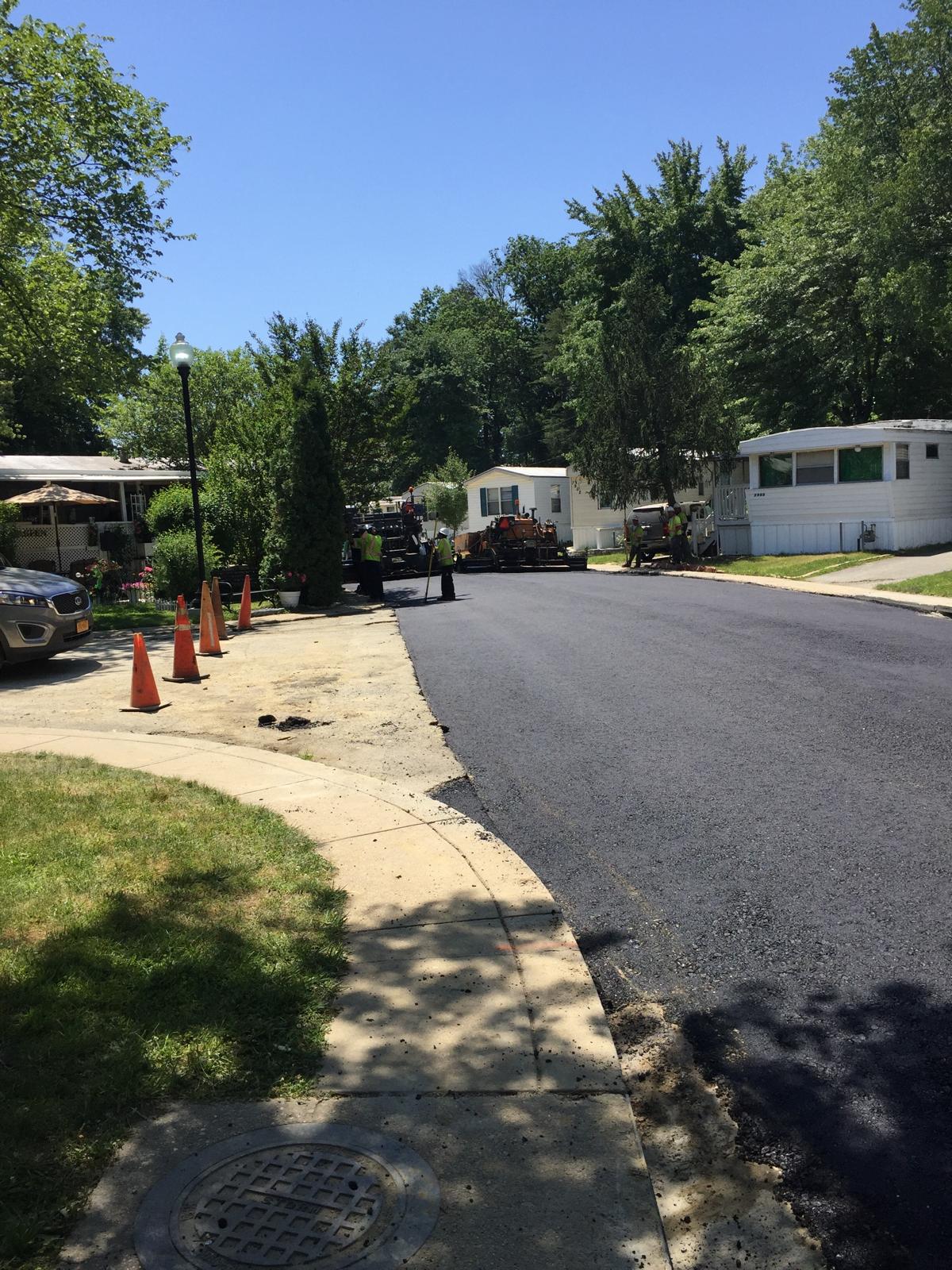
A material can be judged safe by listing its ingredients, or by measuring what living organisms actually do when exposed to it. The second path is the stronger proof: it captures the real biological effect rather than a prediction drawn from chemistry.
The accredited whole-effluent toxicity bioassay on runoff (WET) does exactly that: it exposes sentinel aquatic organisms to the rainwater that runs off the treated surface, and measures their survival against a clean-water control.
Conclusion: the runoff from the treated surface is not acutely toxic to aquatic life. The composition explains this result; the proof is the survival of the organisms.
In plain terms
A water flea and a small fish — among the organisms most sensitive to water pollution — were placed in the rainwater that ran off the treated road. They lived just as well as in clean water. If the material had released anything harmful, these organisms would have shown it. They did not.
Direct biological proof — acute WET bioassay
NELAP/TNI-accredited laboratory · official EPA methods · program reviewed by a federal agency
Coastal Bioanalysts, Inc. (a NELAP/TNI-accredited laboratory) collected the runoff from a simulated rainfall (50 mm/h for 20 minutes) on treated surfaces, then ran 48-hour static acute tests on two standardized sentinel species.
| Sentinel species | EPA method | Result |
|---|---|---|
| Fathead minnow Pimephales promelas | 2000.0 | LC50 > 100 % · NOAEC = 100 % — no acute toxicity |
| Water flea Ceriodaphnia dubia | 2002.0 | LC50 > 100 % · NOAEC = 100 % — no acute toxicity |
Even undiluted, the treated runoff caused no statistically significant mortality; survival equalled or exceeded that of the untreated-soil control. The laboratory issued a signed certification letter, and the test program was reviewed and approved by a senior toxicologist at the Tennessee Valley Authority.
The nature of the material
An aqueous emulsion — not a hazardous chemical
According to the manufacturer's safety data sheets, the product is an aqueous vinyl-acrylic polymer emulsion (pH ≈ 4.5, density ≈ 1.08). A material that carries no listed carcinogen, that is not a hazardous waste and that is not classified as hazardous has no obvious reservoir of toxicity to release.
| Standard | Product status |
|---|---|
| IARC carcinogens | None at ≥ 0.1 % content |
| RCRA | Not a hazardous waste |
| OSHA HazCom (29 CFR 1910.1200) | Not classified as a hazardous chemical |
| TSCA | Inventory-compliant |
| Transport (DOT · TDG · IATA) | Not regulated |
| NFPA | Fire 0 · Health 1 · Reactivity 0 — does not burn, stable |
Containment & low leaching potential
If water does not move through the hardened layer, it cannot carry anything out of it
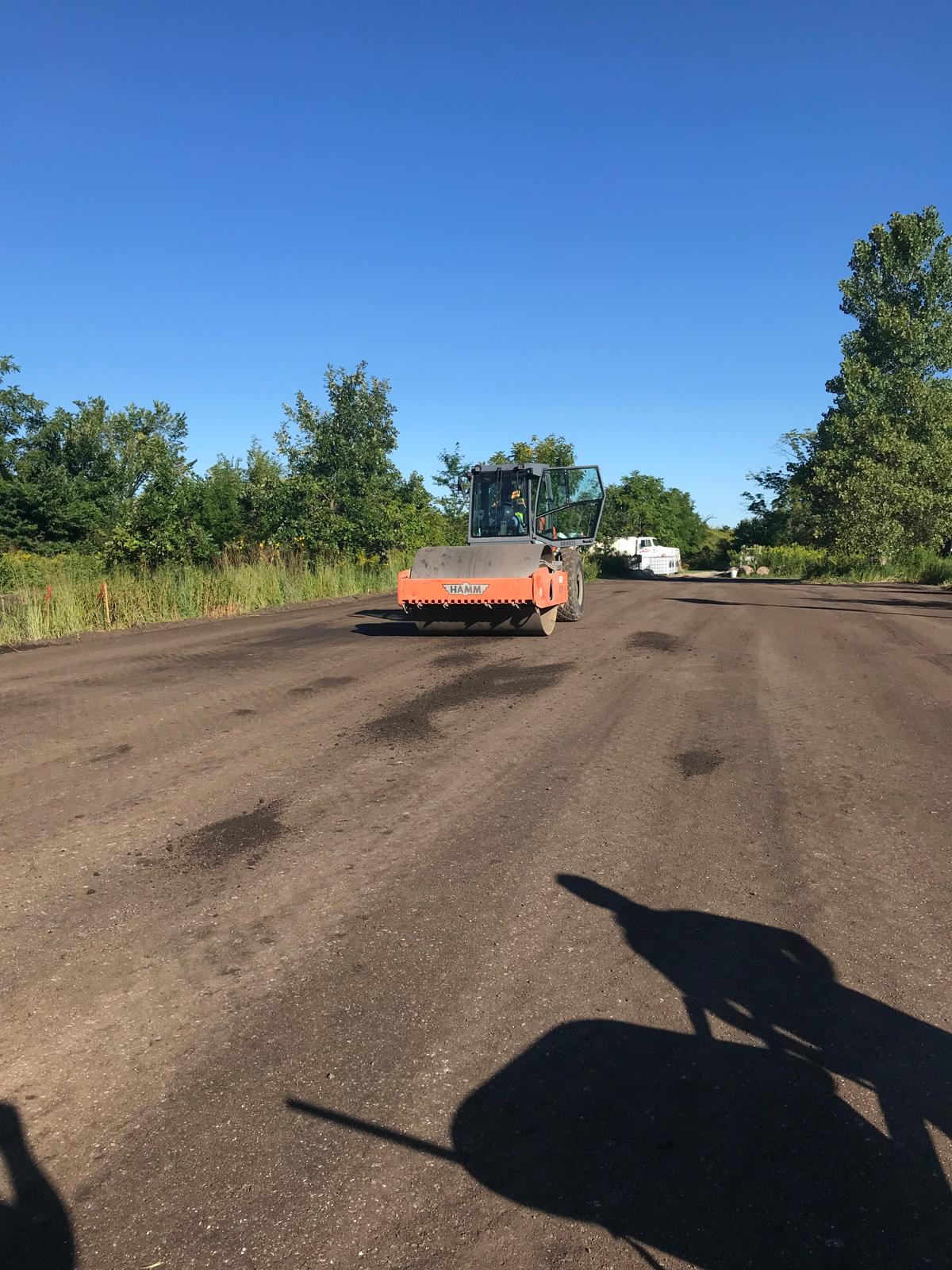
The same closed, unconnected porosity that produces the low permeability closes off the physical path by which water could carry substances into the soil and groundwater.
Hydraulic conductivity measured per ASTM D5084 (S.A.M. Consultants, 2017) on twin specimens of the same soil:
| Specimen | Hydraulic conductivity (ASTM D5084) |
|---|---|
| Untreated soil | ≈ 6.0 × 10⁻⁸ cm/s |
| Structural layer | ≈ 5.9 × 10⁻⁹ cm/s |
| Structural + surface layer | ≈ 3.1 × 10⁻⁹ cm/s |
The treatment lowers conductivity by about an order of magnitude. The physical cause (a non-toxic, contained material) and the measured effect (non-toxic runoff) agree. Caveat: permeability is indirect physical evidence; no TCLP test is on file.
Federal environmental recognitions
External review by authorities applying their own standards
| Authority | Determination | Caveat / condition |
|---|---|---|
| US Fish & Wildlife Service (Alabama, 2017) |
Use approved in protected-species habitat (Alabama beach mouse), applied per the manufacturer's guidelines — where the agency otherwise allowed only geoweb, asphalt or concrete. | Any new construction still requires an incidental-take permit or a letter of authorization; scope specific to the targeted habitat. |
| Sierra Army Depot (US Army, 2015) |
NEPA categorical exclusion granted with no extraordinary circumstance; No Effect determination from the USFWS; beneficial effects noted (less CO₂ than cement/asphalt; PM10 control). | Valid only for the approved formulation (OPS25 product MSDS attached to the dossier). |
| Tennessee Valley Authority | Reviewed and approved the acute-toxicity test program. | The approval covers the test program as documented. |
External, independent corroboration
These determinations come from named authorities applying their own frameworks — independent of both the manufacturer and the authors of this dossier.
Ecological co-benefits
Beyond non-toxicity — each benefit backed by a measured test or a named attestation
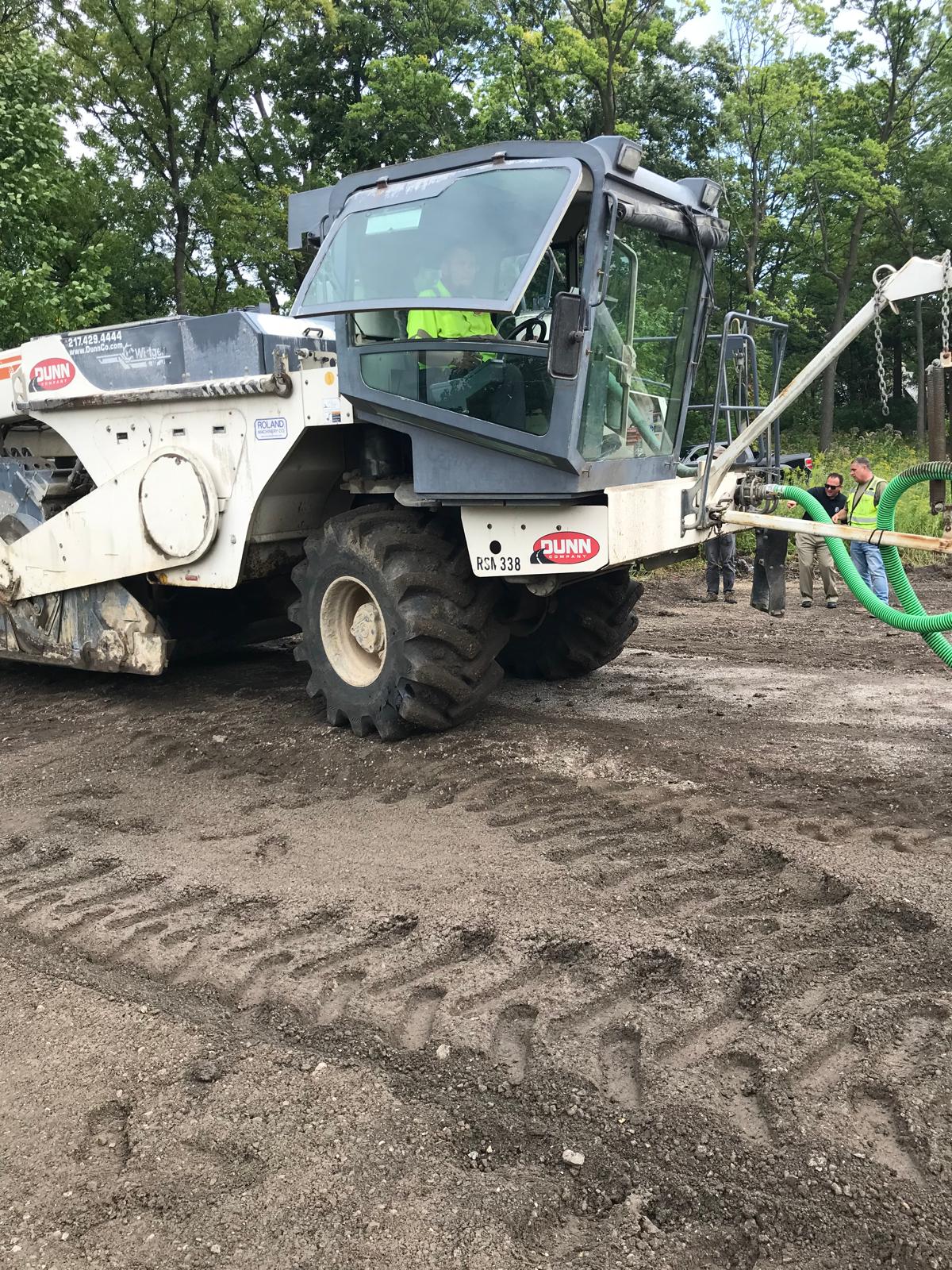
Stabilization is done cold and in place: the system treats the soil and asphalt already present, with no asphalt plant and no hauling of new aggregate. The recycled old pavement is encapsulated in the low-permeability matrix rather than sent to landfill.
No Portland cement
Stabilization without clinker firing. Sierra Army Depot records "markedly less CO₂ than cement or asphalt".
PM2.5 / PM10 control
A sealed surface that no longer releases fugitive dust — backed by the manufacturer, the US Army and Uganda's roads authority.
No alkalinization
No cement or lime: no lasting rise in the pH of surrounding soils, unlike hydraulic binders.
Solar reflectance
In a reflective finish: reflectance 0.49 / SRI ≈ 43 (ASTM C1549, CTLGroup), well above new asphalt.
Cold & in place
No heat input, often on 100 % native soil: less hauling, a smaller site footprint.
Extended life cycle
Reference sites in service since 2012; a durable pavement needs fewer rehabilitations, hence less recurring load.
The environmental regulatory framework applied
Evidence produced under US federal standards; intended use in Québec
| Standard / authority | Application to the dossier |
|---|---|
| EPA 2000.0 / 2002.0 | WET bioassay on runoff — no acute toxicity |
| RCRA · TSCA · OSHA HazCom | Non-hazardous / compliant (safety data sheets) |
| NEPA (32 CFR 651) | Categorical exclusion granted — Sierra Army Depot (2015) |
| ESA section 7 | No Effect from the USFWS; approval in protected habitat |
| Clean Water Act (§404 · NPDES) | Project-by-project responsibility, informed by the non-toxic runoff |
| ASTM D5084 | Permeability ≈ an order of magnitude below untreated soil |
Scope and stated limit
What the dossier establishes — and what it does not
This dossier is a documentary record of ecological harmlessness established by accredited testing and by federal recognitions. It does not constitute a contractual framework, contains no warranty clause, and does not prejudge either the structural design or the project-specific authorizations.
Limits stated openly
- The demonstration covers acute toxicity (48-hour survival), not chronic harmlessness — which remains to be produced (ECCC methods EPS 1/RM/21 and 1/RM/22) or accepted by the regulator.
- No chemical analysis of water that has passed through the material (TCLP test); permeability serves as indirect physical evidence.
- The direct biological proof covers the surface layer; the harmlessness of the structural layer rests on an identical safety-data-sheet profile.
- The project-specific environmental authorization (NEPA, Clean Water Act, ESA §7; in Québec, EQA s. 22) remains the responsibility of the design engineer.
It is this openly stated limit that makes the dossier credible
LANDLOCK Natural Paving, Inc. presents this dossier as the compilation and reasoning of the evidence; the toxicity science is attributed to the accredited laboratory and the named federal agencies.
Sources & contact
Third-party data and determinations in the source dossier
| Item | Authority / laboratory | Ref. |
|---|---|---|
| Acute toxicity, runoff (EPA 2000.0 / 2002.0) | Coastal Bioanalysts, Inc. (NELAP/TNI) | ENV-3 / SUP-8 |
| Safety data sheets (surface · structural) | LANDLOCK Natural Paving, Inc. | ENV-1 / ENV-2 |
| Hydraulic conductivity (ASTM D5084) | S.A.M. Consultants | STR-7 |
| Solar reflectance (ASTM C1549) | CTLGroup | ENV-5 |
| Approval in protected-species habitat | US Fish & Wildlife Service (Alabama) | ENV-6 |
| NEPA categorical exclusion | Sierra Army Depot (US Army) | ENV-7 |
Québec, QC G1N 4H5, Canada
Summary of technical dossier PRV-05 "Ecological harmlessness and non-toxicity" (20 March 2026). The full dossier and source records (laboratory reports, agency letters) are available on request; in case of discrepancy, the original source document prevails.