
Road Solutions — Québec
The road technology built to withstand freeze-thaw cycles

Municipal presentationLL-TEQ™ Road Solutions
Green · Fast · Durable — built to withstand Québec's freeze-thaw cycles
Who we are
LL-TEQ's mission and role in Québec
Based in Québec, LL-TEQ supports the introduction, deployment and oversight of its road technology. Finalized in 2009, this technology has been field-proven and today counts documented deployments in more than 39 countries worldwide.
LL-TEQ's mission is to equip Québec with road infrastructure capable of durably withstanding freeze-thaw cycles, supporting public bodies in deploying a proven technology suited to the territory's climatic and operational realities.
This technology is deployed in civil, industrial and military contexts, in northern climates subject to freeze-thaw cycles as well as in environments heavily exposed to water and thermal variation. It has proven itself where conventional infrastructure reaches its limits.
Our role
| Phase | Description |
|---|---|
| Project structuring | Support with planning, selecting the pilot section and defining objectives |
| Technical support | Joint drafting of specifications and technical documents |
| Technical transfer & supervision | Transfer of know-how to contractors and technicians, and supervision of the first field operations |
| Deployment oversight | On-site follow-up to ensure compliant and durable execution |
What the LL-TEQ technology is
A proprietary copolymer emulsion with controlled rheological* behaviour
* Rheology — the science of how materials flow and deform under an applied force.
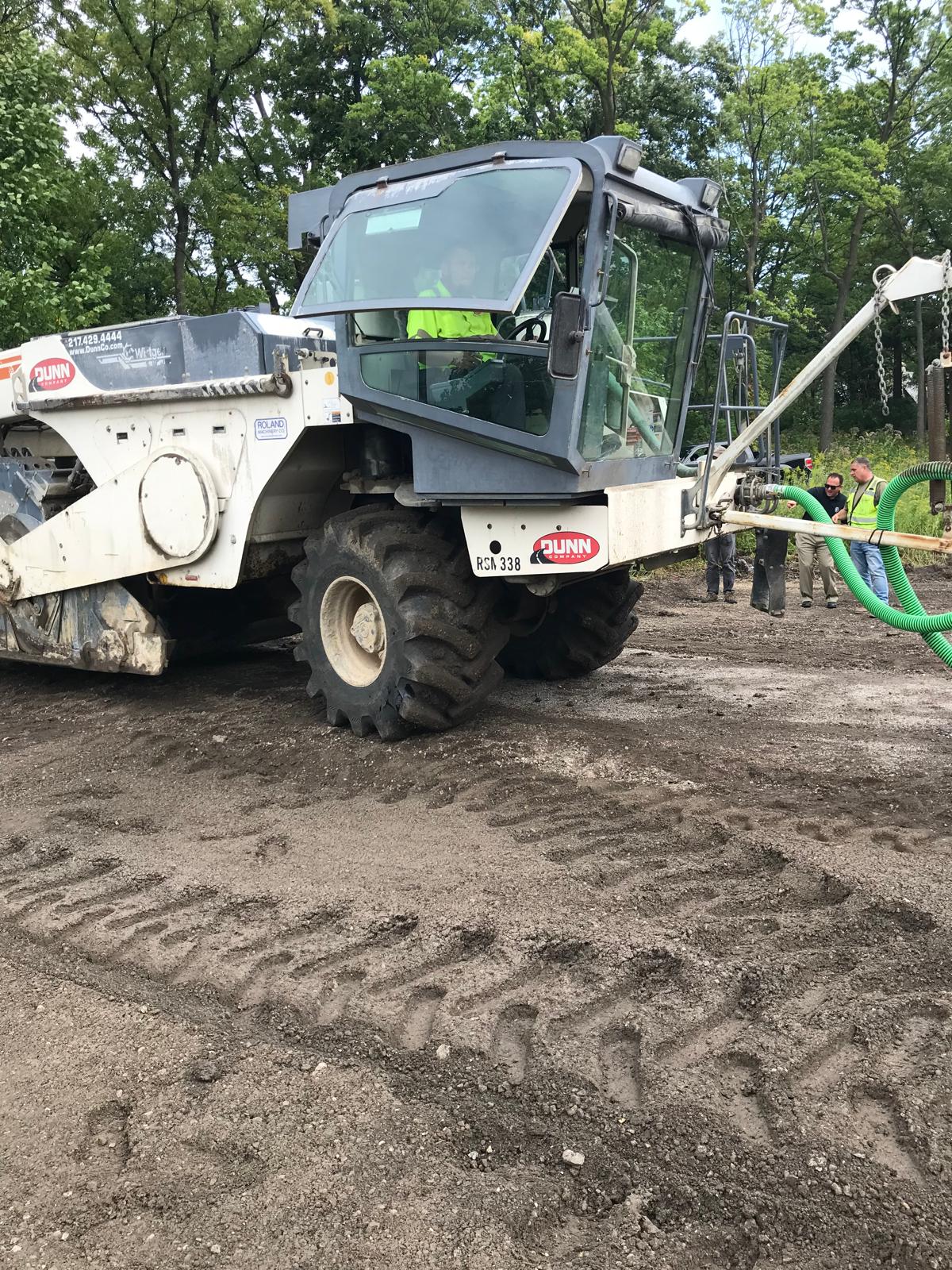
LL-TEQ is a proprietary copolymer emulsion with controlled rheological behaviour, designed for road construction and rehabilitation.
Its distinctive feature: the treated layer delivers both the structural function and the wearing surface at once, formed in place as a single monolith, with no interface or stratification.
The process directly integrates in-place materials — asphalt millings, granular materials or natural soils — to form a unified cohesive layer able to carry traffic loads and withstand severe environmental conditions.
Unlike traditional solutions, built on stacked layers and water-sensitive surfacings, LL-TEQ acts at the core of the material. Performance comes from the treated volume, not from the surface coating.
Structural approach
- Performance proven since 2011, from northern freeze-thaw to tropical conditions
- Unified layer formed in place, with no interface or stratification
- Non-floating structure, no sub-base erosion
- Unique formulation tailored to each project
In-service pavement behaviour
Distributed loads, controlled fatigue, neutralized defects
Once placed and compacted, the LL-TEQ structure distributes loads evenly and absorbs stresses through limited, reversible deformation, with no fatigue accumulation.
Pavement defects avoided
The main degradation mechanisms observed in Québec are neutralized by the very nature of the structure:
Shear resistance
Holds under repeated heavy loads with no permanent deformation.
No hardening with age
No bituminous matrix that stiffens under thermal cycling.
No initiation point
No pore or interface where the classic mechanism can take hold.
No free water
No free water in the matrix — no ice lens can form.
Construction — Process 1: Full Depth Reclamation
Full Depth Reclamation (FDR) — structural reconstruction in a single pass
LL-TEQ offers two complementary road processes depending on the pavement's condition, both carried out cold with conventional road equipment.
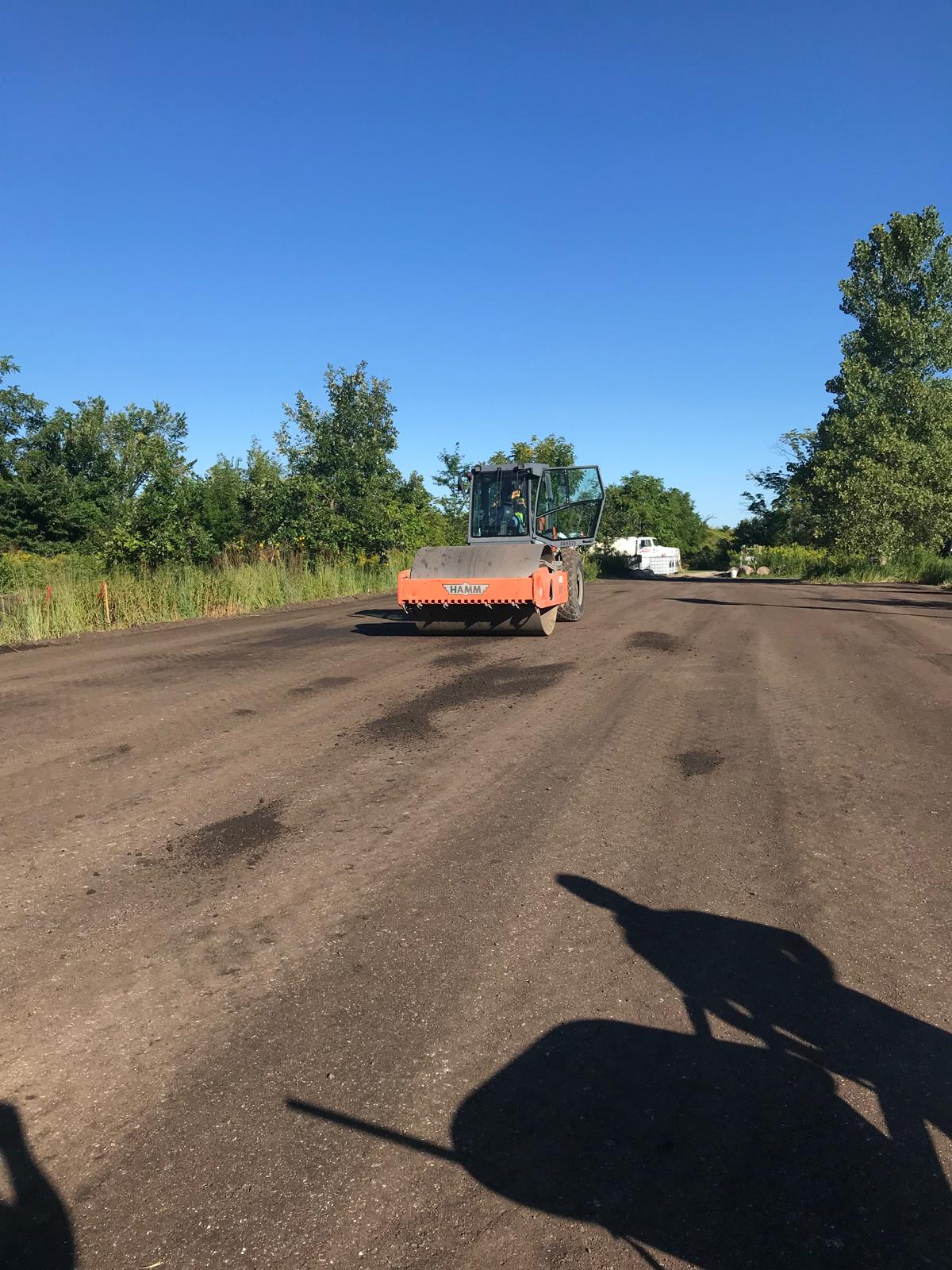
Full Depth Reclamation (FDR) is the rehabilitation process: cold recycling and stabilization of the full pavement thickness in a single pass, intended for end-of-life pavements requiring structural reconstruction.
Key figures
- Up to 4 km/day with a single contractor crew
- Reopening in as little as 12 hours depending on site conditions
- ≈ 150 mm (6 inches) of treated thickness in one pass
- 95% of standard Proctor minimum at compaction
- Conventional equipment: cold recycler, vibratory roller, grader
Construction — Process 2: Surface-spray sealing
Preventive sealing (Fog Seal) — extending the life of sound pavements
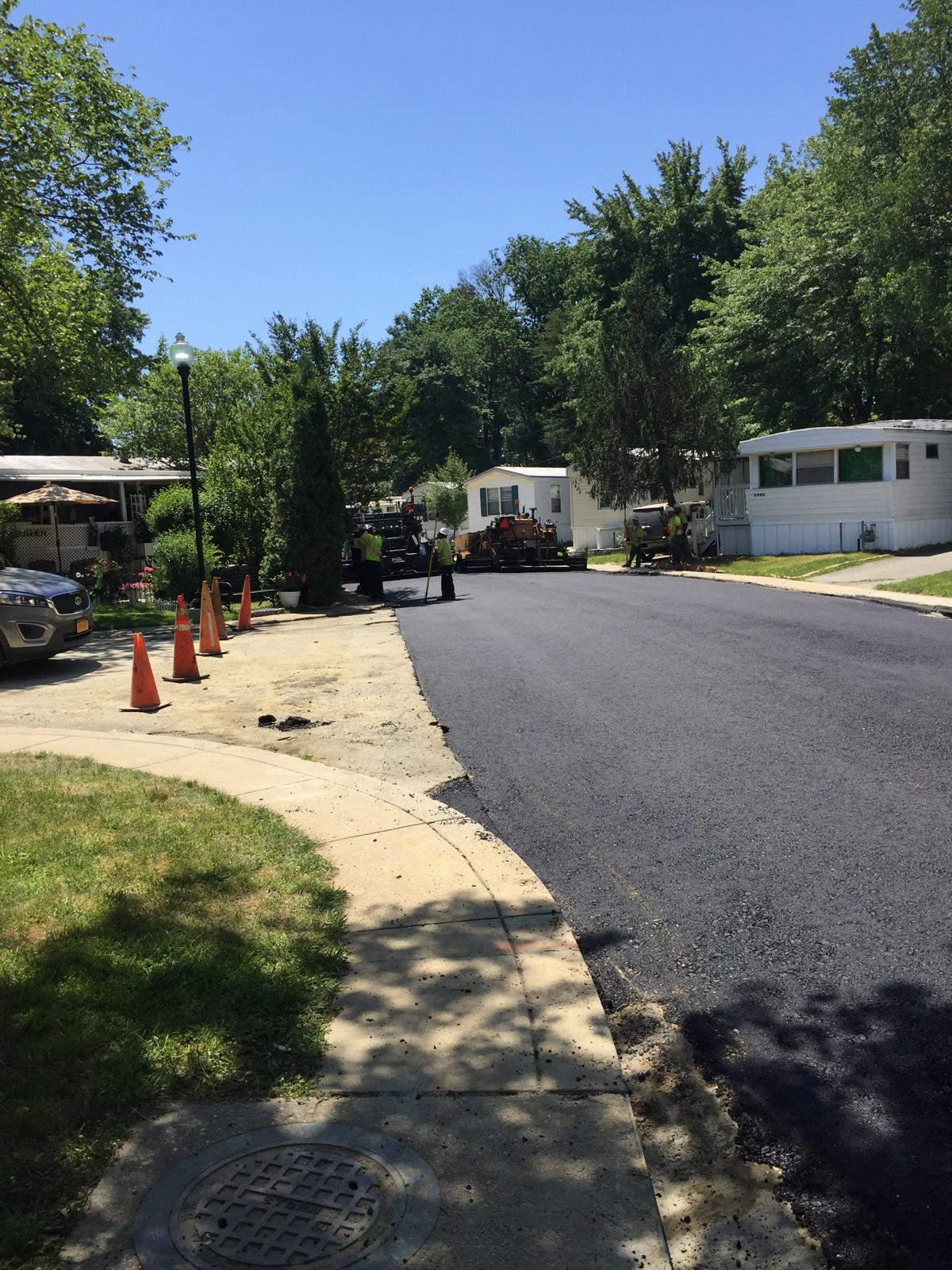
Surface-spray sealing (Fog Seal) is the life-extension process: preventive sealing by topical spray, intended for pavements that are still sound, in the early or mid stages of ageing.
Key figures
- Cold application by spray, light crew of 2 people
- Penetrates surface pores and restores surface cohesion
- UV protection that slows the ageing of the existing bitumen
- Standard black pigmentation, or light to reduce urban heat islands
A unique formulation per project
Before each job, the LL-TEQ engineering team tailors the formulation to the site's precise conditions (geolocation, geotechnical data, climate history). Every project is treated as an individual engineering case, validated before the product is ordered. Detailed execution procedures and equipment specifications are in the "LL-TEQ Construction" document, available on request.
Why LL-TEQ — structural and economic value
Turning what is already under your wheels into a durable pavement
LL-TEQ offers a complete structural alternative to conventional road methods, by turning what is already under your wheels into a durable, economical pavement.
One integrated structure
Load-bearing and wearing surface in one monolith. Recovery of in-place materials: the existing pavement becomes the new structure. Thermal stability: no summer softening or winter embrittlement, non-floating structure.
One pass, one logistics chain
A single operation combines recycling, structure and wearing surface. No purchasing or massive excavation: in-place materials become the resource. Cold process: lighter logistics, wider seasonal window, no hot-mix transport.
Reduced maintenance costs
Fewer corrective repairs, more widely spaced interventions. Budget predictability for multi-year planning. Market independence: not tied to bitumen prices or asphalt plants.
Environmental benefits
Soils and waters preserved, reduced job-site footprint
LL-TEQ alters neither the soils nor the surrounding waters. Its aquatic ecotoxicity is nil, validated by environmental testing to Canadian standards.
A chemistry that does not contaminate
- Versus Portland cement: no increase in the pH of surrounding soils
- Versus asphalt: no leaching of hydrocarbons into stormwater
- Versus hot-mix solutions: no emission of volatile organic compounds (VOCs)
A reduced job-site footprint
Cold process, no asphalt plant: less CO₂, less noise, less dust, less hauling.
Mitigation of urban heat islands
Surface-spray sealing (Fog Seal) can be applied with a light pigmentation that raises albedo and reduces urban heat islands, without altering structural performance.
Compatible with sensitive areas
The absence of toxic leachate and the cold process make LL-TEQ compatible with job sites bordering watercourses, wetlands and ecologically sensitive areas.
Alignment with municipal priorities
An answer to the issues you manage
LL-TEQ fits the current priorities of Québec's public administrations: responsible management of public funds, measurable ecological transition and infrastructure resilience.
| Municipal issue | LL-TEQ response |
|---|---|
| Ageing road network | Durable structural reconstruction, not a mere resurfacing |
| Multi-year budget pressure | Extended life cycle, reduced corrective interventions |
| Carbon-footprint reduction | Cold process, no asphalt plant, in-place recycling |
| Changing climate | Performance under increased freeze-thaw and thermal variation |
| Urban heat islands | Light pigmentation available to raise albedo |
Technology credibility and track record
77 cumulative winters of real service, zero freeze-thaw defects observed
LL-TEQ benefits from a long, documented deployment history, validated against the highest demands for performance and durability.
Documented freeze-thaw performance
Performance dossier signed by an Engineer of Record, across 9 sites representative of St. Lawrence Lowlands conditions.
| Indicator | Value |
|---|---|
| Reference sites in real service | 9 |
| Cumulative winters | 77 |
| Cumulative freeze-thaw cycles | 6,730 |
| Köppen climate regimes covered | 4 (Dfa, Dsb, Cfa, Csb) |
| Freeze-thaw defects observed | 0 |
Adoption and demanding conditions
A technology validated by critical organizations, across 39 countries
Adoption by demanding organizations
LL-TEQ is deployed for critical projects by:
- U.S. Army and U.S. Marine Corps (USMC)
- Bechtel — global industrial civil engineering
- ExxonMobil — oil logistics bases
- Waste Management — environmental management sites
Performance documented under demanding conditions
| Context | Documented case |
|---|---|
| Heavy aircraft loads | Airstrip at the USMC base in Bridgeport (California, 2,070 m elevation), hosting the C-17 Globemaster III up to 265,000 kg, under 172 freeze-thaw cycles per year since 2016 |
| Industrial loads | ExxonMobil logistics road in Guyana, loads up to 39 tonnes |
| Difficult soils | Rural roads on laterite and clay soils, approved by the national road authorities of Ghana and Uganda |
A technology validated across 39 countries
LL-TEQ's adoption by leading organizations and its integration into demanding projects demonstrate the soundness and technical maturity of the approach.
Municipal reference sites
Climates representative of the St. Lawrence Lowlands
A selection of sites from the freeze-thaw performance dossier, in climates representative of the St. Lawrence Lowlands.
| Site | State | In service since | Distinctive feature |
|---|---|---|---|
| Bessemer | Alabama | April 2016 (10 winters, the oldest in the dossier) | Humid subtropical climate, heavy rainfall |
| Benton Harbor | Michigan | May 2017 (9 winters) | Humid continental climate, lake effect, clay soil |
| Alexandria | Virginia | June 2017 (9 winters) | Potomac marine clay, comparable to the Lowlands' Champlain clays |
| Glenview | Illinois | August 2018 (8 winters) | Silty floodplain soil, comparable to the Lowlands' loose deposits |
Full details available on request
Site-by-site climate conditions and inspection findings in the freeze-thaw performance dossier.
Start an LL-TEQ project in your municipality
From the first conversation to reopening to traffic
Whether you are considering a pilot project on a single section or a broader deployment, LL-TEQ supports your municipality at every step, from the first conversation to reopening to traffic.
How it starts
| Step | Description |
|---|---|
| 1. First conversation | Exploratory discussion to understand your issues, candidate sections and budget constraints |
| 2. Site visit | Our engineering team assesses the site and collects the data needed for design |
| 3. Custom specs and procedures | Unique formulation, dosage and execution SOPs specific to your project |
| 4. Information session | Presentation of the procedures to contractors and municipal representatives |
| 5. Execution and reopening | Joint inspection at startup, technical supervision, reopening in as little as 12 h |
Our recommendation: start with a pilot project
A pilot project on a targeted section makes it possible to assess performance under real conditions, train local contractors and manage risk before a broader deployment. As exclusive distributor in Québec and Canada, LL-TEQ supports your project until your contractor is fully autonomous.
Contact us
Ready to explore LL-TEQ for your project?
Whether for a technical question, a detailed presentation to the municipal council, or to assess a candidate section, our team is here to support you.
Québec, QC G1N 4H5, Canada
Resources available on request
- Freeze-thaw performance dossier signed by an Engineer of Record — 9 sites, 77 cumulative winters
- Sample specifications and execution procedures for municipalities
- Technical data sheets and environmental certifications
- Presentation to your decision-making committee on request