
The science behind the technology

Presentation documentThe science behind LL-TEQ
A Québec soil-stabilization technology, engineered for our climate.
The problem we solve
Water, the number-one enemy of our roads
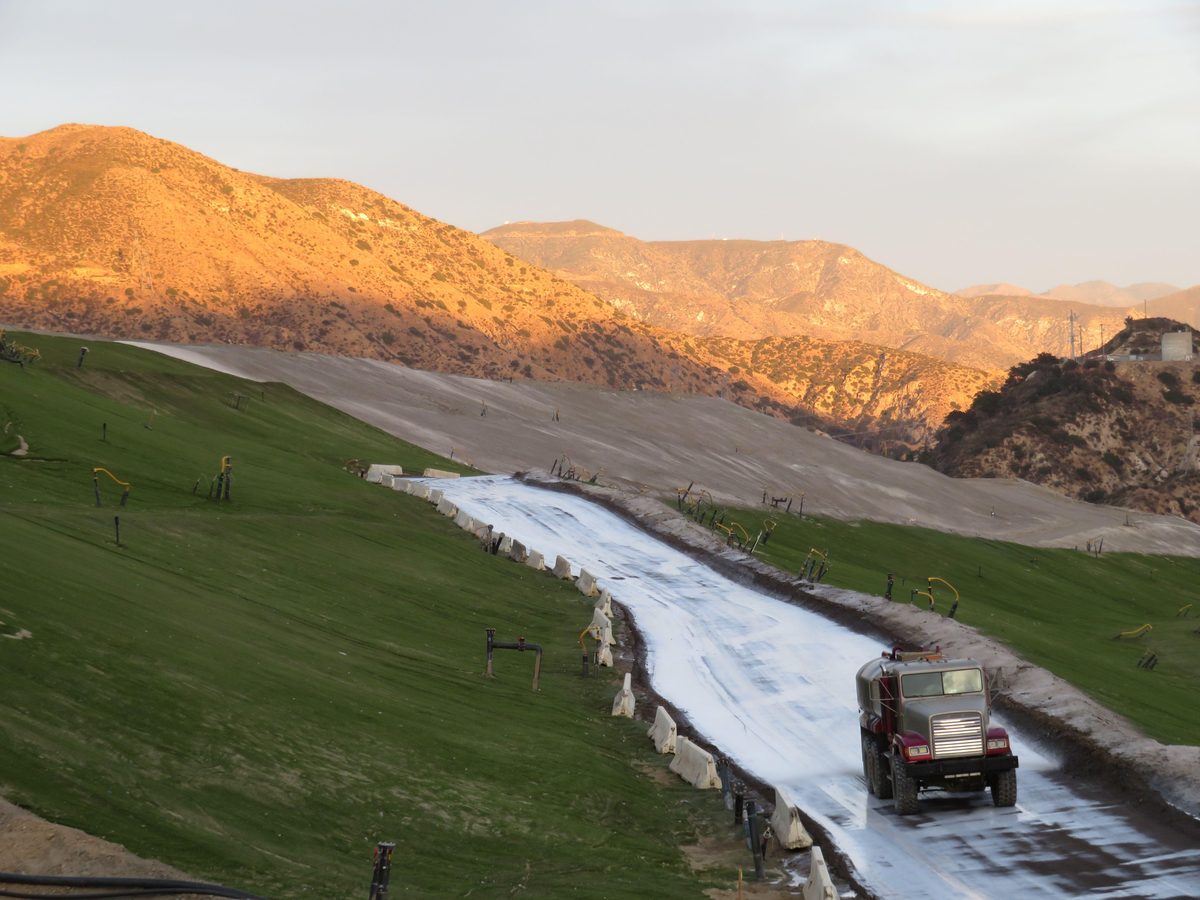
In Québec, water is the number-one enemy of our roads.
It seeps into the soil beneath the pavement. In winter it freezes and expands. In spring it melts and leaves voids behind. It is this cycle that bursts our roads from the inside, year after year.
LL-TEQ tackles the problem at its root: we keep water from entering the soil. Not just at the surface — everywhere in the structure.
How it works
Three steps, one single on-site sequence
We integrate LL-TEQ
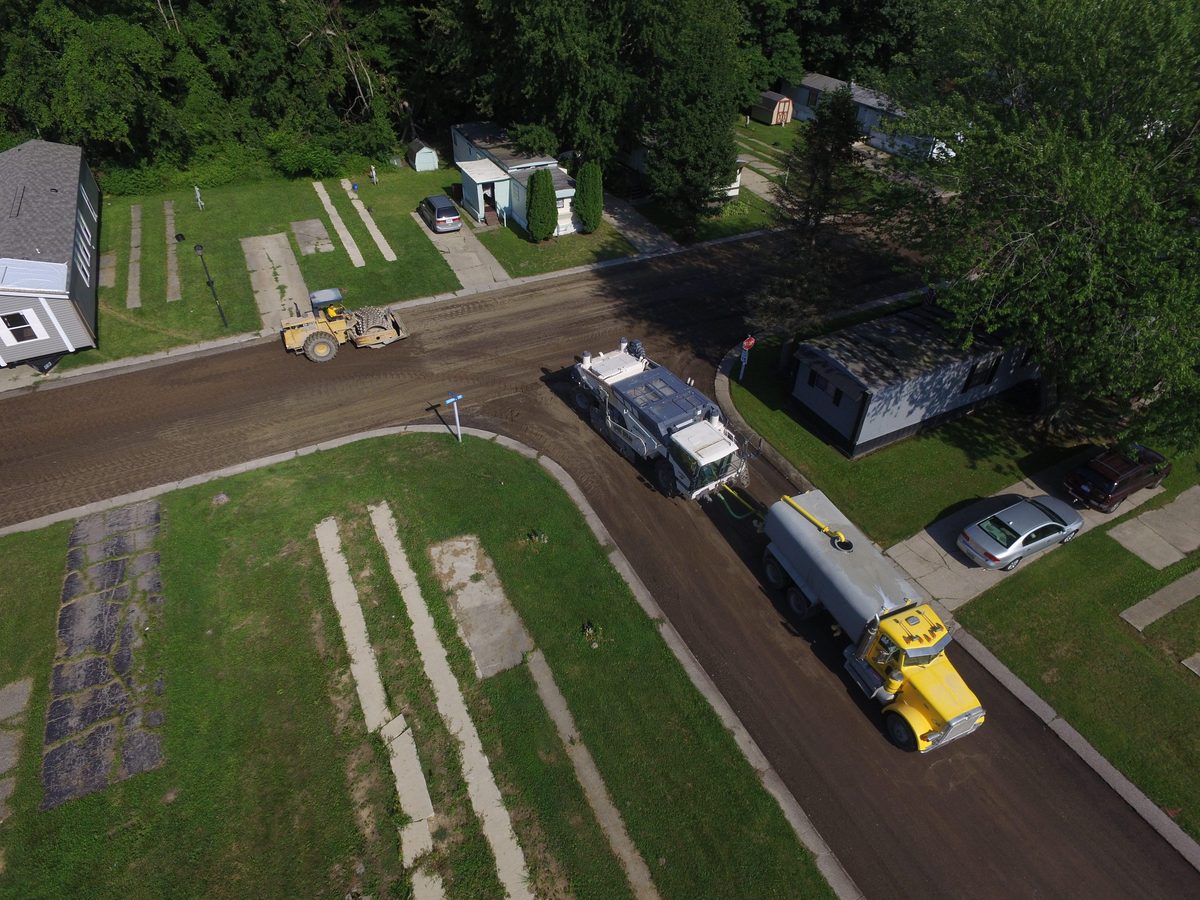
Directly into the in-place materials, to a predefined depth (around 150 mm). No added materials, no needless hauling — we transform what is already there.
Every particle is coated
The technology works its way between the soil grains and surrounds each particle. Air and water are driven out. The treated volume becomes a sealed matrix: what is inside stays inside, what is outside stays outside.
The particles lock together
Under compaction, the coated particles bond to one another. The matrix sets and locks the entire structure. Water can no longer get in, even under full immersion.
A single structure, not a layered pavement
It is no longer a layered pavement whose layers can delaminate. It is a single, dense, watertight structure that works as one monolith.
Rheology*, explained simply
One product, three successive states — at the right moment
* Rheology — the science of how materials flow and deform under an applied force.
A single product can be thick at rest, fluid when worked, then rigid once left to set — and all of this in a controlled order, at the right moment. LL-TEQ is engineered on exactly this principle.
Total confinement, at job-site scale
Each particle is held by all those around it, and those by their neighbours in turn. The larger the treated area, the more total the confinement — and the more the real bearing capacity exceeds what a laboratory cylinder can measure.
Rigid, but with memory
A dual-architecture polymer, engineered for freeze-thaw
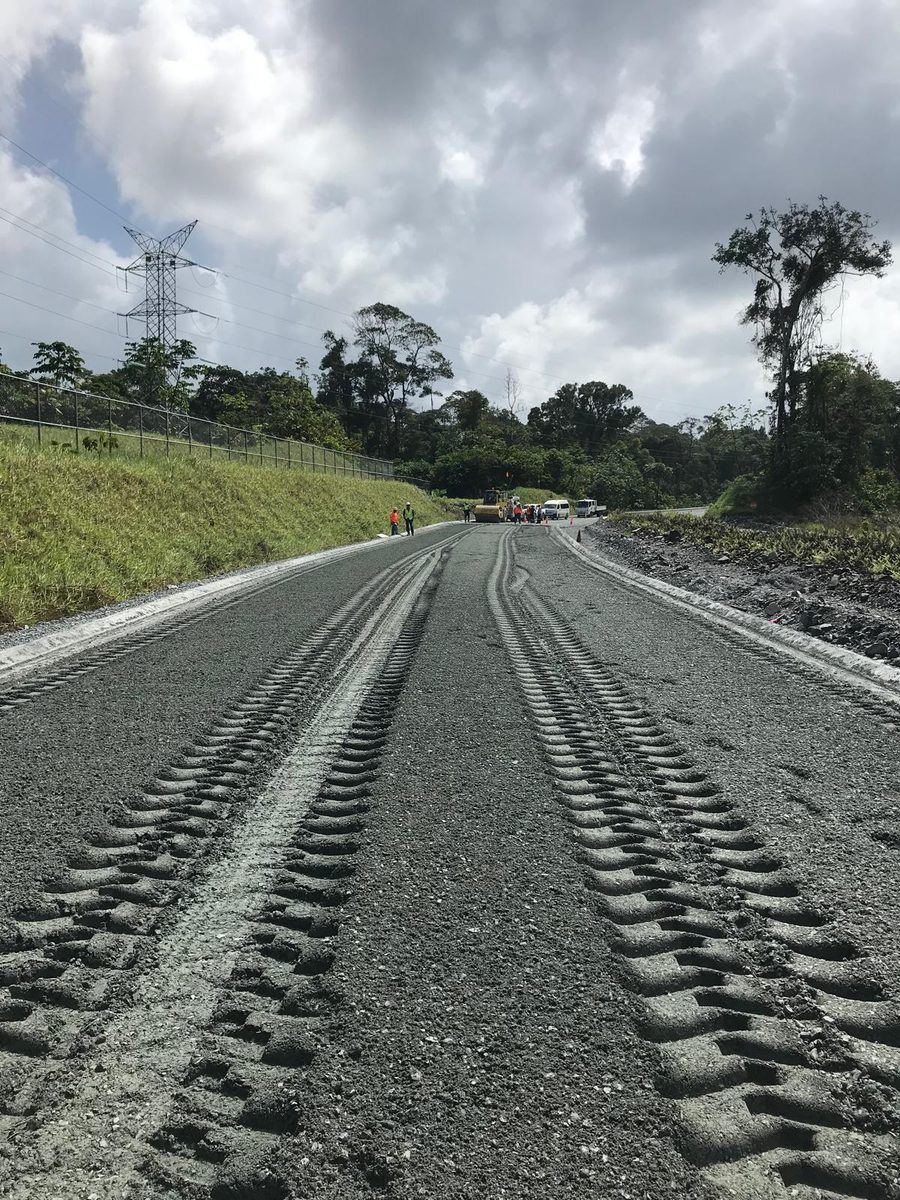
Think of rubber: you stretch it, it returns to its shape. You press it, it springs back. That is because it combines strong bonds that hold it together and flexible chains that absorb deformation. LL-TEQ works on the same principle, but to a far more measured degree, engineered for a stabilized soil.
A rigid structure that never flexes eventually cracks — especially in frost. LL-TEQ sidesteps the problem through a dual-architecture polymer: hard segments that provide strength and bearing capacity, and soft segments that absorb variations in temperature and pressure.
Solid as a block, slightly flexible with shape memory
That is why the treated soil does not crack after years of freeze-thaw cycles.
What it delivers in concrete terms
Three measurable results, once the soil is locked
High bearing capacity
The load spreads through the entire treated volume. No weak point, no zone that gives way first.
Resistance to repeated passes
The structure takes the passes of trucks and heavy equipment with no structural degradation.
Stable even under immersion
The structure stays stable in wet conditions or under full immersion — water no longer seeps into the treated volume.
In summary
Not a surface treatment — a different logic
LL-TEQ is neither a surface treatment nor an improvement on existing methods. It is a different logic.
Instead of adding a layer on top, we transform the soil itself. Every particle is coated, air and water are driven out, and the whole locks into a single, dense, watertight structure.
The result: a pavement that resists water, freeze-thaw, heavy loads and time — everywhere within its volume, not just at the surface.
Made in Québec, for Québec's climate.
A technology designed within our winters, our soils and our freeze-thaw cycles.
Québec, QC, G1N 4H5, Canada