
Structure and riding surface, united

Structural performanceStructure and riding surface, united
A single layer that is both the riding surface and the pavement structure
Purpose of this document
Summarize the structural-performance highlights of the LL-TEQ™ system: measurements from accredited third-party laboratories and bearing capacities certified by military authorities, not projections.
The road that carries a C-17
A C-17 Globemaster, 204 tonnes (450,000 lb), carried as the final riding surface, through 100,000 load cycles at 46 to 60 °C with no deflection or rutting, a performance certified by U.S. military engineers (PCASE 2.09 method). What carries a loaded military cargo aircraft carries a ten-wheeler, a full delivery van or your car without difficulty.
The LL-TEQ™ system turns the soil in place into a solid pavement, in a single block. No layers that peel apart: the riding surface and the structure are one. The figures that follow come from independent accredited laboratory tests and bearing capacities certified by military engineers. These are not projections, they are measurements.
Stronger in service than in the lab
The role of confinement* in a real pavement
* Confinement: the surrounding soil grips the material on every side. Unable to spread, it carries far more.
In the lab, a small isolated sample is crushed, free to spread sideways. In a real pavement, the treated material is gripped on every side by the surrounding soil: the lab figure is therefore a floor, not the true in-service strength.
Loose sand gives way underfoot; packed into a bucket, it holds you standing. The LL-TEQ™ polymer binder welds the particles into a single block, and the harder the load presses, the tighter the material packs and the more it holds.
3,705 PSI (25.5 MPa) verified, and that is a floor
On the test bench, isolated, compressive strength already reaches 3,705 PSI (25.5 MPa), measured by an independent AASHTO-accredited laboratory. In service, confined, it exceeds that figure.
No rutting, and heat does not soften it
Rutting under immersion and heat resistance
On a road, a 12.5 mm rut is the limit beyond which the pavement is judged too deeply worn and must be rebuilt. LL-TEQ™ technology stays far below that limit, even under deliberately severe conditions.
Water does not have time to get in
Hydraulic conductivity measured in the laboratory
Laboratory tests measure a material so impermeable that, through its mass, the time water would take to advance a single centimetre is measured in years.
In other words, even for a road constantly covered with water, it would take years before the water passed through. And a real road is never permanently underwater: rain runs off, the surface dries, and that water never has time to get in.
Loads that few surfaces in the world can take
Military certification: PCASE 2.09 method
U.S. military engineers certified LL-TEQ™ technology as the final riding surface under heavy cargo aircraft, calculating the number of allowable passes from field measurements:
| Aircraft | Load | Certified passes |
|---|---|---|
| C-17 Globemaster | 204 t (450,000 lb) | 2,470 |
| C-130 / C-130J | 70 t (155,000 lb) | 23,847 |
| KC-130J | 79 t (175,000 lb) | 10,000+ |
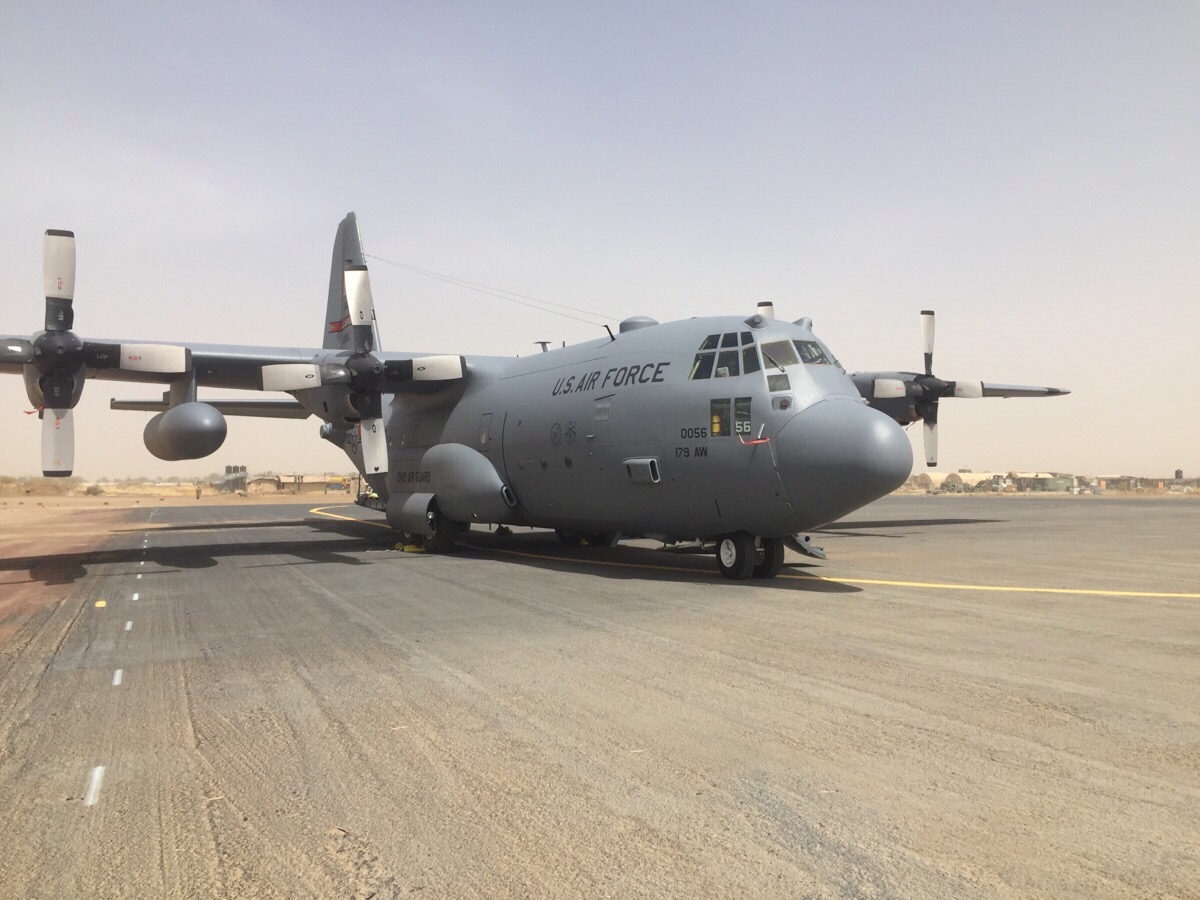
These loads, concentrated under high tire pressures, exceed those of road traffic. What carries a loaded military cargo aircraft carries a ten-wheeler, a full delivery van or your car without difficulty.
Why it is credible
Independent families of evidence that converge
Several independent families of evidence (compressive strength, rutting resistance, heat and water resistance, real aircraft loads) all converge on the same conclusion: high structural performance. The raw data come from accredited third-party laboratories and military authorities, not from the manufacturer or the distributor.
These are not projections, they are measurements
This document summarizes the highlights. The full engineer-signed technical dossier details every test and its limits.
Full dossier
Structural performance of the LL-TEQ™ system, Mark D. Hardy, P.E., Hardy Engineering, Santa Monica (CA), PE license 36538, 12 May 2026.
Sources
Supporting evidence: third-party laboratories and authorities
Accredited tests and field data underpinning the figures above, carried into the engineer-signed dossier.
| Test / item | Method | Laboratory / authority · year |
|---|---|---|
| Ozinga crushed-concrete core, 4% treated | ASTM C31/C42 | S.A.M. Consultants (AASHTO) · 2019 |
| Sandy silty clay with gravel, 4% treated | ASTM C31/C42 | S.A.M. Consultants (AASHTO) · 2017 |
| Sand-clay cores, 4% treated | ASTM C39/C42 | S.A.M. Consultants (AASHTO) · 2016 |
| 28-day cure curve | ASTM C31/C42 | S.A.M. Consultants (AASHTO) · 2023 |
| Hamburg wheel-track test | AASHTO T-324 | Behnke Materials Engineering (AMRL) · 2018 |
| MMLS accelerated loading | MMLS | Kamen Engineering, Australia · 2012 |
| Hydraulic conductivity | ASTM D5084 | S.A.M. Consultants (AASHTO) · 2017 |
| Mocoron airfield (Honduras): DCP / CBR / passes | PCASE 2.09 | USAF AFSOC · 2015-2019 |
| ALZ Sandhill (Twentynine Palms): DCP / passes | PCASE 2.09 | USMC MAWTS-1 · 2019 |
| Geotechnical survey and immediate bearing index | IPI | Grollemund LaboRoutes, France · 2019 |
G1N 4H5, Québec, QC, Canada