
By profile · Developer
Deliver faster, stronger, without callbacks
Your top concern is total cost and schedule — and the risk that the municipality rejects your roads. LL-TEQ™ reduces all three.
Your top concern
Controlled total cost — and accepted by the municipality
A lower entry cost that comes with a warranty bill is not a saving. LL-TEQ™ lowers both capital cost and total cost of ownership: fewer callbacks and warranty repairs thanks to a bound slab that does not crack like a floating surface, and a design that fits the AASHTO 1993 pavement-design framework — defensible to the municipal engineer who must accept your streets.
Reuse what you already have
The existing road becomes your construction material
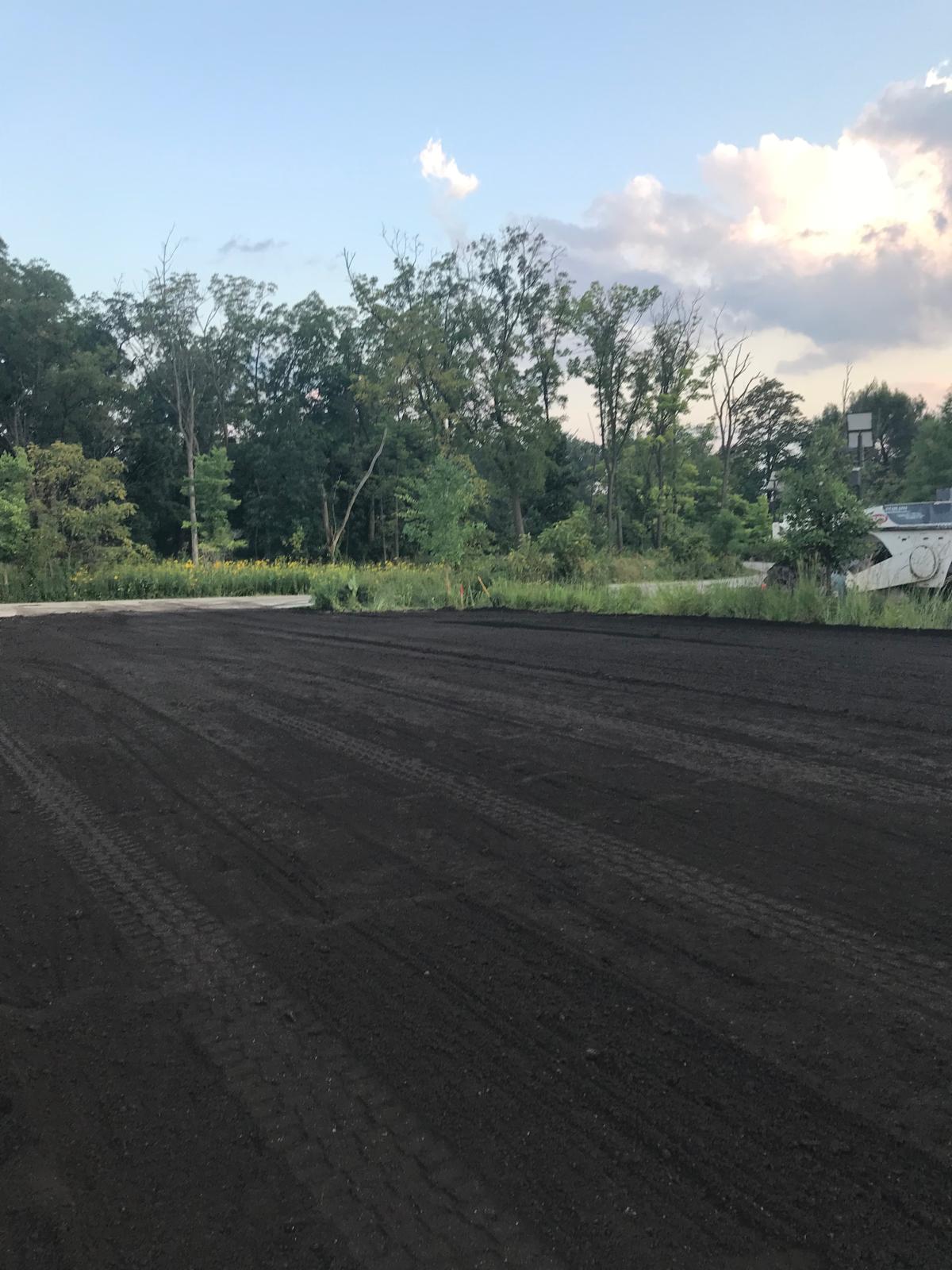
Ref. Benton Harbor (MI), 2017: ≈ 22,600 m² of failing roadway fully rehabilitated from 50% base-course and 50% in-place asphalt millings — showcased against remove-and-replace. Zero new material imported, zero landfill: the "haul and disposal" line leaves your budget.
Why it holds up on a pro forma
Three levers on your return
Capital
Excavation, hauling and landfill drop out of the budget — actual savings are confirmed at the bid stage.
Schedule
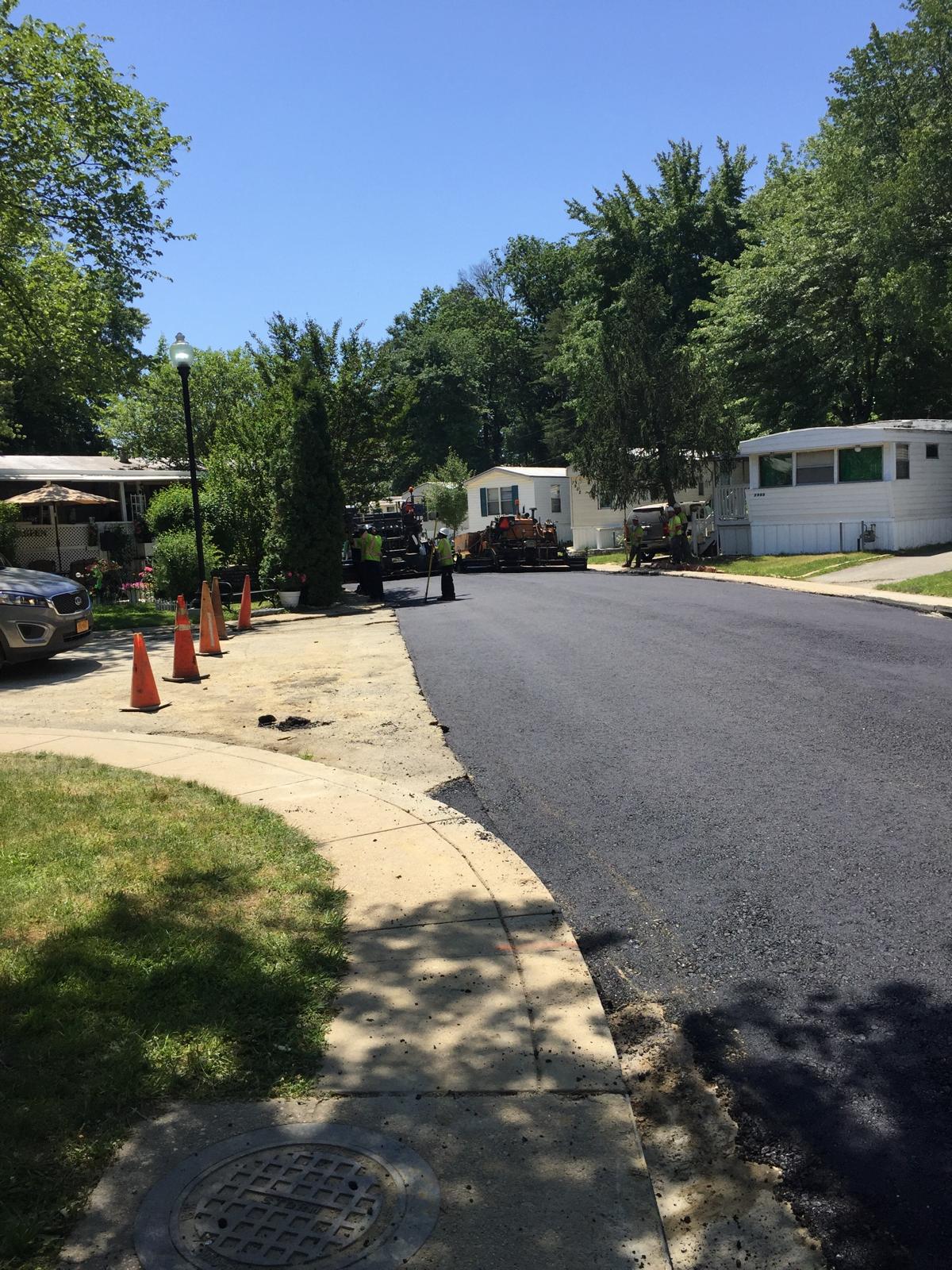
Cold process with no asphalt plant, over 2 km/day of complete 2-lane rebuild, return to service from 12 h depending on conditions: shorter phases, lots deliverable sooner.
Acceptance risk
Design integrable in the AASHTO 1993 framework (a₂ = 0.21–0.30) and engineer-signed data: the municipality accepts on familiar ground.
What you hand over
Roads that don't come back to haunt you
A bound slab, about ten times less permeable than untreated soil (ASTM D5084), resists crazing and frost heave — fewer resident complaints, fewer warranty claims, and infrastructure the municipality is willing to take over.
Get a comparison on your project
Remove-and-replace vs LL-TEQ™ comparison, phasing schedule, and a municipal-acceptance note for your development.
Contact LL-TEQ™ See the case studies