
LL-TEQ™
Case Studies
Documented projects across multiple continents — municipal roads, industrial routes, strategic infrastructure, trails in sensitive environments. LL field data 2012–2024.
Filter results
0 matching projects
No project matches this selection.
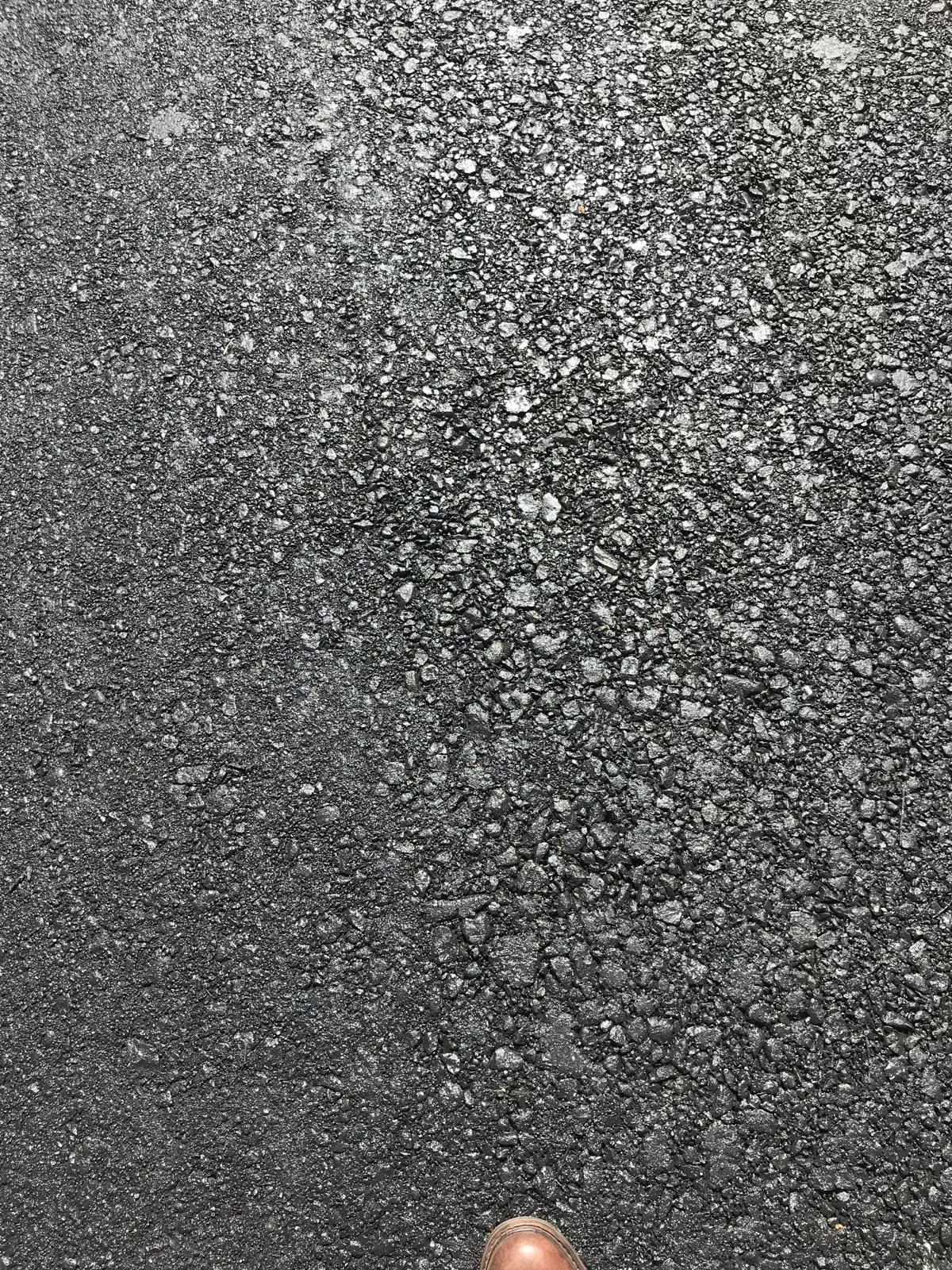
Featured freeze-thaw case — Rockford, Illinois · Oct 2018
EIGHT WINTERS, ≈720 FREEZE-THAW CYCLES — ZERO STRUCTURAL DEFECT
Heavy haul road in the Rock River valley (Winnebago County) — glacial outwash sand and gravel with fine interbeds. A 150 mm unified LL-TEQ layer formed in place by soil stabilization, integrating the existing crushed granular base. Sustained heavy traffic, cumulative ESAL estimated between 700,000 and 1,000,000 (AASHTO method).
About 90 freeze-thaw cycles per year — among the highest in the dossier — and three extreme events weathered (January 2019 polar vortex, December 2022 Storm Elliott, severe March 2026 rain-freeze cycle). Engineer-of-Record inspection in April 2026, after eight winters: no cracking, no frost heave, no delamination, no potholes, no rutting.
Freeze-thaw durability
North American sites inspected after 8 to 10 winters
Two-lane municipal roadway — 9 winters
- Freeze-thaw
- Municipal
- Cold recycling
- Type
- Local road · 150 mm unified LL-TEQ in place (recycled asphalt and base)
- Soil
- Glacial clay — comparable to St. Lawrence Lowlands clays
- Outcome
- ≈770 freeze-thaw cycles over 9 winters · Lake Michigan lake-effect · 0 defect (EOR inspection Apr 2026) · sealant 2024
Two-lane municipal street rebuilt by cold-recycling the existing asphalt and base into a 150 mm unified LL-TEQ layer, over glacial clay exposed to Lake Michigan lake-effect. Nine winters, zero structural defect.
Two-lane municipal roadway — 9 winters
- Freeze-thaw
- Municipal
- Cold recycling
- Type
- Local road · 150 mm unified LL-TEQ via cold recycling
- Soil
- Highly plastic expansive marine clay, Potomac tidal water table — Champlain-clay behaviour
- Outcome
- ≈405 freeze-thaw cycles over 9 winters · 0 defect (EOR inspection Apr 2026) · no sealant
Residential lane stabilized by cold recycling over highly plastic, expansive marine clay under the Potomac tidal water table. Nine winters and about 405 freeze-thaw cycles with no sealant, zero defect.
Heavy haul road — 8 winters
- Freeze-thaw
- Heavy haul
- In-place stabilization
- Type
- Heavy-traffic collector · 150 mm unified LL-TEQ via in-place stabilization · ESAL 700k–1M
- Soil
- Rock River valley — glacial outwash sand and gravel with fine interbeds
- Outcome
- ≈720 freeze-thaw cycles over 8 winters (≈90/yr, among the highest in the dossier) · 0 defect (EOR inspection Apr 2026)
Heavy-traffic collector (estimated ESAL 700,000 to 1M) built by in-place stabilization over glacial outwash sand and gravel. Among the most stressed sites in the dossier (about 90 cycles per year); zero defect after eight winters.
Park access road & parking lots — 8 winters
- Freeze-thaw
- Recreational
- Cold recycling
- Type
- Local access & parking · 150 mm unified LL-TEQ via cold recycling
- Soil
- Riparian floodplain silty soil, high water table — comparable to St. Lawrence Lowlands clays
- Outcome
- ≈576 freeze-thaw cycles over 8 winters · 0 defect (EOR inspection Apr 2026) · no sealant
Park access road and parking lots stabilized by cold recycling over high-water-table riparian silty soil. Eight winters, about 576 freeze-thaw cycles, zero defect.
Industrial-corridor arterial — 8 winters
- Freeze-thaw
- Industrial
- In-place stabilization
- Type
- Arterial · 150 mm unified LL-TEQ via in-place stabilization · ESAL > 1M
- Soil
- Steel-slag fill over glaciolacustrine clay and silt, high water table — south Lake Michigan shore
- Outcome
- ≈536 freeze-thaw cycles over 8 winters · 0 defect (EOR inspection Apr 2026) · sealant 2023
Industrial-corridor arterial (ESAL above 1M) stabilized in place over steel-slag fill above glaciolacustrine clay and silt. Eight winters, zero defect.
Heavy haul road — 8 winters
- Freeze-thaw
- Heavy haul
- In-place stabilization
- Type
- Heavy-traffic collector · 150 mm unified LL-TEQ via in-place stabilization · ESAL 700k–1M
- Soil
- Fox River valley — silty till, loam and sandy outwash, frost-susceptible
- Outcome
- ≈576 freeze-thaw cycles over 8 winters · 2023 patches from site changes (not the system), uniform re-cohesion · 0 defect (EOR inspection Apr 2026)
Heavy-traffic collector stabilized in place in the Fox River valley over frost-susceptible silty till. The 2023 patches came from site changes, not the system: uniform re-cohesion, zero defect.
High-altitude military airstrip & site roadways — 10 winters
- Freeze-thaw
- Aviation
- High altitude
- Type
- Arterial airstrip & roadways · 200 mm unified LL-TEQ via in-place stabilization · ESAL > 1M
- Soil
- Alluvial valley fill, sandy-silty glacial-outwash gravel — Sierra Nevada east slope
- Outcome
- ≈1,720 freeze-thaw cycles over 10 winters (≈172/yr, the most demanding in the dossier) · atmospheric rivers and record snowpack · 0 defect (EOR inspection Apr 2026) · sealant maintained
High-altitude (about 2,070 m) military airstrip and site roadways, 200 mm unified LL-TEQ layer by in-place stabilization. Ten high-mountain winters, zero defect.
Mountain ski-resort access road — 7 winters
- Freeze-thaw
- Recreational
- High altitude
- Type
- Local mountain road · 150 mm unified LL-TEQ in place (crushed gravel and decomposed granite integrated)
- Soil
- Decomposed granite with clayey fines over crushed gravel — moisture pockets, frost behaviour like St. Lawrence Lowlands soils
- Outcome
- ≈1,070 freeze-thaw cycles over 7 winters (≈153/yr, high mountain ≈2,050 m) · heavy chloride winter maintenance, heavy plows · 0 defect (EOR inspection Apr 2026) · no sealant
Mountain ski-resort access road (about 2,050 m), crushed gravel and decomposed granite integrated in place. Heavy chloride winter maintenance; seven winters, zero defect.
Two-lane municipal roadway — 10 winters (oldest in the dossier)
- Freeze-thaw
- Municipal
- Cold recycling
- Type
- Two-lane local road · ≈150 mm unified LL-TEQ via cold recycling (asphalt and aggregate integrated)
- Soil
- Jefferson County silty soil, high cool-season humidity, ≈1,300 mm/yr rainfall — St. Lawrence Lowlands clay-type behaviour
- Outcome
- ≈360 freeze-thaw cycles over 10 winters · EF3 tornado 2021, 2022 flash flood, 2022 arctic cold wave · 0 defect (EOR inspection Apr 2026) · sealant maintained
Oldest site in the dossier: two-lane road cold-recycled over Jefferson County silty soil. EF3 tornado, flash flood and arctic cold wave weathered; ten winters, zero defect.
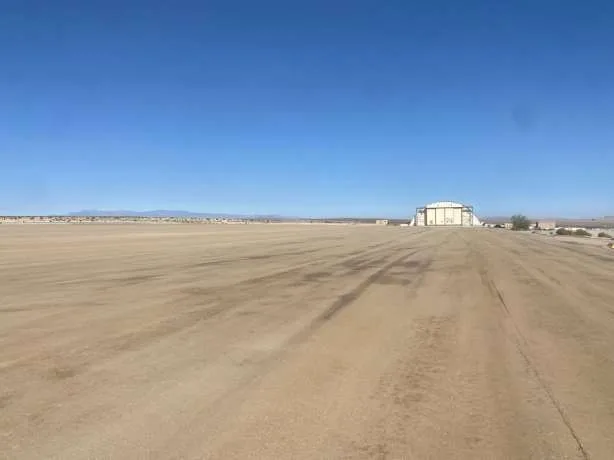
Featured strategic case — USMC Twenty-Nine Palms, California — June 2024
35,300 m² STRATEGIC AIRFIELD IN 4 DAYS
Stabilization of a Strategic Expeditionary Landing Field (SELF) certified for C-17 and C-130 aircraft. A competitor product had failed on the same site. LL-TEQ corrected the failure and built 35,300 m² of taxiway, apron, and refueling centre in four days. The conventional solution would have taken roughly two months.
39 Marine Engineers trained on-site.
Civil & Environmental
Municipal roads, trails, and sensitive ecosystems
Ravenswood Trail — Bedwell Bayfront Park
- Trail
- Non-toxic
- Type
- Multi-use trail on decomposed granite
- Soil
- Decomposed granite
- Outcome
- 3,700 m² · Non-toxic formulation for San Francisco Bay proximity · Adjacent to Meta campus
3,700 m² multi-use trail on decomposed granite, adjacent to the Meta campus. Non-toxic formulation chosen for San Francisco Bay proximity.
Desert Heavy Haul Access Road Network
- Heavy haul
- Desert
- Type
- Heavy haul access road stabilization
- Soil
- -3/4" road base + native sandy soil ("blow sand")
- Outcome
- 22.5 km (209,000 m²) · Prevented big rigs from getting stuck · Eliminated dust-suppression water trucks
22.5 km (209,000 m²) network of off-road access roads stabilized over road base and blow sand. Ended big rigs getting stuck and the dust-suppression water trucks.
Copper Mine — Heavy Haul Access Road
- Mining
- Heavy haul
- Type
- Heavy haul road stabilization at copper mine
- Soil
- -3/4" road base + Native Soil
- Outcome
- Heavy haul road achieved · Washout and dust eliminated · Mine efficiency improved
Heavy-haul access road at a copper mine, road base and native soil stabilized. Washouts and dust eliminated, operational efficiency improved.
Uganda National Road Authority — UNRA Pilot
- Pilot
- Rural road
- Type
- Treatment of gravel rural roads — laterite
- Soil
- Native Laterite
- Outcome
- Product installed in 67 min · Full construction in 3.5 hrs · Officially approved by UNRA Nov 19, 2013
National road authority pilot on laterite: product installed in 67 minutes, full construction in 3.5 hours. Officially approved by UNRA on Nov 19, 2013.
Military & Aviation
Validated under the most demanding conditions in the world
Strategic Expeditionary Landing Field (SELF)
- Aviation
- Expeditionary
- Type
- SELF stabilization — C-17, C-130 capable
- Soil
- 100% Native Soil
- Outcome
- 35,300 m² in 4 days · 39 Marines trained · Phase 2: 53,000 m²
Strategic expeditionary landing field certified for C-17 and C-130 on 100% native soil. After a competitor product failed, 35,300 m² delivered in 4 days; 39 Marine engineers trained; 53,000 m² Phase 2.
Expeditionary Landing Strip Rehabilitation
- Aviation
- Expeditionary
- Type
- C-130 & C-17 runway rehabilitation
- Soil
- Native Soil
- Outcome
- 41,000 m² · 2 weeks · Remote — no cell service, no fuel on-site
C-130 and C-17 expeditionary strip rehabilitation on native soil, 41,000 m² in two weeks. Remote site with no cell service and no fuel on-site.
FARP & Helipad Operations Base
- Aviation
- FARP
- Type
- Airfield stabilization
- Soil
- 75% Native Sand, 25% Asphalt Millings
- Outcome
- 44,600 m² · MV-22 and rotary aircraft
44,600 m² FARP and helipad operations base stabilized over 75% native sand and 25% asphalt millings. Certified for the MV-22 and rotary aircraft.
Assault Landing Zone — Desert Runway
- Aviation
- Desert
- Type
- Desert runway and apron stabilization
- Soil
- 100% Native Soil
- Outcome
- 62,700 m² · KC-130, MV-22, and rotary aircraft certified
62,700 m² assault landing zone and desert aprons stabilized over 100% native soil. Certified for the KC-130, MV-22 and rotary aircraft.
Aircraft Taxiway & Shelter Flooring
- Aviation
- Taxiway
- Type
- Taxiway and shelter flooring
- Soil
- -3/4" Aggregate Base Course
- Outcome
- 23,400 m² · International airport · Completed for Operation Flintlock
23,400 m² aircraft taxiway and shelter flooring over crushed aggregate base at the international airport. Completed for Operation Flintlock.
Assault Landing Zone — Multi-Aircraft Training Runway
- Aviation
- Desert
- Type
- Multi-aircraft training runway stabilization
- Soil
- Base Course + Native Soil
- Outcome
- 45,200 m² · First of its kind for US Marine Corps · FOD elimination
First-of-its-kind assault landing zone for the US Marine Corps: 45,200 m² multi-aircraft training runway over base course and native soil, with FOD elimination.
Aircraft Taxiway — N'Djamena International Airport
- Aviation
- Taxiway
- Type
- Aviation taxiway — international runway
- Soil
- 6" of 3/4" minus base course
- Outcome
- 7,500 m² · Operation Flintlock 2017 · Completed in 2.5 days despite major equipment challenges
7,500 m² taxiway at N'Djamena International Airport, 150 mm crushed base course. Completed in 2.5 days despite major equipment challenges, for Operation Flintlock 2017.
Expeditionary Airfield — Runway & Apron
- Aviation
- Expeditionary
- Type
- Aviation soil stabilization and paving
- Soil
- In-situ sand & clay with river rocks & gravel
- Outcome
- 46,000 m² · C-17 @204,000 kg certified · Counter-drug SPMAGTF-SC operations
46,000 m² expeditionary airfield (runway and apron) over in-situ sand-clay mix, certified for C-17 at 204,000 kg. Counter-drug SPMAGTF-SC operations.
Pu'uloa Rifle Range — Haul Road
- Heavy haul
- Rifle range
- Type
- Military haul road stabilization
- Soil
- -1" base course aggregate
- Outcome
- 13,400 m² · Eliminated dust and washouts · Long-term stabilization confirmed
13,400 m² Pu'uloa Rifle Range haul road over stabilized crushed base. Dust and washouts eliminated, long-term stabilization confirmed.
Ready to add your project to this list?
Contact LL-TEQ™ for your next project — whether it is a municipal road, a remote access route, an airfield, or a sensitive ecosystem requiring a non-toxic solution.
Contact LL-TEQ™