
LL-TEQ™ · Dust control
Dust Control
A polymer dust suppressant that binds the surface instead of watering it — dust doesn't resettle, it's gone.
The problem
Gravel-road dust is expensive — in health, in safety, in materials
Health and PM10 / PM2.5 compliance
Fine particles lifted by traffic penetrate the respiratory tract and trip regulatory air-quality thresholds. Residents, workers and operators bear the daily exposure.
Visibility and safety
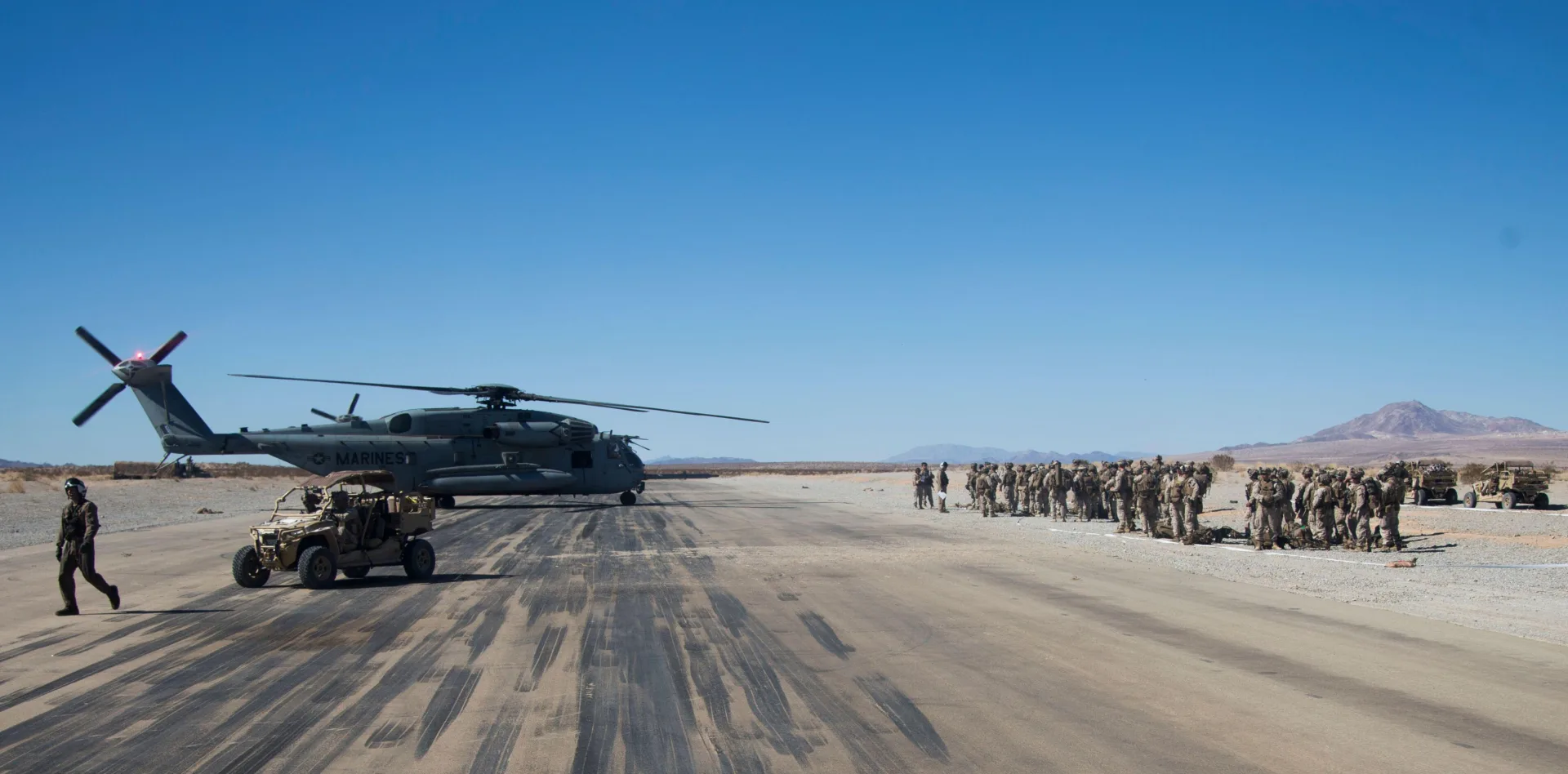
A dust cloud behind every vehicle hides the road, pedestrians and machinery. At the extreme it becomes brown-out: the cloud kicked up by a helicopter that erases all visibility on landing.
The endless water-truck cycle
Watering evaporates within hours and the cycle starts again — day after day, season after season. Meanwhile the road sheds its fines: washboarding, ruts, aggregate to replace.
The solution
Bind the surface, don't wet it
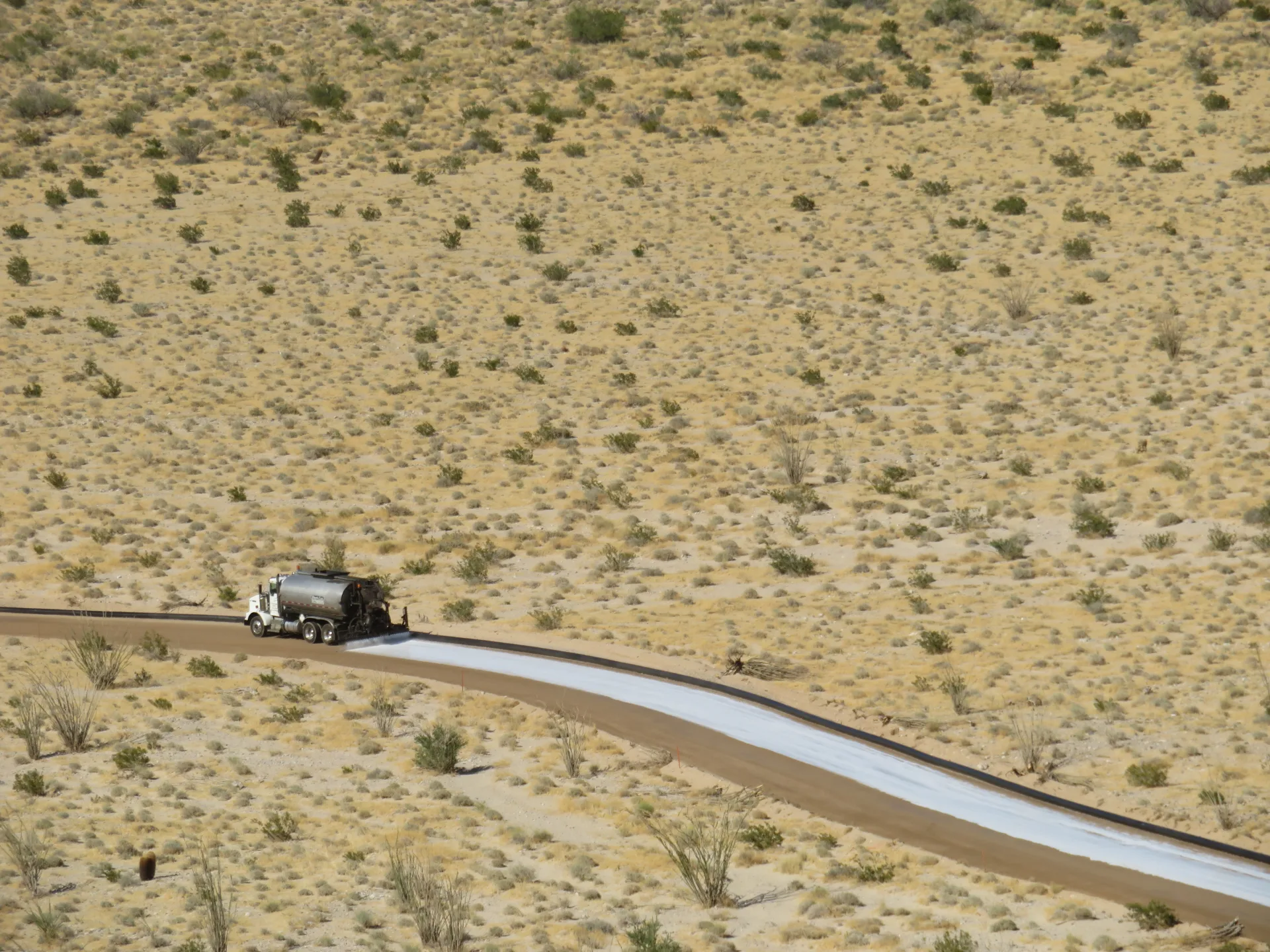
The LL-TEQ dust suppressant is a water-based polymer emulsion formulated as a dust control agent, dust inhibitor, dust suppressant and dust palliative for PM2.5 and PM10 compliance (LL25 safety data sheet). Applied diluted with a standard water truck or distributor truck, it binds fine particles into a cohesive surface that no longer lifts under traffic.
A topical application is enough for dust and erosion control. For surfaces carrying heavy traffic the product is also mixed in at depth — at the Twentynine Palms firing range (USMC, 2017), 90% topical and 10% mix-in encapsulated all the material in 3 days.
- Standard equipment — water truck with a pressurized spray bar
- Cold application, no bitumen, no heating
- Application rate designed per project, based on soil and use
- Maintained by simple periodic topical reapplication
Field validation
Where dust was problem #1
Twentynine Palms, California · 2017
USMC firing range — about 73,000 m² of slopes, berms and access roads treated in 3 days (90% topical, 10% mix-in). All material encapsulated: no more brown-out.
Sierra Army Depot, California · 2015–2016
Dust suppression, storage pads and helipad — brown-out and foreign-object debris (FOD) eliminated. Use approved after environmental review with California EPA and regional water-board consultation.
Sylmar, California · 2017
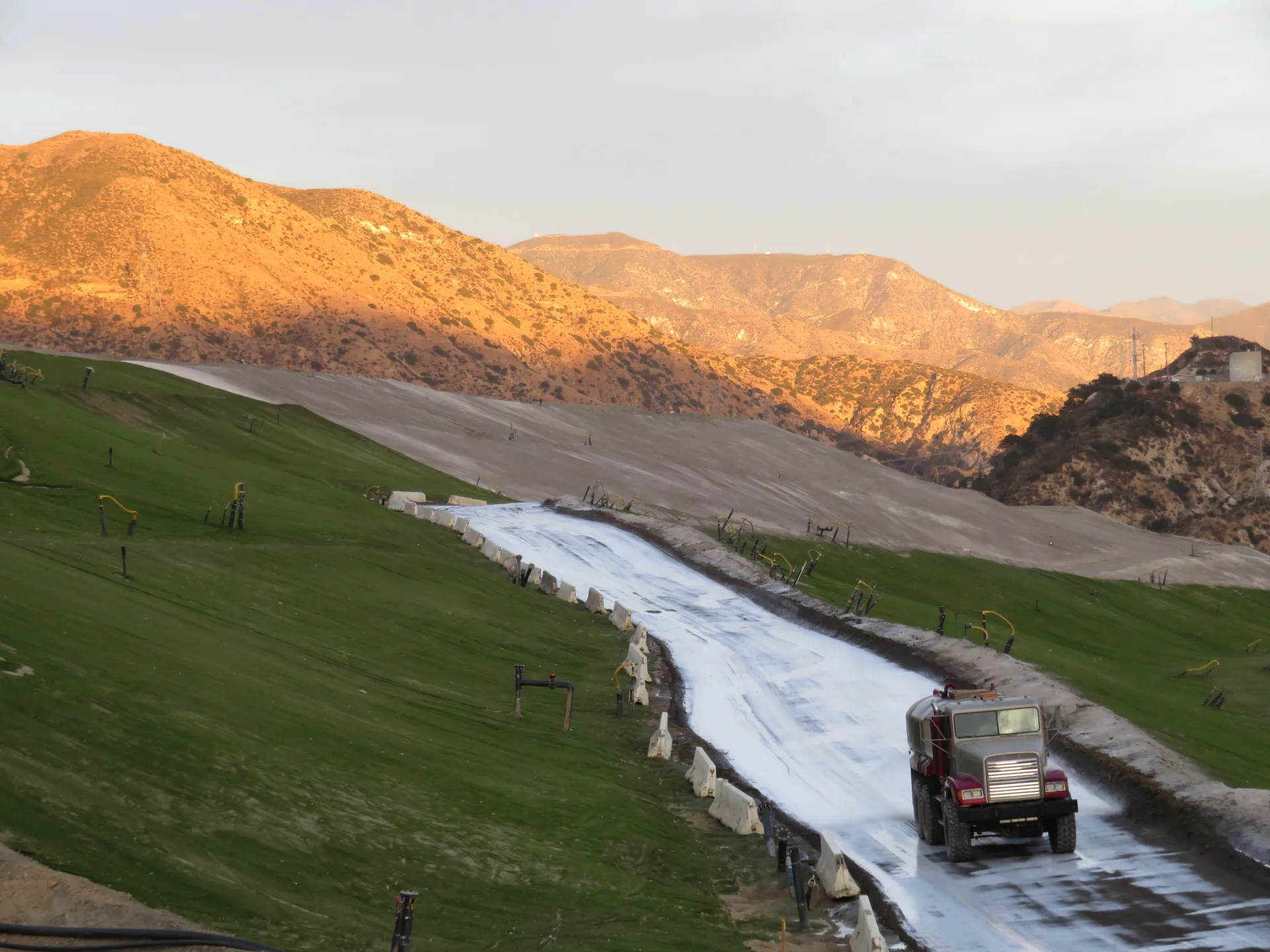
Landfill site — about 3,000 m² of parking and roads stabilized. A dust- and erosion-free surface, cutting water use and post-rain maintenance.
McKittrick, California · 2016
Landfill haul road — about 18,400 m² paved on in-place soil. Reliance on water trucks reduced, road maintenance costs eliminated.
La Guajira, Colombia · 2013
Mining haul road — about 10,200 m² treated with toxic coal-dust control as the priority along the Colombia–Venezuela corridor.
Camp Al Jaber, Kuwait · 2017
Joint U.S. forces exercise — about 3,600 m² of haul road built on pure sand and "moon dust". Result: a heavy-haul road free of dust and erosion.
What about the environment?
A dust suppressant whose runoff has been tested
Whatever is sprayed on a road ends up in the ditch. In 2013, an independent accredited laboratory (Coastal Bioanalysts) simulated 50 mm/h of rainfall for 20 minutes over treated soils, then ran the runoff through the acute-toxicity tests of EPA Methods 2000.0 and 2002.0.
Verdict: no acute toxicity — survival of organisms exposed to the runoff matched the control groups (LC50 > 100%). The emulsion is water-based, non-flammable, and unregulated for transport.
The U.S. Fish & Wildlife Service even approved its use in the protected Alabama beach mouse habitat, where gravel had become a threat.
Beyond dust
The same surface also controls erosion — and carries the load
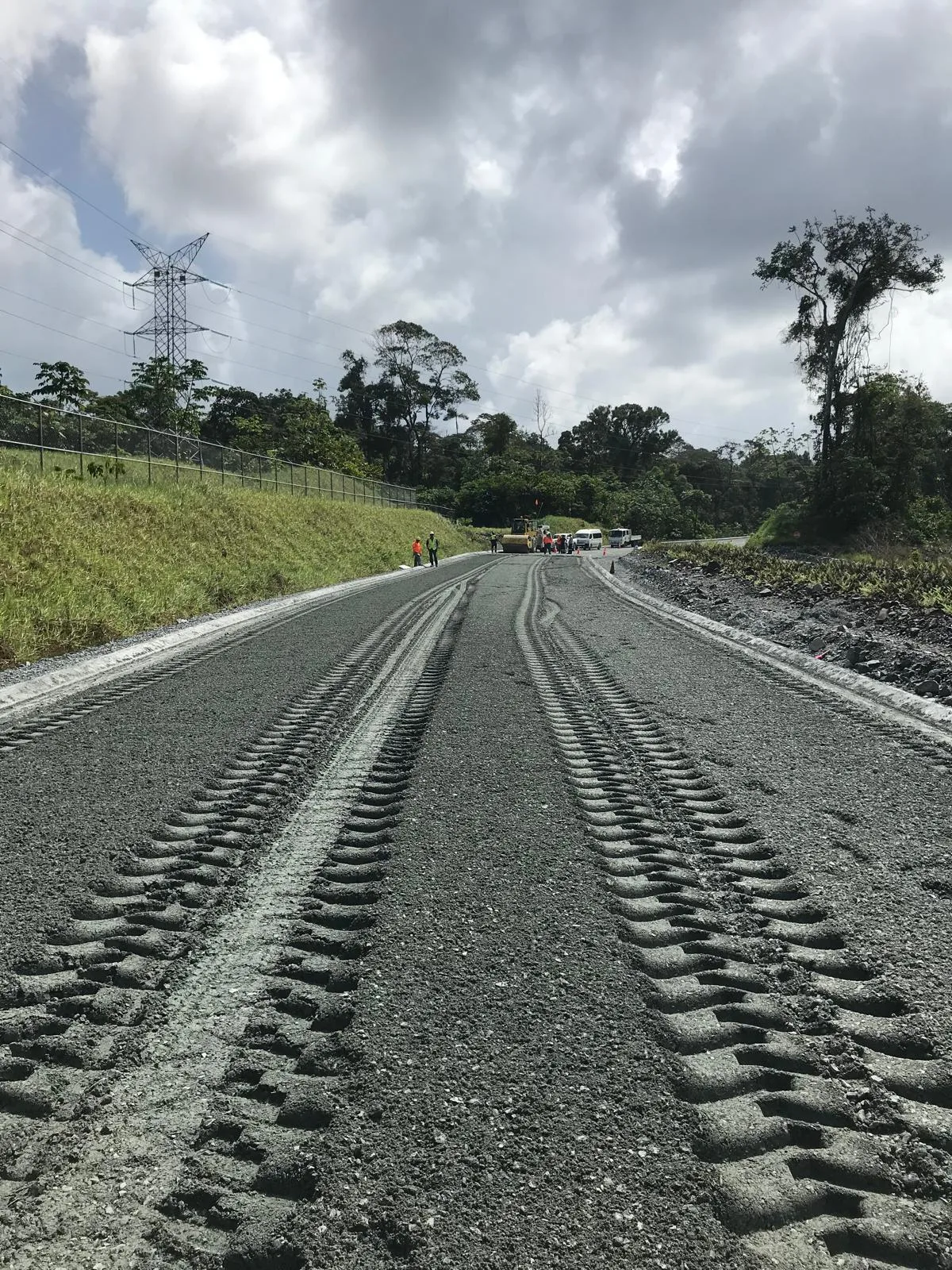
Because the fines are bound rather than watered, the surface resists wind and runoff alike: dust control and erosion control are the same treatment. And when needs grow — heavy traffic, mining loads, machinery — the same product, mixed in at depth, becomes a full stabilized pavement.
- Topical application: dust, erosion, slope stabilization
- Mix-in: gravel roads, haul roads, staging areas
- Moving from one to the other requires no change of product
Stop watering. Bind the surface.
If the military standard is "no brown-out on landing", your gravel road, quarry or industrial site is well within reach.