
LL-TEQ™ · Freeze-thaw resistance
Freeze-thaw Resistance
Mechanism measured in the lab, verified across ten years of pavements in cold-climate service.
The problem
Two mechanisms — one outcome: the pavement gives way
Cyclic thermal fatigue
At each transition through 0 °C, water infiltrated into the wearing course freezes, gains ~9% in volume, and fractures the local binder. Multiplied by 50–170 cycles per year over decades, the result is accumulating surface cracking, scaling and potholes.
Structural frost heave
When the frost front reaches a fine, frost-susceptible soil, capillary water migrates to the front and forms ice lenses that lift the pavement. On thaw, bearing capacity collapses: alligator cracking, traversing cracks, rutting.
Laboratory validation
Performance measured per ASTM & AASHTO protocols
Very low permeability
Hydraulic conductivity measured at 3 to 6 × 10⁻⁹ cm/s on treated soil cores (ASTM D5084, S.A.M. Consultants 2017) — roughly an order of magnitude lower than the same untreated soil. Less water enters, less ice forms.
Residual flexibility retained
The bound layer keeps a measurable residual flexibility after curing, rather than going fully brittle like cement-stabilized layers. In the field this shows up as reduced surface cracking through repeated thermal cycles — observed behavior, not yet characterized in third-party rheology tests.
Compressive strength
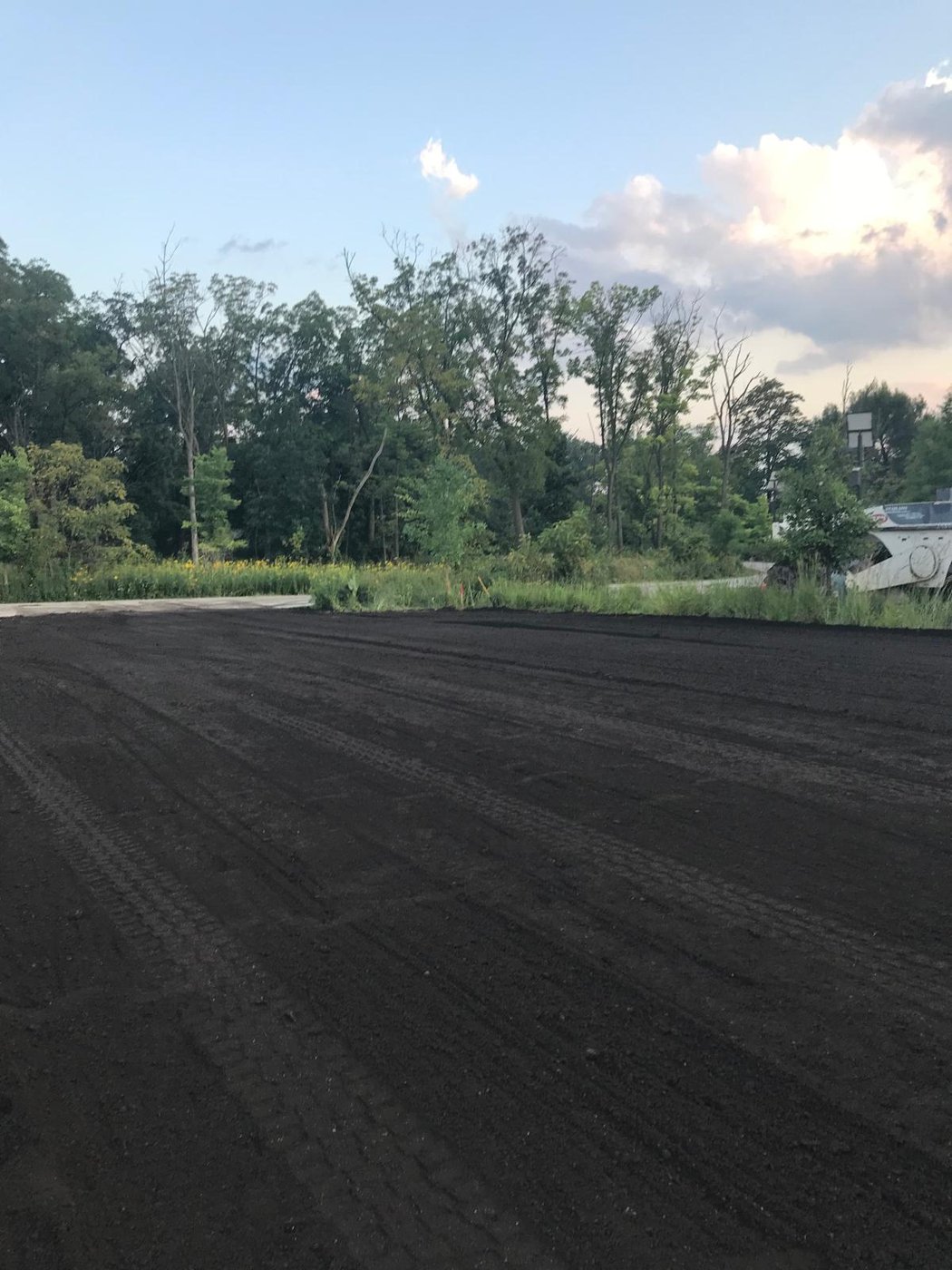
Single-specimen test on a sand-clay mix: LL30 at 4% reached 1,625 PSI versus 804 PSI for Portland Cement at 8% on the same soil (ASTM C39, S.A.M. Consultants 2016). Strength is soil-dependent — design values come from project-specific testing.
Field validation
What the pavement does, winter after winter
The signed-and-sealed April 2026 dossier — prepared by Engineer of Record Mark D. Hardy, P.E. — records in-service visual auscultation of nine LL-TEQ™ pavements. On the six-category freeze-thaw defect grid adapted from ASTM D6433, the verdict is uniform: none observed.
Nine sites · freeze-thaw cycles per year
Deliberate climate diversity
Freeze-thaw cycles counted from NOAA GHCN-Daily (transitions of surface temperature around 0 °C). Compared with Québec's Dfb: the sites cover four distinct Köppen regimes and frequencies ranging from 36 to 172 cycles per year.
Benton Harbor, MI
9 winters in service · lake effect · three extreme events weathered.
Alexandria, VA
9 winters · marine clay analogous to St. Lawrence Champlain clays.
Rockford, IL
8 winters · heavy haul · ESALs 700,000 to 1,000,000 — featured case in the dossier.
Glenview, IL
8 winters · silty floodplain soil · high seasonal moisture.
East Chicago, IN
8 winters · industrial corridor on steel-mill fills · ESALs > 1,000,000.
Elgin, IL
8 winters · Fox River Valley · fine frost-susceptible glacial till · heavy collector.
Bridgeport, CA
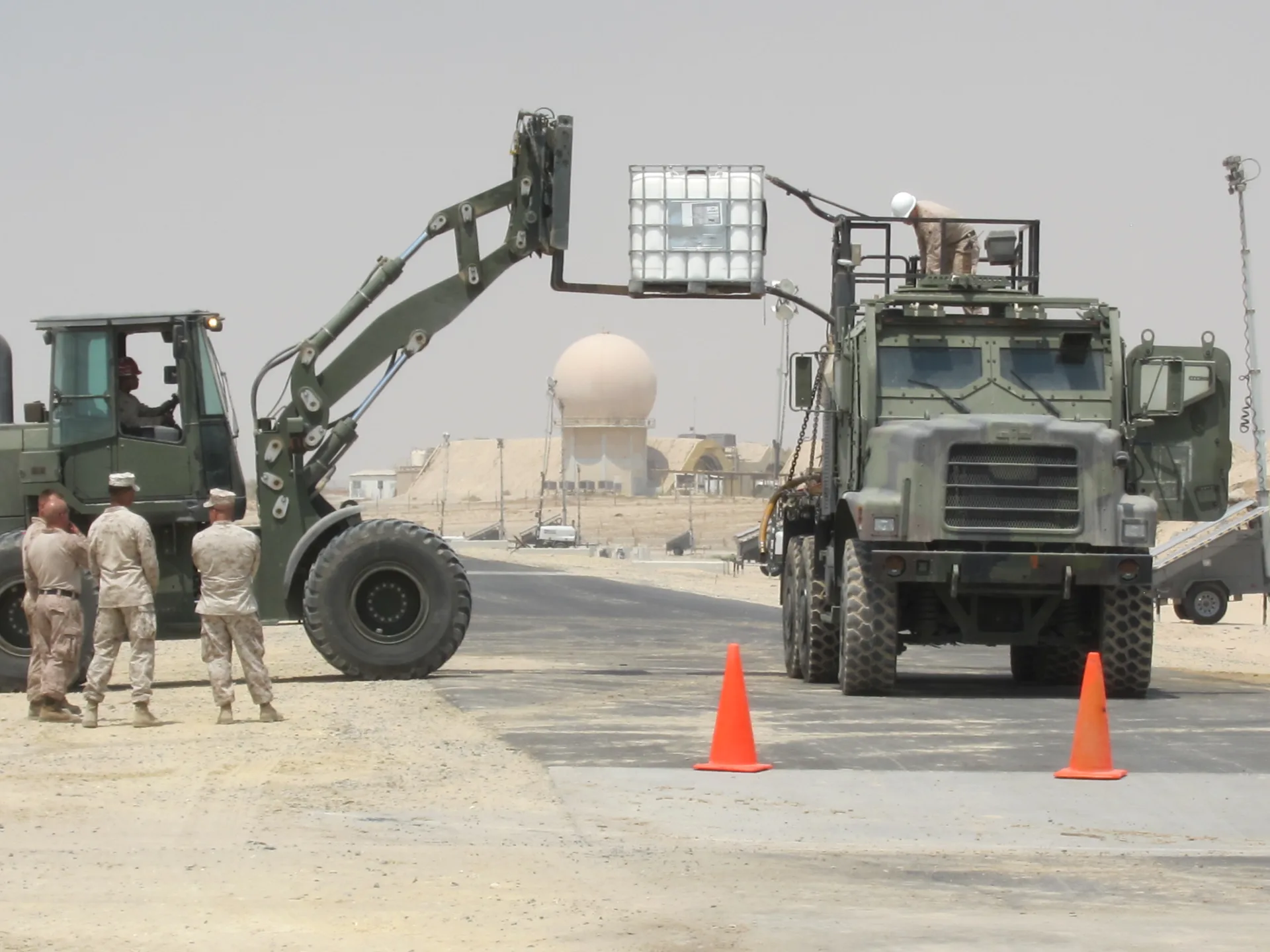
10 winters · USMC airstrip Sierra Nevada (~2,070 m) · highest freeze-thaw frequency in the dossier.
Big Bear Lake, CA
7 winters · mountain access ~2,050 m · salts, brine, heavy mechanical plowing.
Bessemer, AL
10 winters · longest deployment in the dossier · silty soil · ~1,300 mm rainfall.
Featured case · Rockford, Illinois
No infiltration. No ice. No heaving.
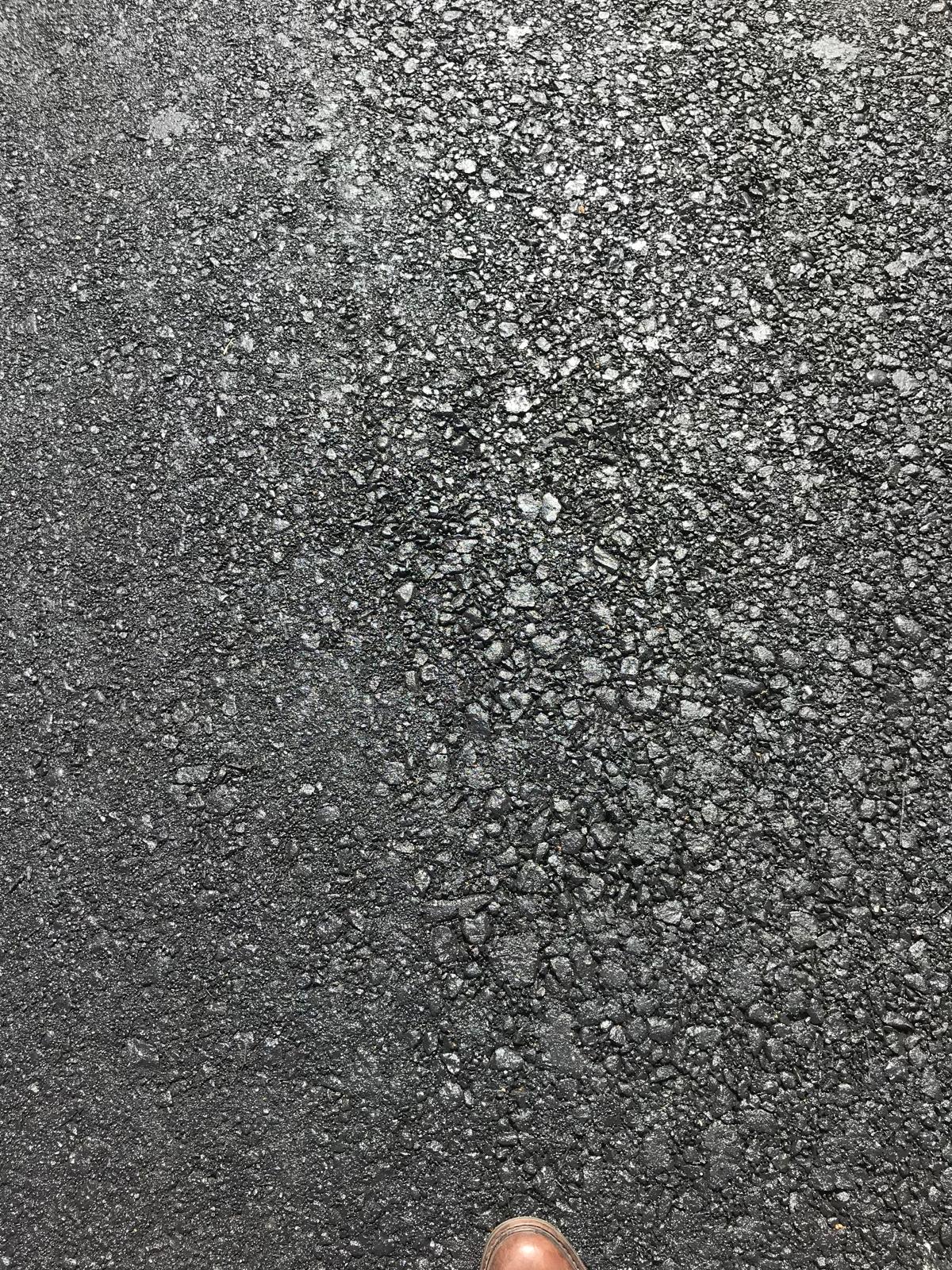
Rock River valley (Winnebago County) — glacial outwash sand and gravel with fine interbeds. A 150 mm unified LL-TEQ™ layer formed in place by soil stabilization, integrating the existing crushed granular base. Sustained heavy traffic, cumulative ESALs estimated between 700,000 and 1,000,000 (AASHTO method).
≈90 freeze-thaw cycles per year — among the highest in the dossier — and three extreme events weathered (January 2019 polar vortex, December 2022 Storm Elliott, severe March 2026 rain-freeze cycle). April 2026 EOR inspection, after eight winters: no cracking penetrates the treated layer.
- Lower permeability — water migration into the structure is slowed
- Less free water — less pore pressure, less ice-lens formation
- Residual flexibility — brittle cracking under thermal cycling is limited
- CBR maintained under soaking (ASTM D1883) — strength holds in saturated scenarios
Inspection grid · ASTM D6433 adapted
Six freeze-thaw defect categories. None observed.
Surface cracking
Fine-to-medium cracks, network or thermal pattern.
None observed
Structural cracking
Cracks traversing the full layer — alligator, wheel-path, block.
None observed
Frost heave
Vertical deformation from ice-lens formation.
None observed
Delamination
Internal debonding, slippage, local stripping.
None observed
Pothole
Open cavity from fragmentation under frost and traffic.
None observed
Rutting
Longitudinal depression from loss of shear resistance.
None observed
Attestation · Engineer of Record
Signed and sealed conclusion
Mark D. Hardy, P.E. · Hardy Engineering, Santa Monica, California · PE License No. 36538
Inspections completed April 2026, master dossier dated May 19, 2026. Evaluations by in-service visual auscultation conforming to standard auscultation practice by a qualified engineer. No defects attributable to freeze-thaw across the six categories — surface cracking, structural cracking, frost heave, delamination, pothole, rutting. Observed surface wear is attributed to normal mechanical wear in service, managed through surface sealant within the planned maintenance.
Methodological scope — in-service visual auscultation; no post-service coring, no embedded deflectometry. The technology is designated LANDLOCK at seven of the nine sites and OPSDIRT at two (East Chicago, Bridgeport); it is the same LL-TEQ™ product distinguished by application context. This page records an observational finding; it is not a contractual framework and does not prejudge project-by-project design.
Download · Engineering dossier
Receive the signed and sealed report
The complete dossier — 9 site sheets, methodology, defect grid, Engineer of Record declaration (PDF, ~250 KB). Enter your email to download.
Build pavements that survive every winter
LL-TEQ™ delivers pavement structures with proven freeze-thaw resistance — no annual repairs, no asphalt dependency.