
LL-TEQ™ · Solutions
LL-TEQ Solutions / Roads on Native Soil
Build a road without importing one: the soil already on site becomes the load-bearing structure.
The problem
With no existing structure, everything is still to build
No base, no road
Where no granular structure exists — agricultural land, industrial sites, new developments — everything is built from scratch.
Importing costs double
Excavating the in-place soil, hauling it away, then buying and hauling in granular material: you pay for trucking twice before laying the first metre.
The temporary road that stays
Undesigned "temporary" accesses become mud pits at spring thaw and dust tracks in summer.
The LL-TEQ solution
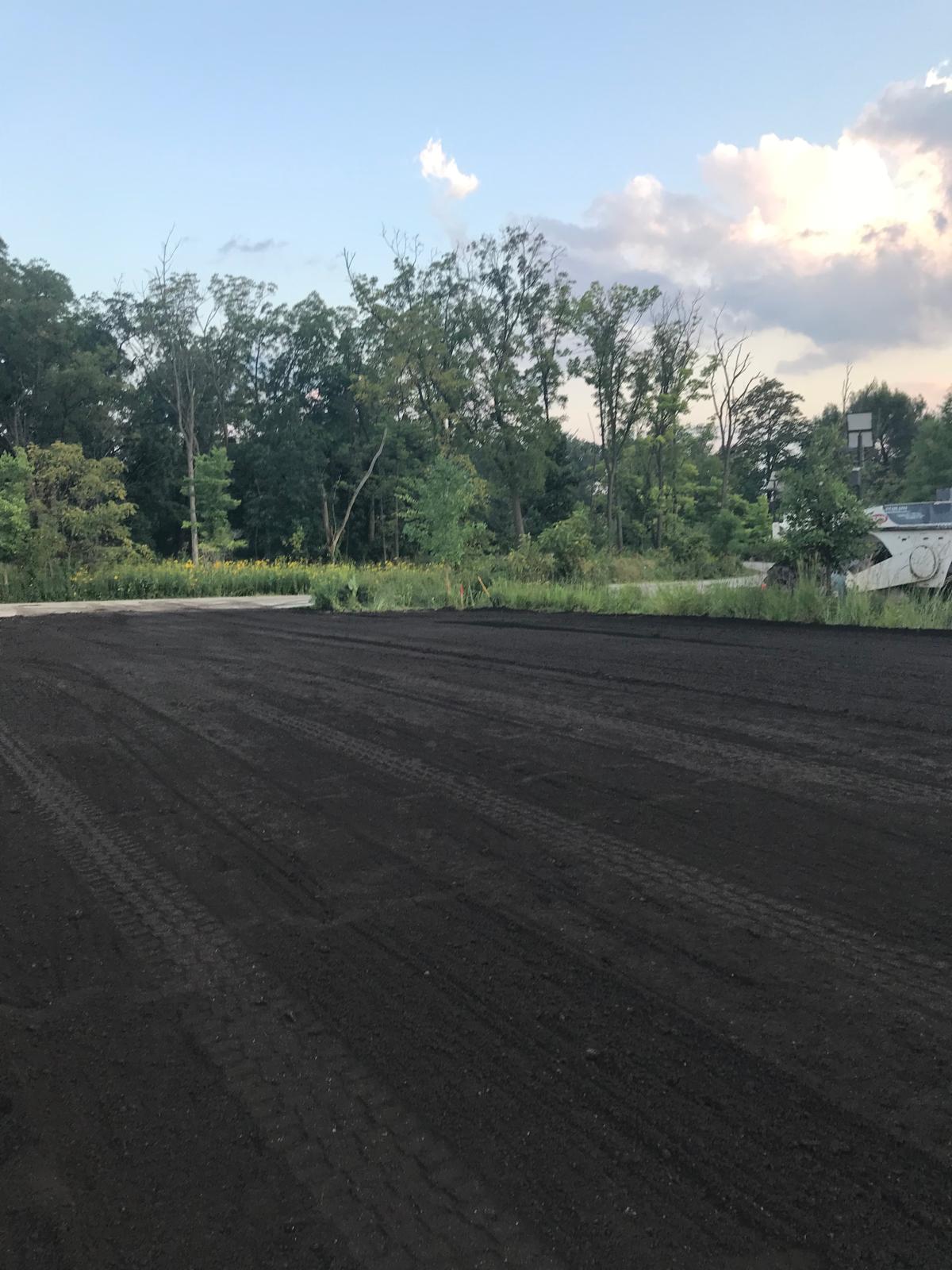
LL30 mixed into the native soil — the engineering makes the road
A site-specific soil analysis determines the loading: the LL30 binder is mixed directly into the in-place soil, at the design depth, then compacted. An optional LL25 seal closes the surface. This is where LL-TEQ's design work shows most — the loading is calculated from YOUR soil, not a generic table.
- LL-TEQ: loading and depth design, SOPs, technical presence, coordination
- The contractor or the client: execution of the works with their own equipment
- Bearing capacity is designed per project, with your engineer of record
- Site-specific soil analysis and formulation trials, included in the design
The frame
What's included — and what isn't
Included in the LL-TEQ solution
- Site visit and design data collection
- Project-specific specifications and execution procedures
- Project-tailored loading and depth, produced after quote acceptance
- Coordinated delivery and technical briefing of operators (LL-TEQ SOPs)
- LL-TEQ technical presence on the first jobs
- End-of-site technical report and return-to-service recommendation
Done by the contractor or the client
- Execution of the works with their own equipment
- Signage and traffic management
- Access control during curing
- Permits and authorizations
- Drainage works and marking
LL-TEQ is not a general or specialized contractor under the Building Act (CQLR, c. B-1.1) and holds no RBQ licence. A certificate of authenticity and product compliance, issued by the manufacturer, is provided.
The price
How the price is set
Every solution is quoted per m². The price follows from the loading design: the treatment depth and the product charge per m², set by our engineering design for your project. No published figure replaces a design — every quote is generated per project.
FAQ
Frequently asked questions
Is every soil suitable for treatment?
No — organic content, grain size, and the bearing capacity of the support soil are checked during the site analysis. That is precisely the role of the design stage: to say whether your soil can be stabilized, at what loading, and to what depth.
What bearing capacity can be achieved?
The LL30-stabilized material is documented by third-party compression testing (e.g. 1,625 PSI on sand-clay, single-specimen test, ASTM C39/C42, S.A.M Consultants 2016). The design bearing capacity is calculated per project based on the soil and traffic.
Is granular material still needed?
In most cases, no — that is the central argument of the solution. If the analysis reveals an unsuitable soil, the design will say so before you buy anything.
A site to serve with no existing structure?
Tell us about your site — we come back with a design and a per-m² quote.