
By profile · Municipality
Break the patch-and-repave cycle
Your main constraint isn't technical — it's the budget. The road-maintenance deficit keeps growing because conventional asphalt is redone every 8–12 years. LL-TEQ™ reuses the road you already have.
Your top concern
A maintenance budget that no longer keeps up
Every filled pothole comes back the next spring. Every repaved street cracks again under freeze-thaw. The problem isn't the crews' effort — it's a "floating" material laid over a base that keeps moving. LL-TEQ™ changes the mechanics: the polymer integrates and binds the base and wearing course into a unified slab, removing the sub-base erosion that drives repeat interventions.
Deployed in sensitive environments
Used near bays, rivers, forests and farmland
Since 2012, the technology has been deployed across 39 countries — including coastal zones, marine environments, farmland, forested areas, and protected biodiversity habitats. The Ravenswood Trail (Menlo Park, California, May 2024) was built directly along the edge of San Francisco Bay, inside a nature reserve. The UNRA pilot project (Lira, Uganda, April 2012) has been monitored under tropical high-rainfall conditions for several years — still in service.
The structural proof — signed
Verifiable numbers, not promises
Compressive strength
LL30 at 4%: 1,625 PSI (11.2 MPa) on sand-clay; up to 3,705 PSI (25.5 MPa) corrected on crushed recycled aggregate. Range 1,310–3,705 PSI across 16 specimens, 2 independent labs, 7 years (ASTM C39/C42).
Designable under AASHTO 1993
AASHTO 1993 structural layer coefficient a₂ = 0.21–0.30 for the LL30-stabilized base, usable directly by the engineer of record in flexible-pavement design.
Sealed against freeze-thaw
About ten times less permeable than untreated soil (ASTM D5084): water does not enter the slab, removing the driver of Quebec winter crazing.
In-place recycling
Full rehabilitation from existing materials — ref. Benton Harbor (MI) 2017: ≈ 22,600 m² rebuilt, 50% base-course / 50% asphalt millings, showcased against remove-and-replace.
Utility trenches reinstatable
You constantly reopen roads for water and sewer: a cured section can be saw-cut, re-treated, and reinstated without reconstruction, with a seamless match.
Engineer-signed data
Engineer-signed dossiers, provided to engineering departments on request.
Before
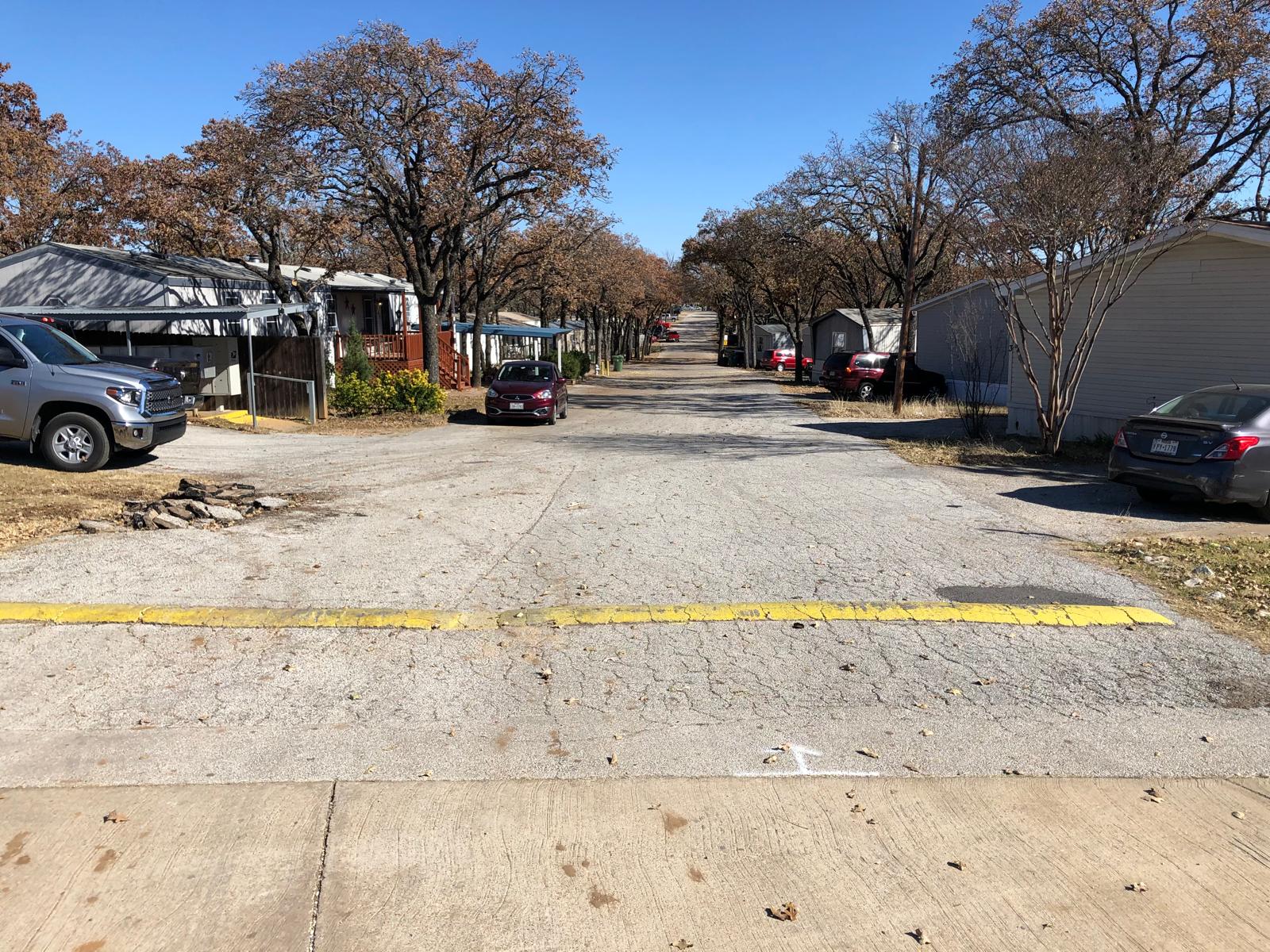
The network your budget keeps chasing
Crazing, frost heave, recurring potholes: the base keeps moving under a wearing course that does not hold it.
After
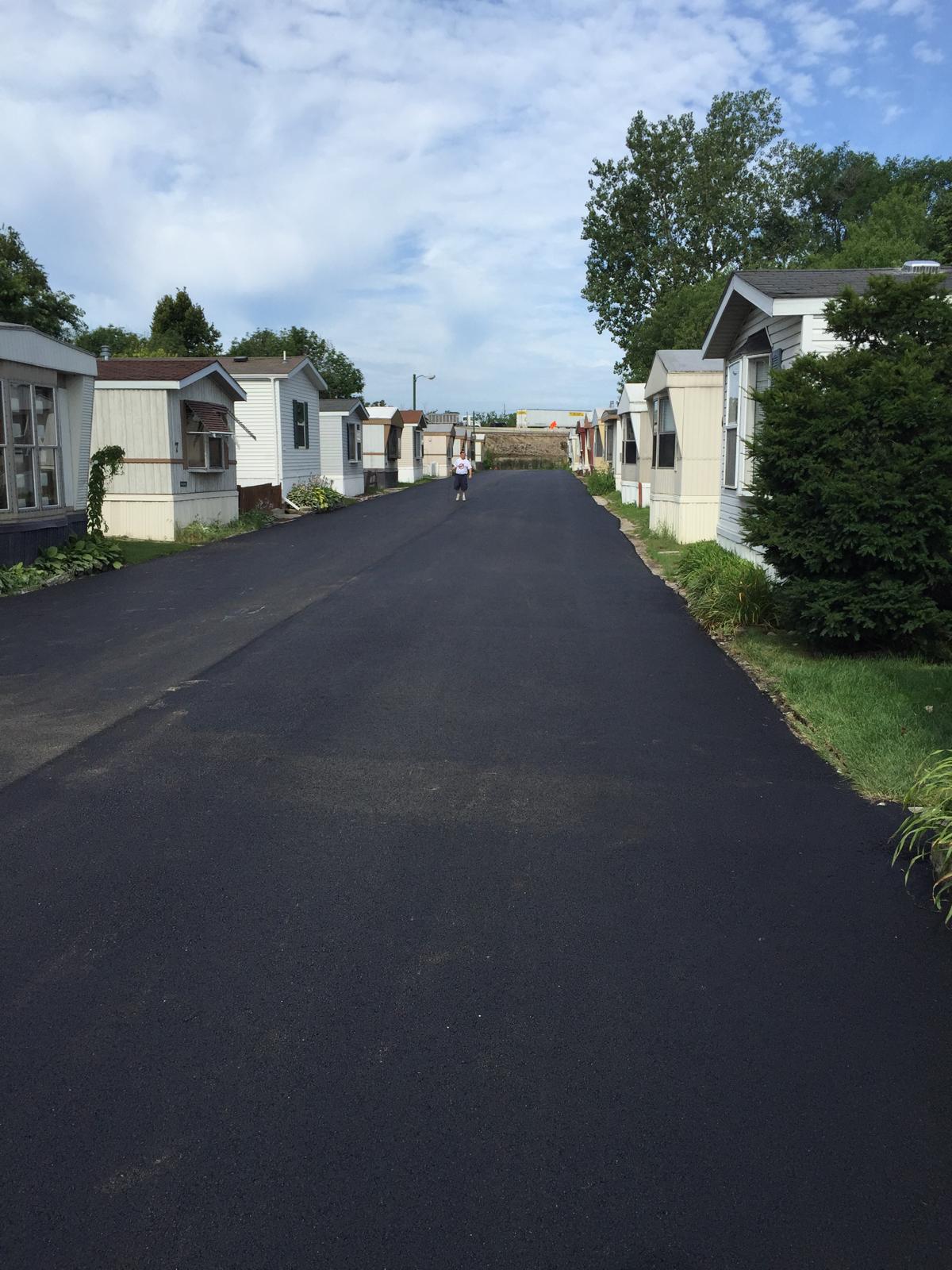
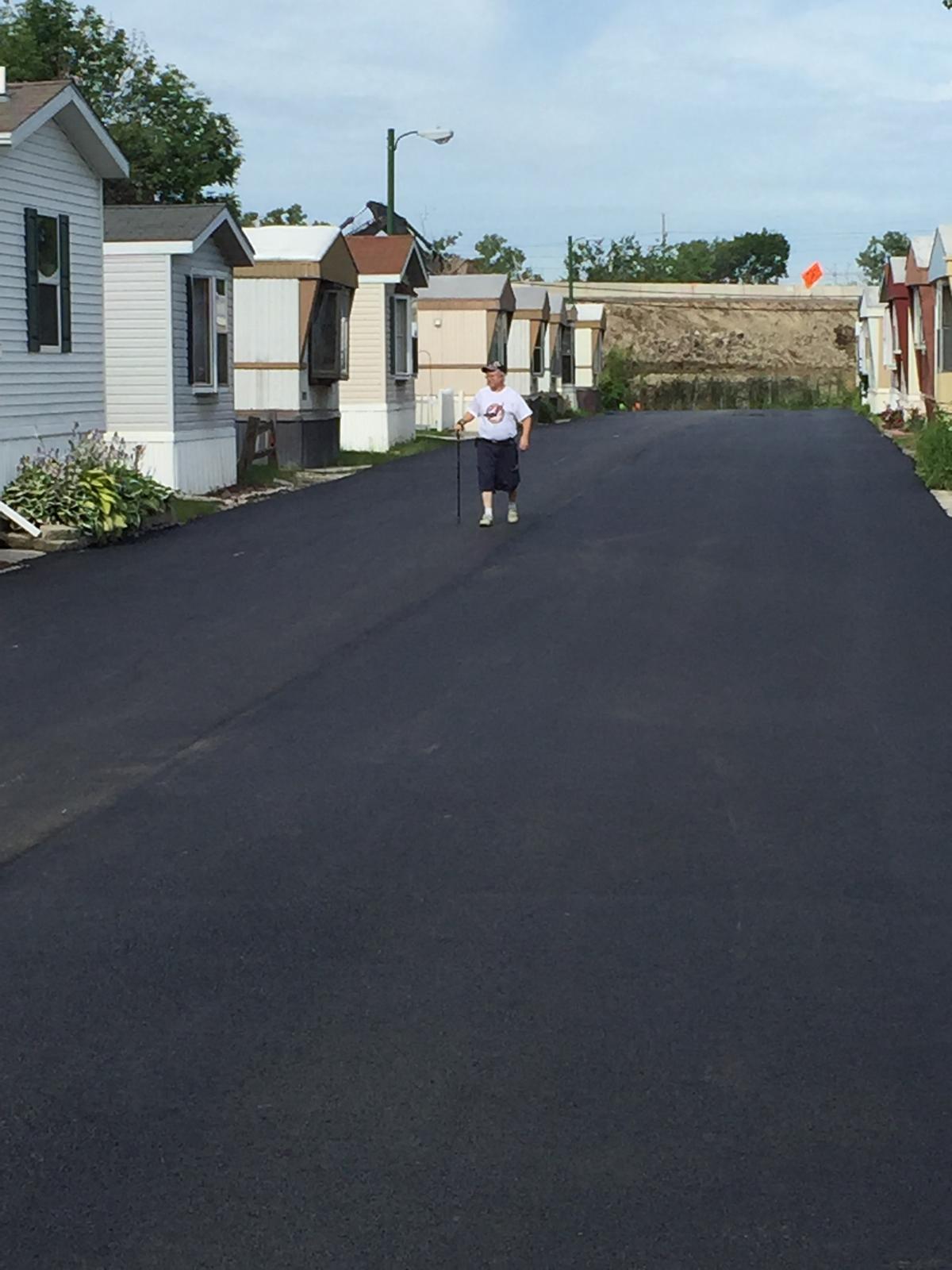
A unified slab, returned to citizens within hours
The same street, bound at depth and reopened to traffic from 12 h depending on conditions — without prolonged detours for residents or multi-week closures.
On your network, with your crews
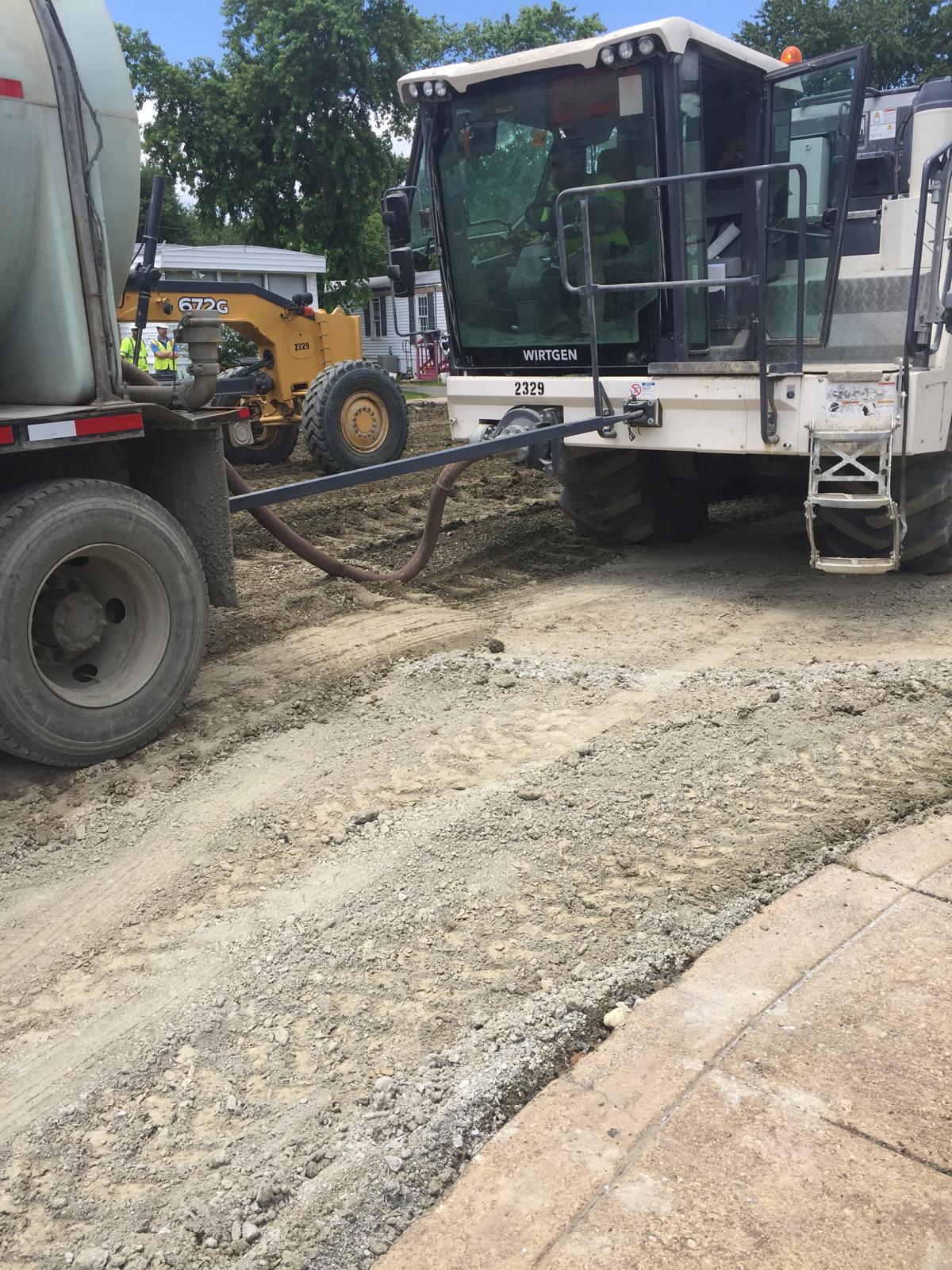
Cold process, standard road-building equipment
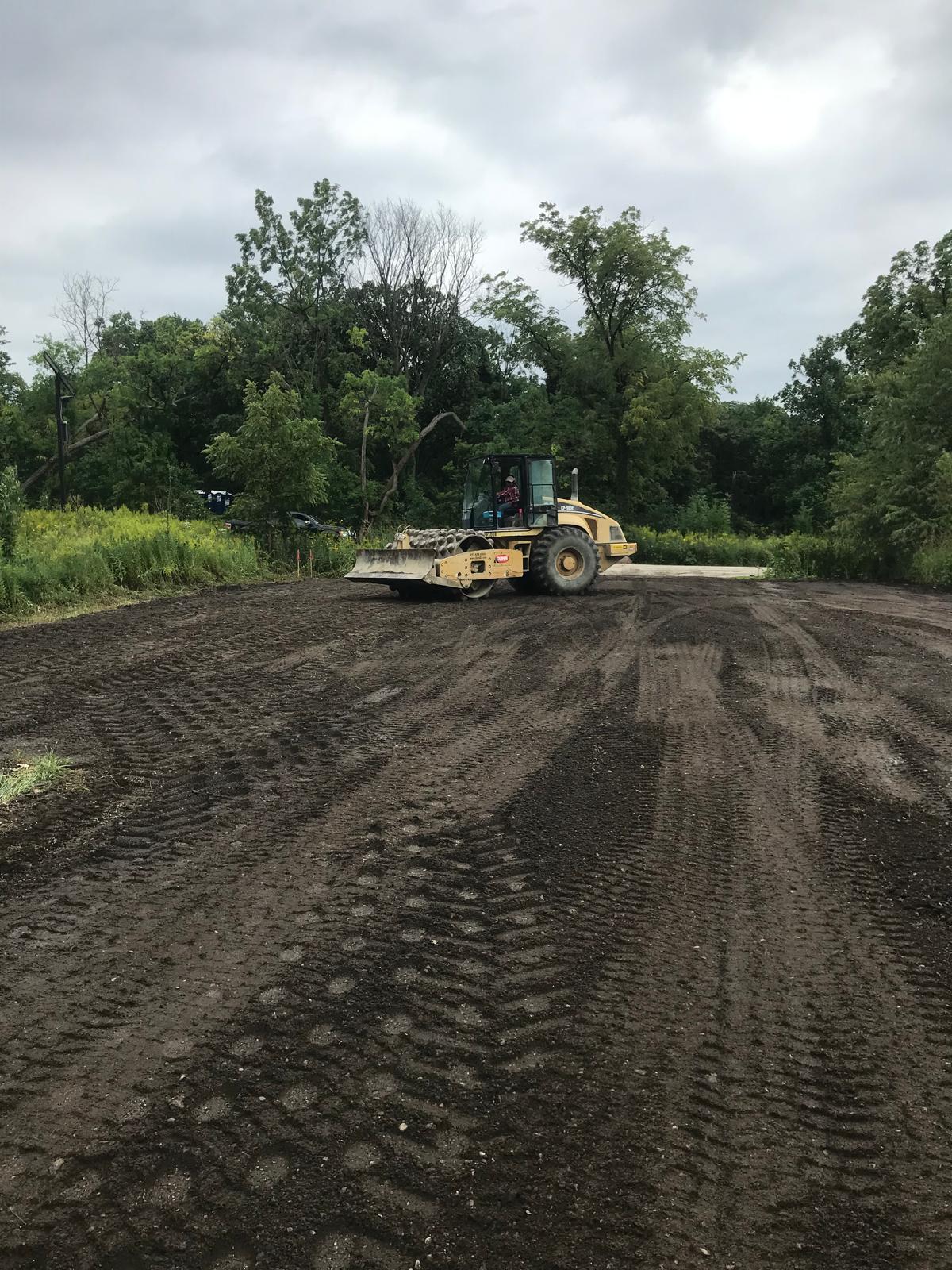
No asphalt plant, no specialized mobilization: one reclaimer, one tanker, one compactor. A trained crew delivers over 2 km per day of complete rebuild — structure and wearing course, 2 lanes; LL-TEQ™ supports on-site training.
Built for the Quebec municipal framework
Defensible to your council and your engineer
Testing under ASTM/AASHTO protocols, design integrable in the AASHTO 1993 framework, data signed by the engineer of record. To de-risk a first decision, LL-TEQ™ offers a reference section on preferential terms on your own network — a field showcase, not a feasibility test.
Let's talk about your network and your budget
Get the model municipal specification, the test reports, and a remove-and-replace vs LL-TEQ™ comparison for a segment of your choice.
Contact LL-TEQ™ See the case studies