
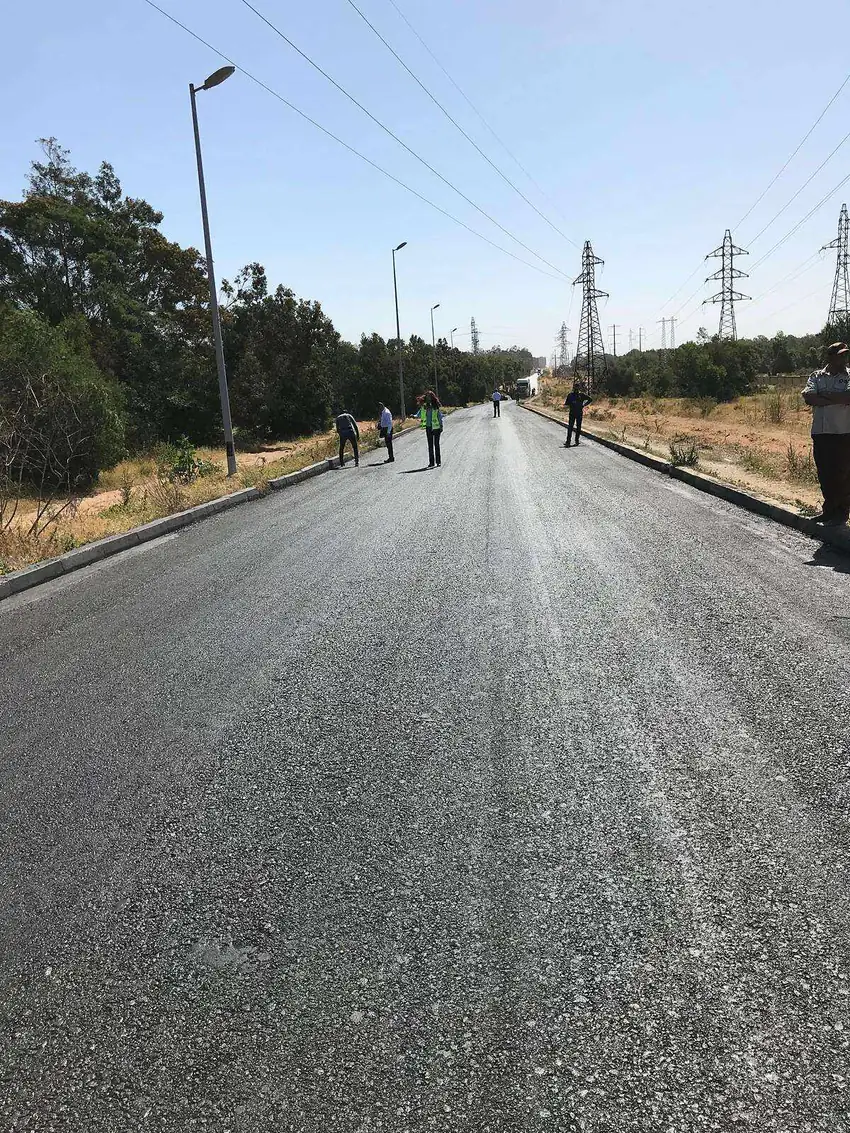
For roads without potholes
Non-toxic.
Longer-lasting.
Faster.
Distributed in Quebec and Canada by LL-TEQ. Structural base and wearing course all in one, with more than double the strength of cement. Proven internationally since 2012 — finally available in Quebec and Canada in 2026.
- Freeze-thaw resistant structure and surface
- Environmentally friendly water and soil
- Adopted by the U.S. military since 2012
Installation
One technology, two installation methods
Rebuild the pavement from materials already on site, or seal an existing surface. The right choice depends on road condition, traffic loads, and target service life.
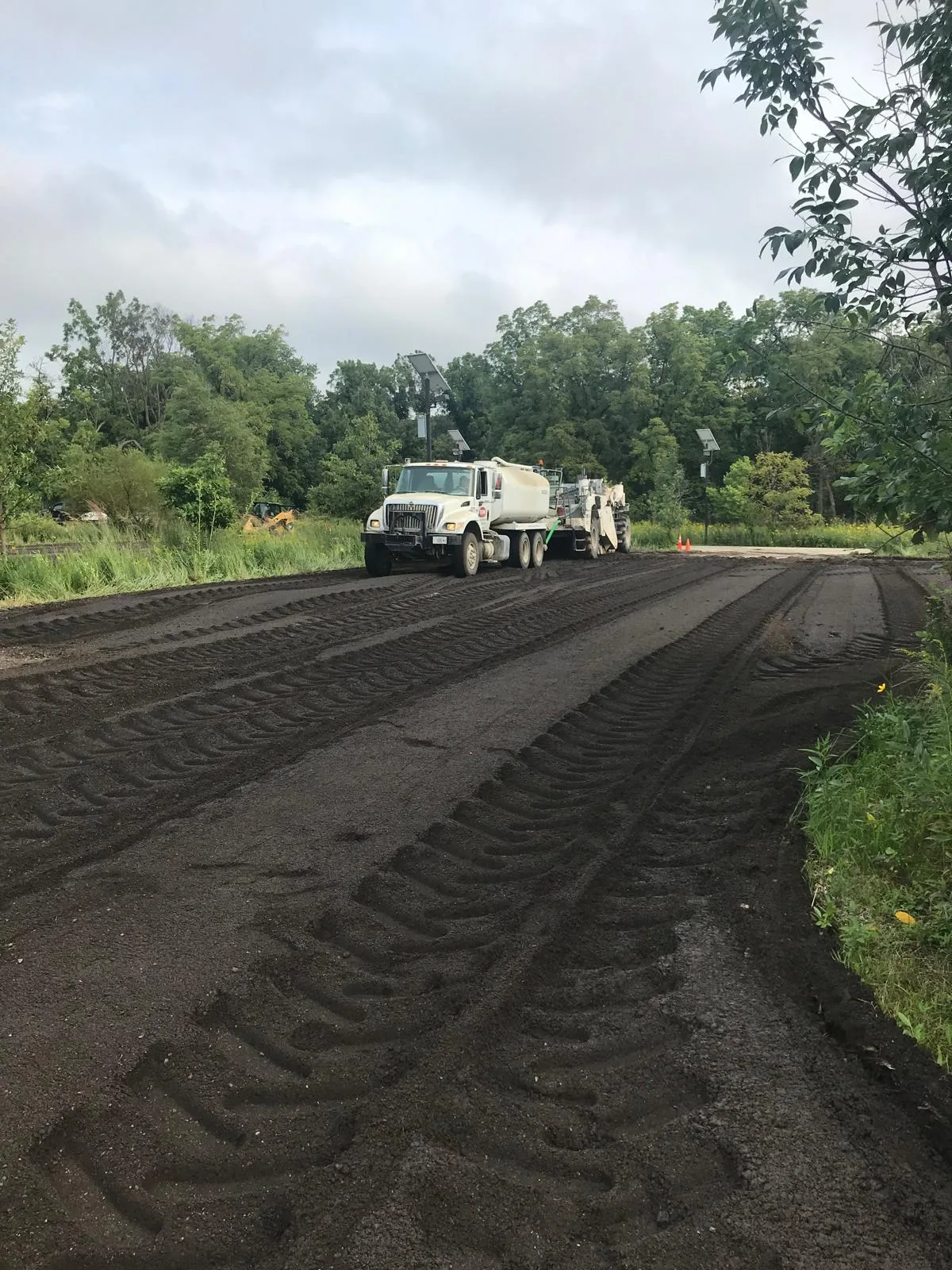
New road from existing material
Cold in-place recycling. A reclaimer scarifies the existing pavement and base 100–150 mm deep, then integrates the LL-TEQ polymer into the pulverized material — no plant, no long-haul transport, no heating.
- Freeze-thaw resistantstructure and surface
- Strength1 625 PSILL30 at 4% · single-specimen test
- Adopted by the U.S. militarysince 2012
- Environmentally friendlywater and soil
Ideal forHighways and major arteries · new road construction · full pavement rehabilitation · heavy-haul and freight routes · municipal and rural roads · industrial yards and logistics platforms · airstrips and structural platforms · mining and forestry access roads.
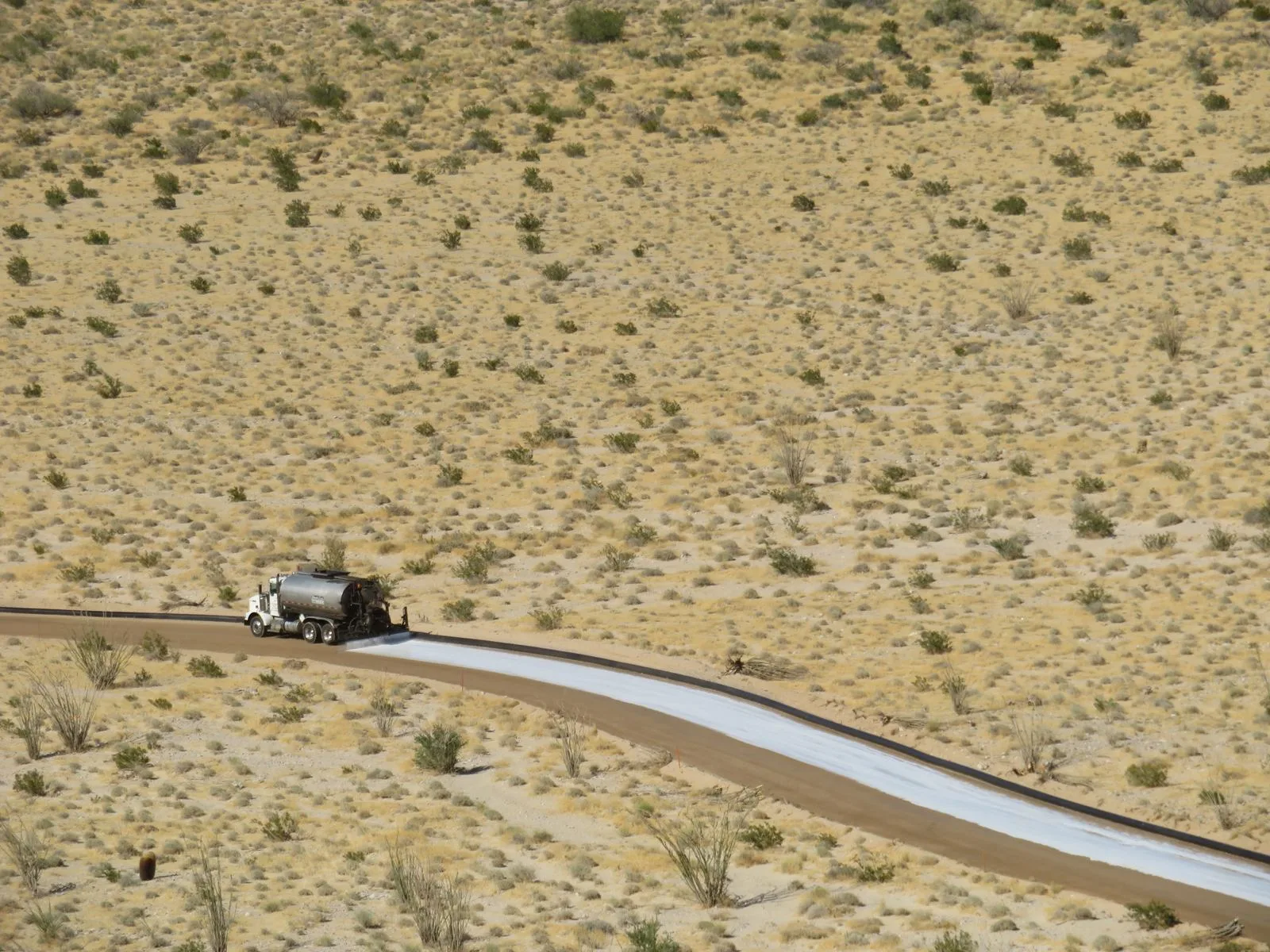
Sealing of an existing surface
Topical application. LL-TEQ is sprayed onto a shaped and compacted surface using a spray-bar water truck — penetrating 25–40 mm to bind fines, shed water, and stop dust at the source.
- Penetration25–40 mm
- Appearancecures transparent
- Acute toxicitynone measuredLL25, EPA 2000.0/2002.0
- Maintenancerenewable topical coat
Ideal forDust and erosion control · shoulders · logistics platforms · helipads · mining access roads · cycling paths · urban and recreational trails · parking lots and park pathways · life-extension surface treatment.
What sets LL-TEQ apart
Three numbers tell the story — strength, speed, and water-tightness — proven in the field and the lab.
- 2× vs cement
Stronger than cement stabilization
LL30 at 4% reached 1,625 PSI on a sand-clay soil — versus 804 PSI for Portland Cement at 8% on the same soil (single-specimen test).
- Residual flexibilityless cracking under freeze-thaw
- Design valueproject-specific testing per soil
SourceASTM C39 · S.A.M. Consultants 2016 · single-specimen test
- 2 km+ / day · complete 2-lane rebuild
Faster to build
Over 2 km per day of complete rebuild — structure and wearing course, 2 lanes — with a trained crew: one pass, one reclaimer, zero plant.
- Reopened to traffic12 h+ depending on conditions
- Equipmentstandard road-building machinery
Notedelay depends on soil, temperature, and weather.
- ~10× less permeable than untreated soil
Impermeable to water
About ten times less permeable than untreated soil (ASTM D5084). No infiltrated water: no ice lenses, no base erosion.
- Freeze-thawless water, less ice, less damage
- Service lifesub-base erosion removed
SourceASTM D5084 · S.A.M. Consultants 2017
Distributed in Quebec and Canada by LL-TEQ. Structural base and wearing course all in one, with more than double the strength of cement. Proven internationally since 2012 — finally available in Quebec and Canada in 2026.
LL-TEQ vs conventional solutions
Same roads, same constraints — different methods. Here is how LL-TEQ compares on the criteria that matter most against conventional options available today.
From a worn road to a structural pavement, in one day
One site pass — no plant, no long-haul transport. Click a step to explore it.
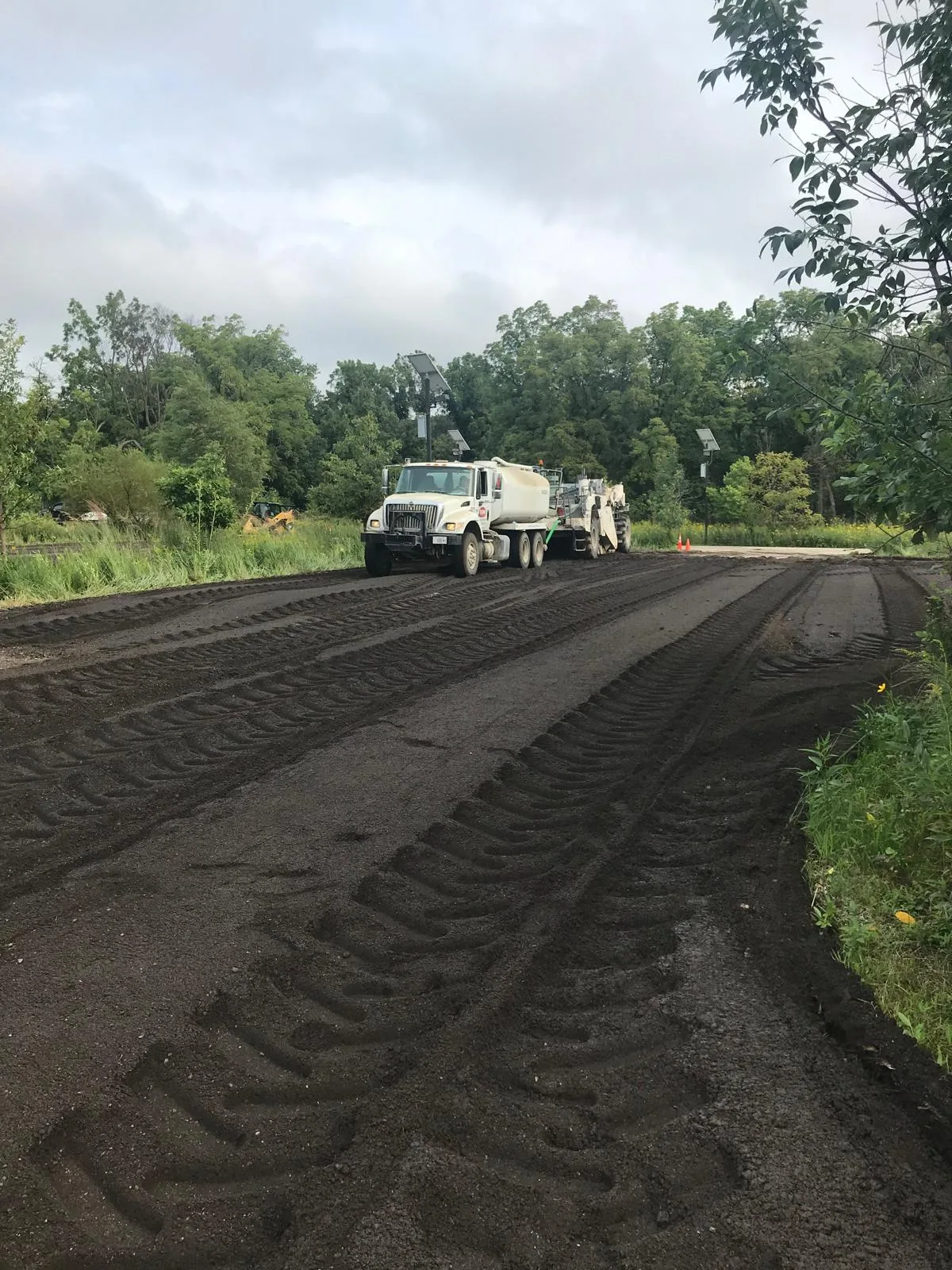
Scarification of the existing pavement
~ 1 h / km
A stabilization mill pulverizes the existing wearing course and base to the target depth — typically 100–150 mm. No material is removed: everything stays in place and is reintegrated into the final slab.
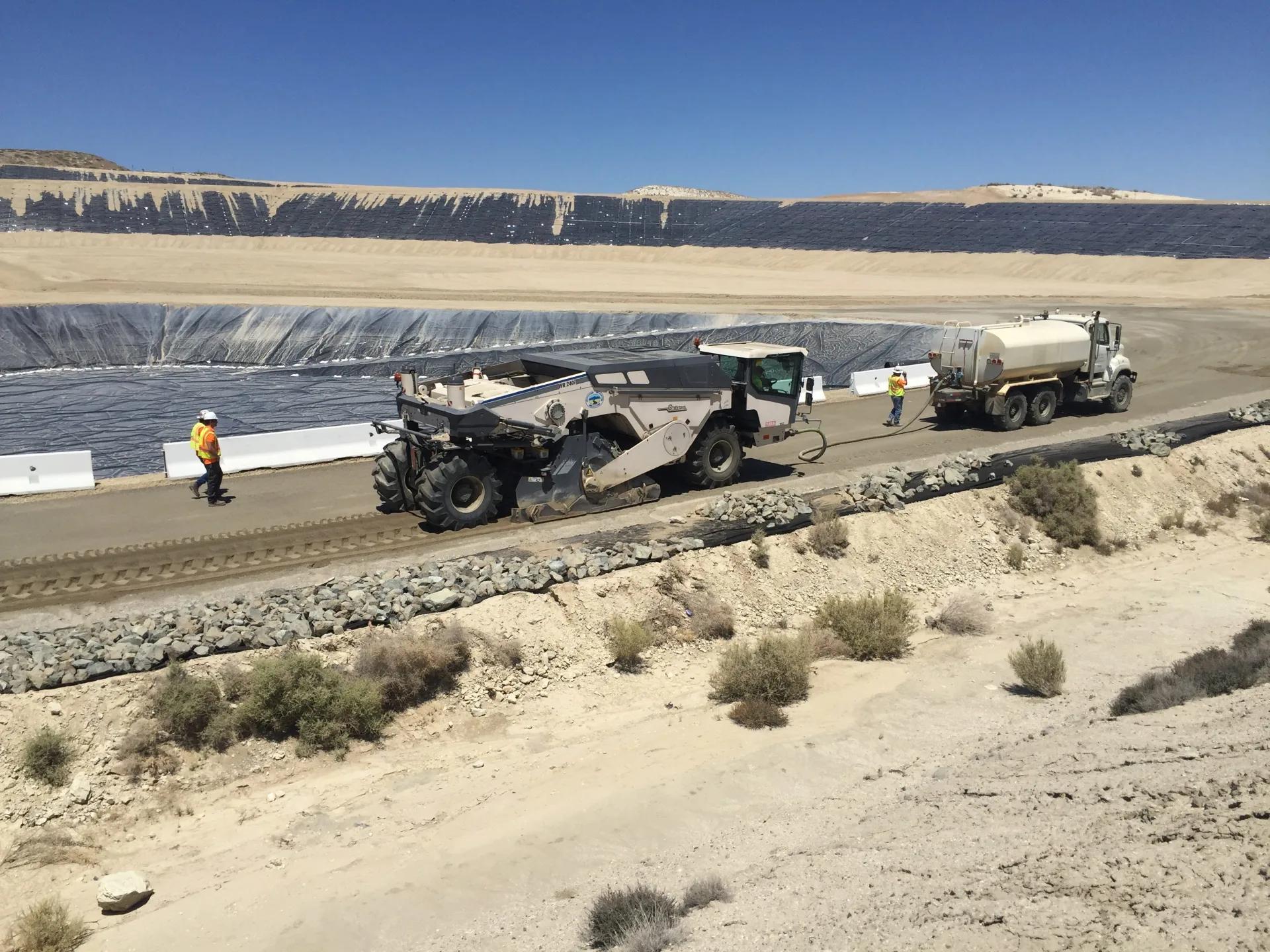
Real projects, in freeze-thaw climates
Three cold in-place recycling rehabilitations in humid northern climates — Michigan and Illinois — hit every winter by the same freeze-thaw cycles as Quebec. Cumulative freeze-thaw cycles and a 2026 engineer-of-record inspection documented.
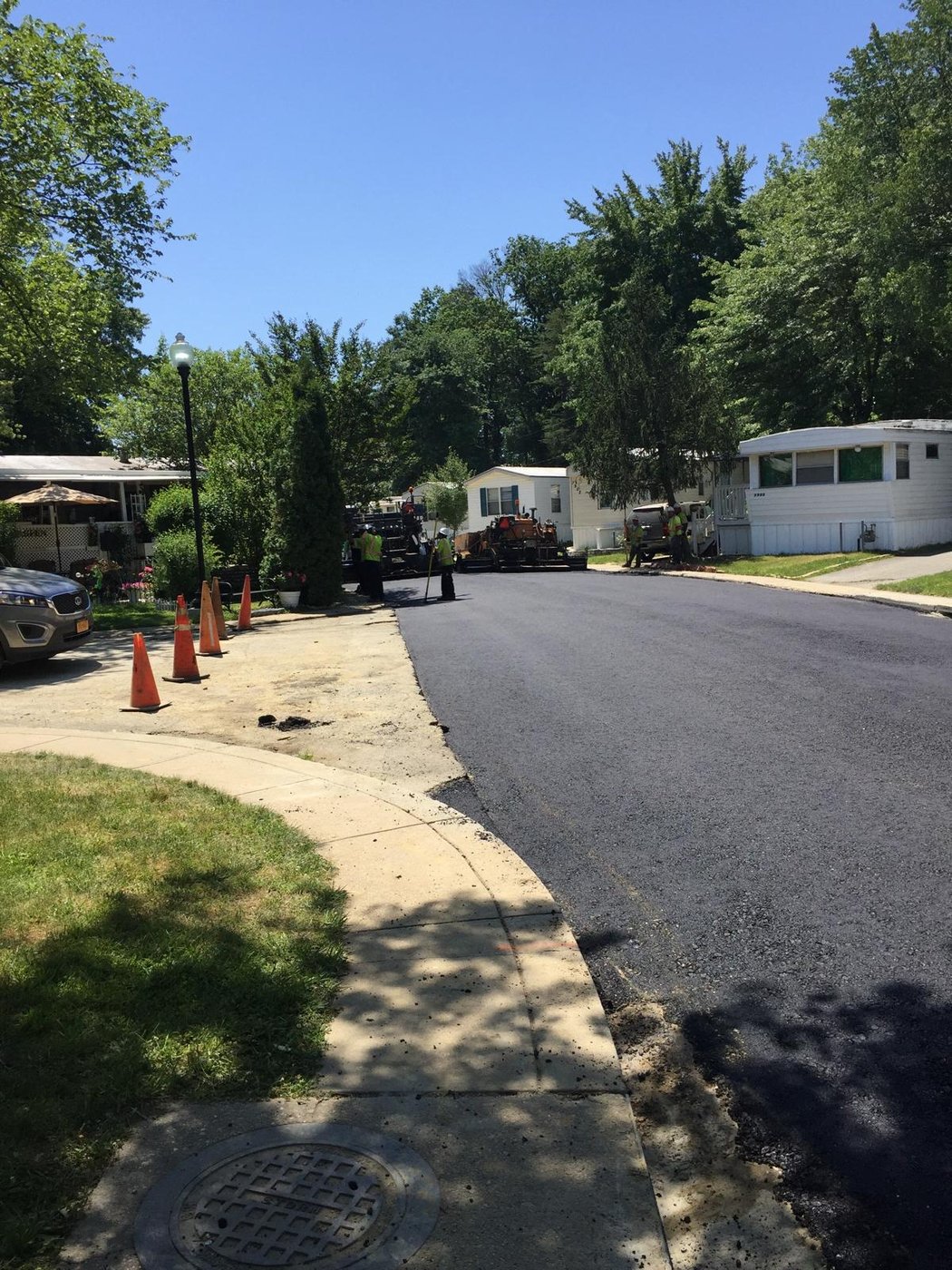
Two-lane municipal roadway
150 mm unified LL-TEQ in place (recycled asphalt and base) on glacial clay — comparable to St. Lawrence Lowlands clays. Full Lake Michigan lake-effect.
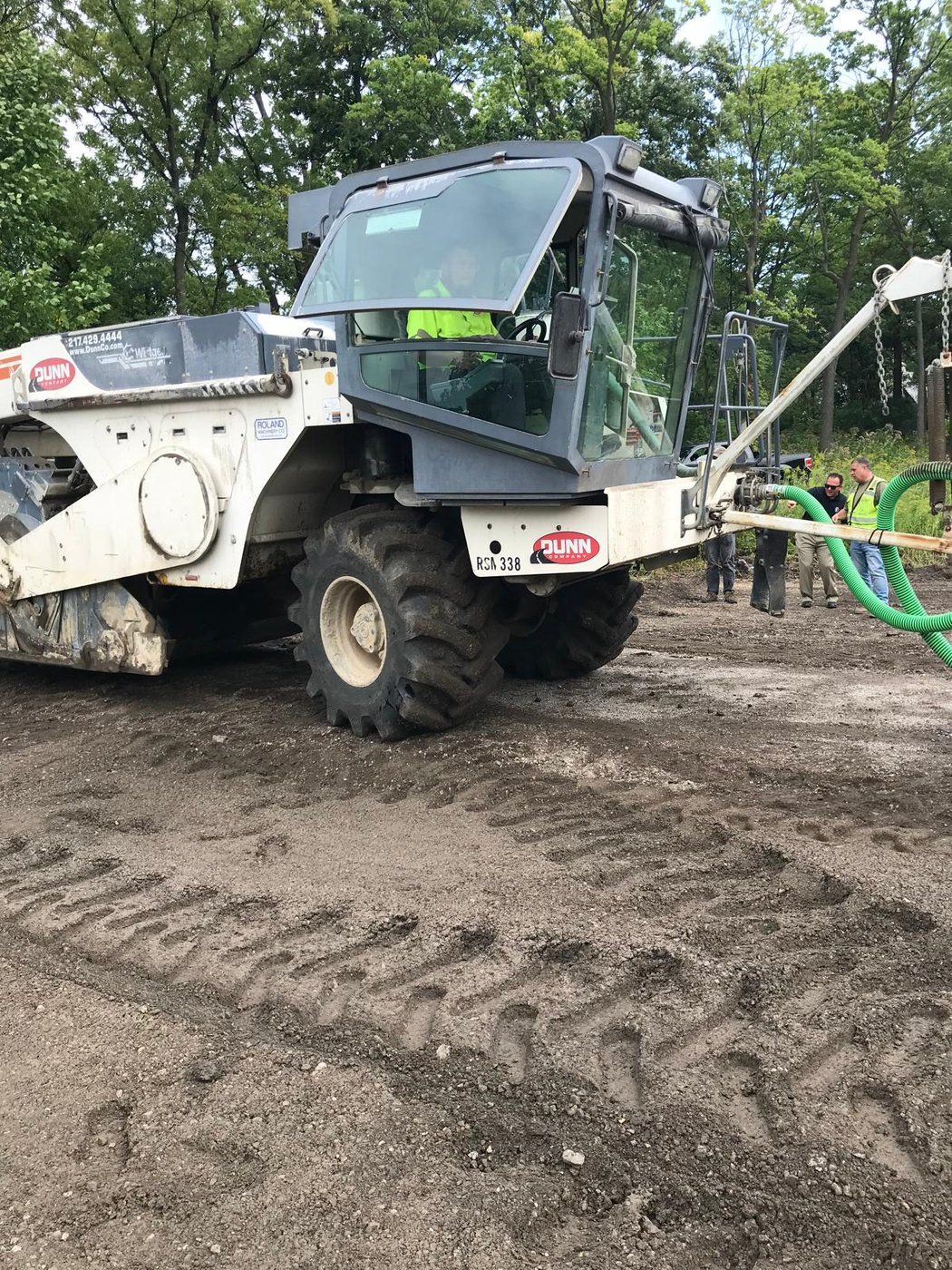
Heavy-traffic collector
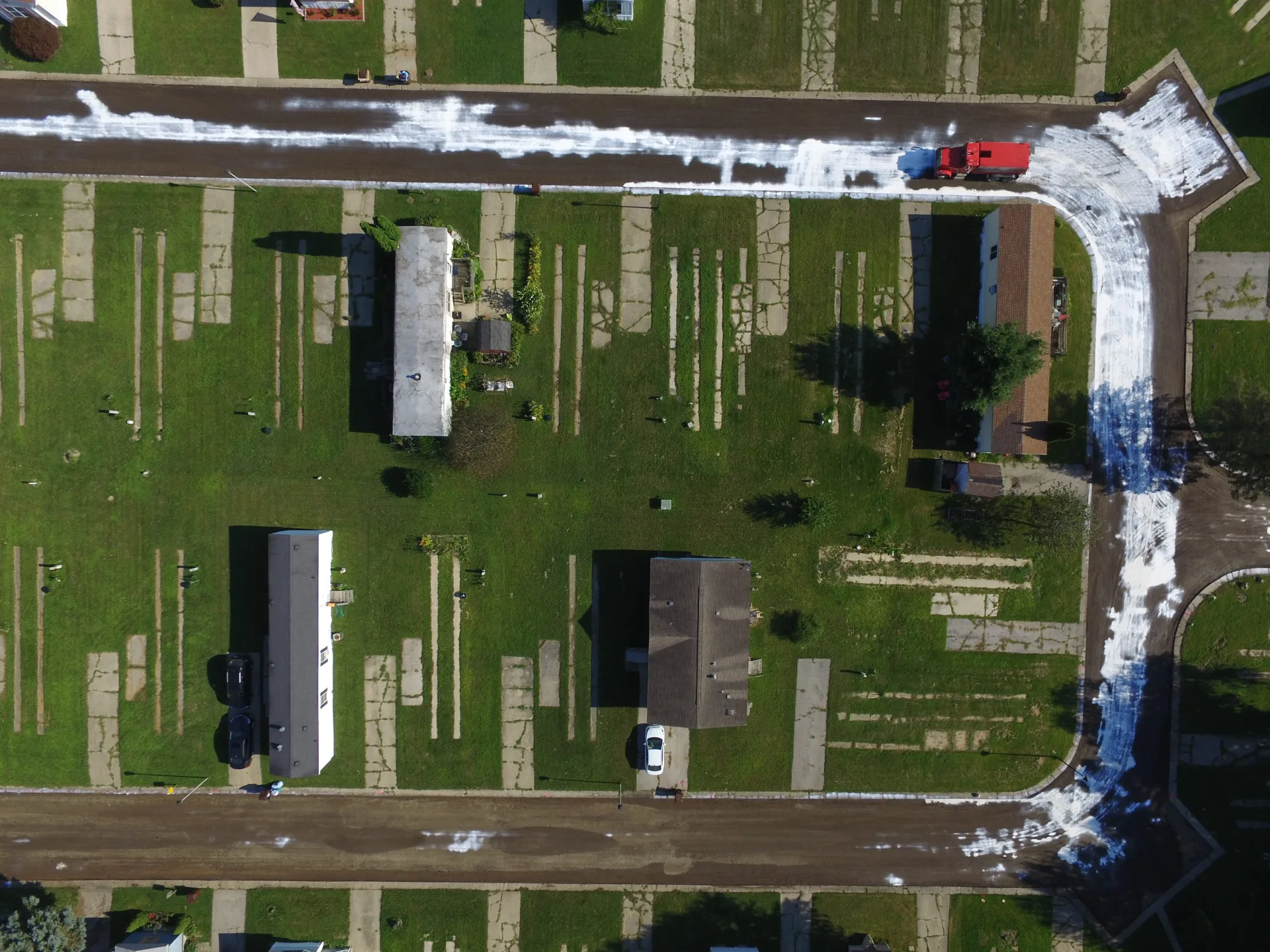
150 mm unified LL-TEQ via in-place stabilization · ESAL 700k–1M · Rock River valley. ≈90 freeze-thaw cycles per year — among the highest in the dossier.
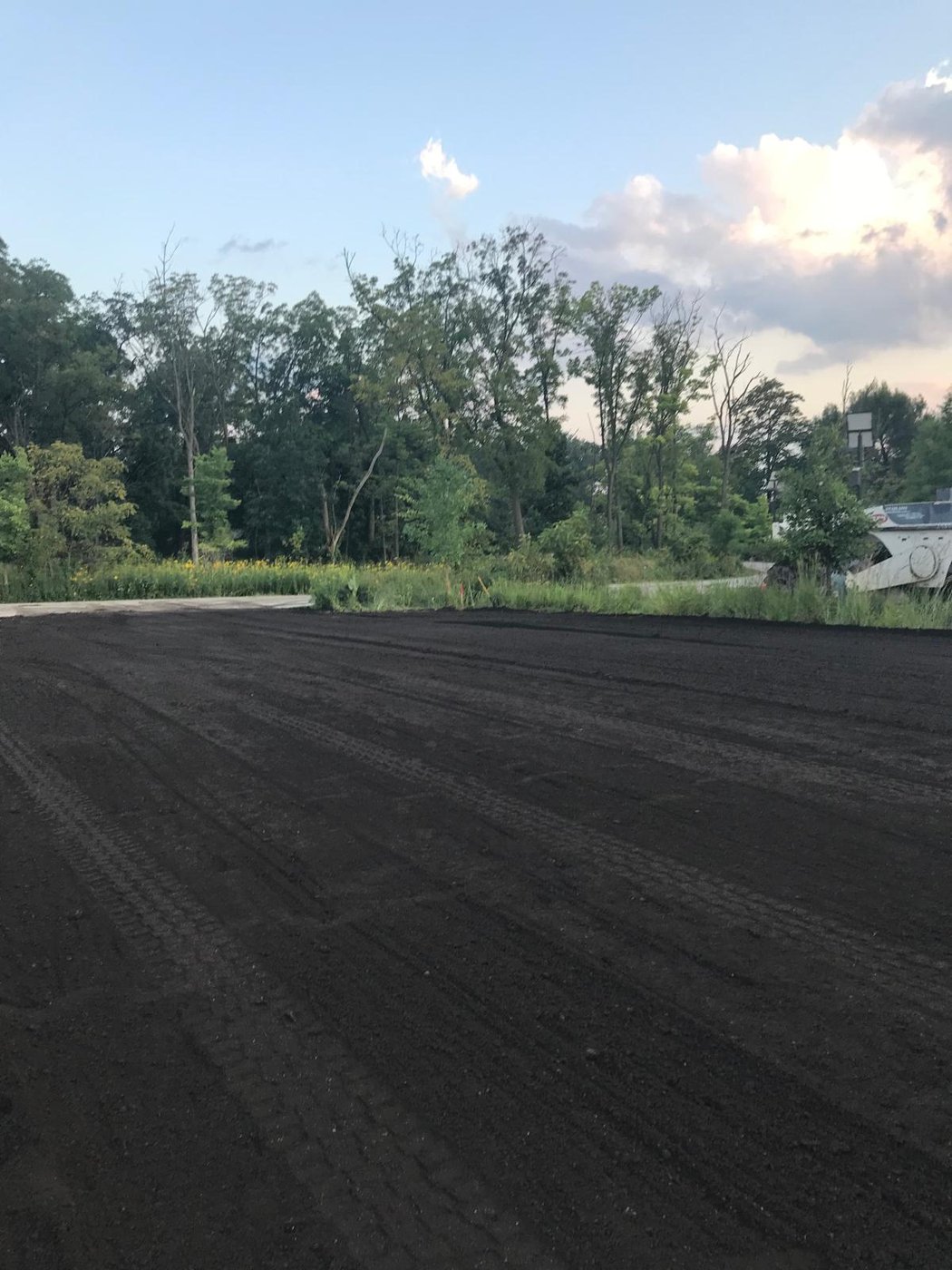
Park access road & parking lots
150 mm unified LL-TEQ via cold recycling · floodplain silty soil, high water table — comparable to St. Lawrence Lowlands clays. No sealant.
Documented case studies across multiple continents, in temperate, alpine, desert, and tropical climates (Landlock FLD-1 to FLD-7, 2012–2024). Project list and full reports available on request.
All case studies →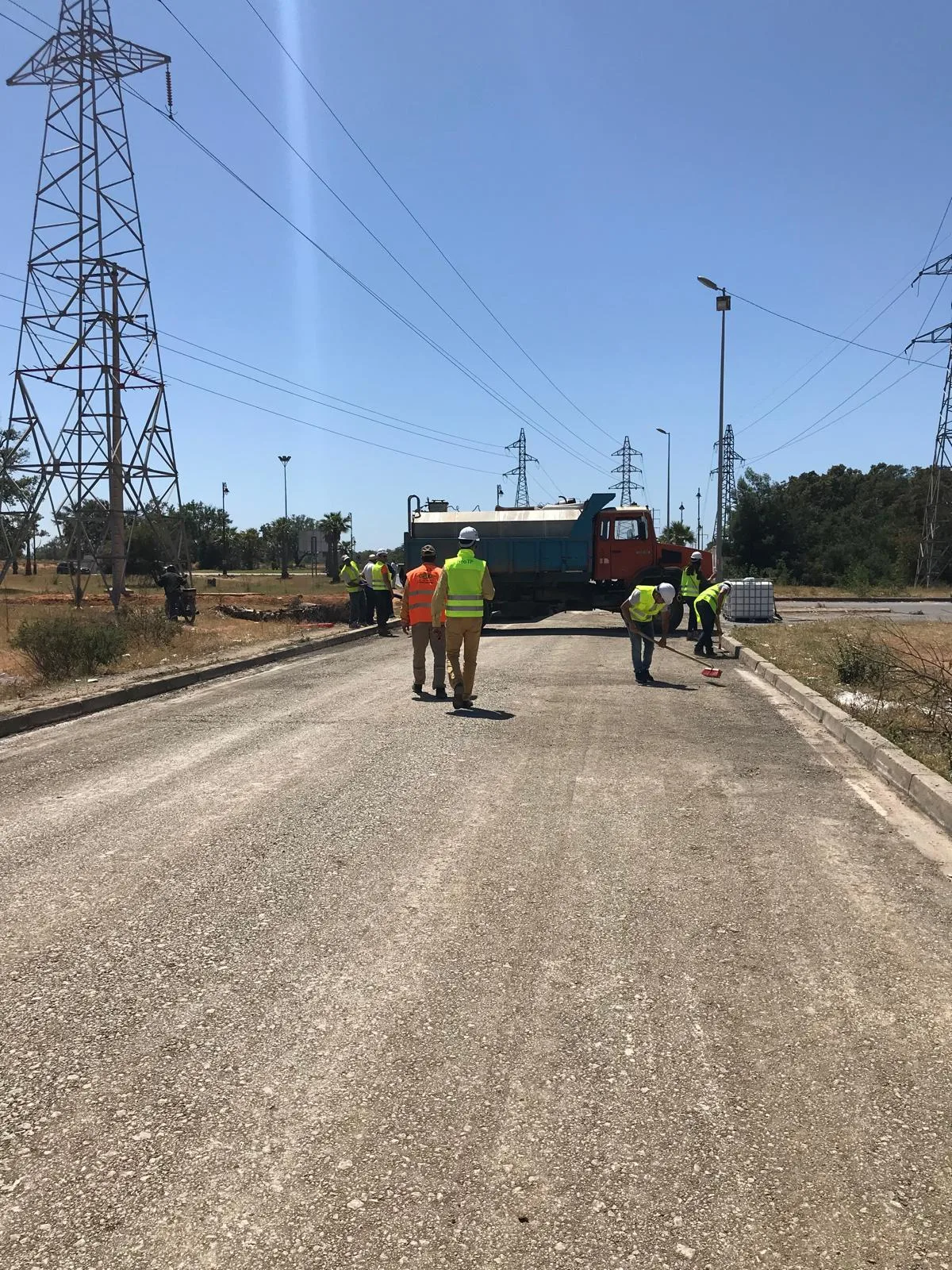
LL-TEQ™ role
Your LL-TEQ partner in Canada
LL-TEQ™ handles sales, distribution, and deployment in Canada.
We also support teams with technical guidance and training to ensure reliable, fast, and durable implementation.
Goal: contribute concretely to reducing climate impact in Canada through lower-footprint road infrastructure.
Frequently asked questions from municipal engineers
LL-TEQ™ — road performance and controlled cost
Let us discuss your project and the applicable technical and economic conditions.