
LL-TEQ™ · Solutions
LL-TEQ Solutions / Airfields & Landing Strips
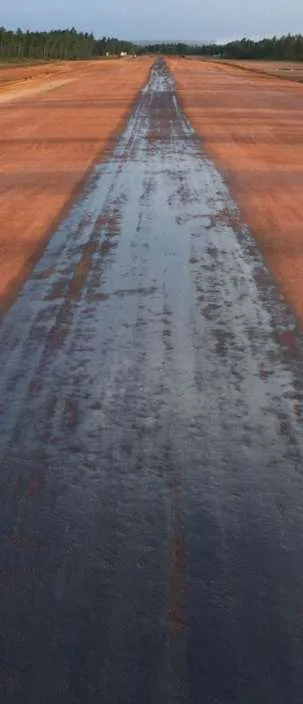
A load-bearing strip built from the material already on site — no asphalt plant, no concrete logistics. Landlock technology deployed on U.S. airfields, engineered here for your site.
The problem
Asphalt and concrete don't reach your airstrip
Logistics kill the project
On a remote or fly-in site there is no asphalt plant and no concrete batch plant. Every tonne of imported material is paid for in transport — often more than the material itself.
A strip that erodes shuts down
Dust, gullying, insufficient bearing capacity: an unbound granular surface eventually forces operating restrictions — or a closure.
Rebuilding costs a fortune
Fully rebuilding a regional strip in concrete or asphalt eats years of budget — for traffic volumes that don't always justify it.
The LL-TEQ solution
LL30 mixed to full depth, LL25 as the seal
The LL30 structural binder is mixed into the in-place material, to the depth set by the design load — up to the 200 mm class for aircraft loading. The LL25 seal closes the surface. The product travels in 1,000 L totes: an entire airstrip ships to places no asphalt truck will ever reach.
- LL-TEQ: loading and depth design, SOPs, technical presence, coordination
- The contractor or the client: execution of the works with their own equipment
- Bearing capacity is designed per project, with your engineer of record
The evidence
Landlock strips measured under real aircraft
Mocoron (Honduras), USMC/USAF
Runway and aprons stabilized (~55,000 SY, 2015). PCASE 2.09 evaluation on DCP readings: C-17 at 450,000 lb — 2,470 passes; C-130 at 155,000 lb — 23,847 passes. (Landlock, ref. FLD-2/SUP-4)
ALZ Sandhill, Twentynine Palms (USMC)
MAWTS-1 certification: KC-130J at 175,000 lb, 10,000+ passes on runway and aprons. (Landlock, ref. FLD-6)
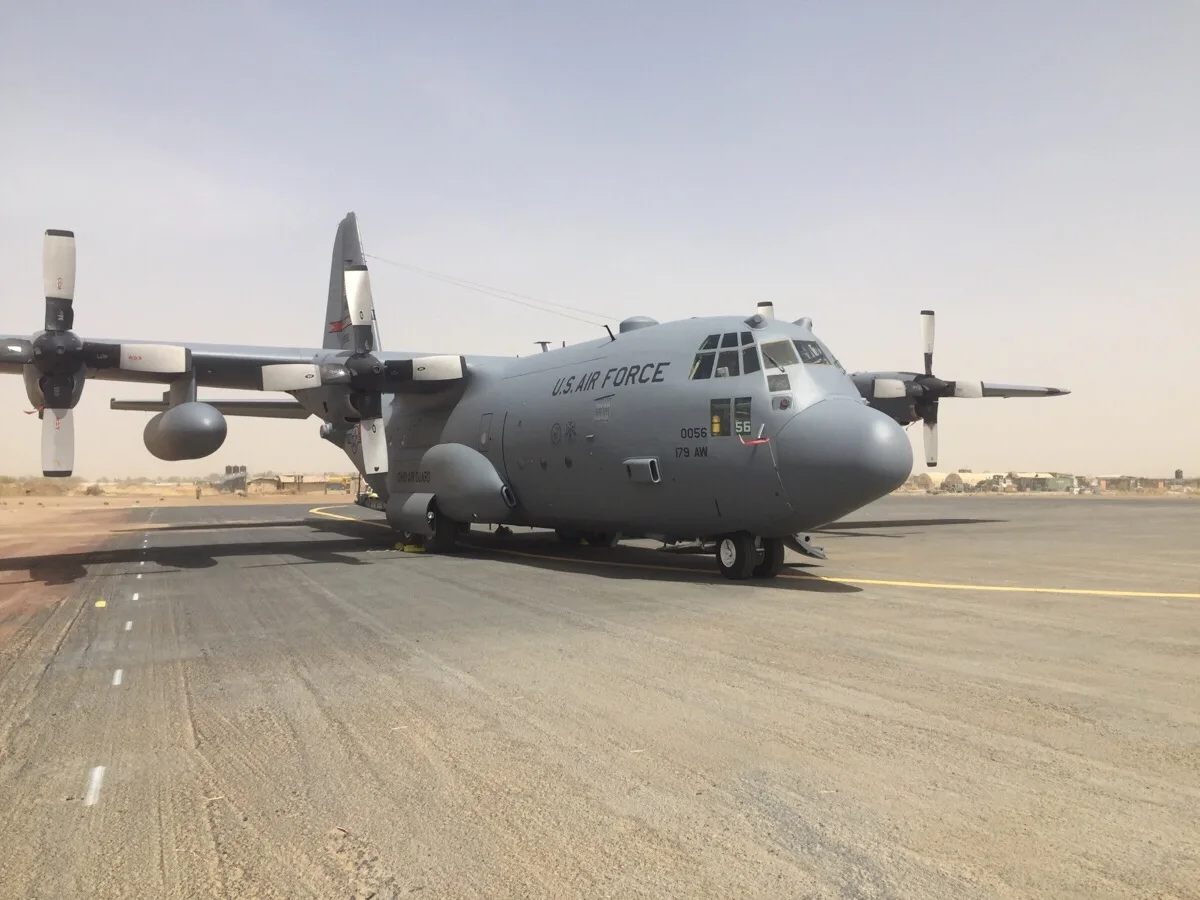
N'Djamena (Chad), USAF 200 RHS
Taxiway and apron — about 9,000 SY completed in 2.5 days (2016), despite equipment constraints. (Landlock, ref. FLD-2/FLD-5)
These references belong to the manufacturer, Landlock (USA). LL-TEQ claims no completed airfield of its own and no Canadian aviation certification: each project is designed and documented with your engineer of record.
The frame
What's included — and what isn't
Included in the LL-TEQ solution
- Site visit and design data collection
- Project-specific specifications and execution procedures
- Project-tailored loading and depth, produced after quote acceptance
- Coordinated delivery and technical briefing of operators (LL-TEQ SOPs)
- LL-TEQ technical presence on the first jobs
- End-of-site technical report and return-to-service recommendation
Done by the contractor or the client
- Execution of the works with their own equipment
- Signage and traffic management
- Access control during curing
- Permits and authorizations
- Drainage works and marking
LL-TEQ is not a general or specialized contractor under the Building Act (CQLR, c. B-1.1) and holds no RBQ licence. A certificate of authenticity and product compliance, issued by the manufacturer, is provided.
The price
How the price is set
Every solution is quoted per m². The price follows from the loading design: the treatment depth and the product charge per m², set by our engineering design for your project. No published figure replaces a design — every quote is generated per project.
FAQ
Frequently asked questions
Is this certified for aviation in Canada?
We claim no Canadian certification. The available bearing-capacity data comes from documented U.S. military evaluations (PCASE 2.09, DCP readings) on Landlock strips. Regulatory compliance for your strip is designed project by project, with your engineer and your oversight authority.
How long does the work take?
The scale is days, not seasons: on documented Landlock jobs, about 9,000 SY of taxiway and apron were completed in 2.5 days (N'Djamena, 2016). Actual duration depends on area, treatment depth and the equipment mobilized.
What maintenance afterwards?
The LL25-sealed surface is maintained by periodic reapplication per the LL25 SOP — no potholes to patch, no annual regravelling. The end-of-site report includes maintenance recommendations specific to your site.
A strip to build or rehabilitate?
Tell us about your site — we come back with a design and a per-m² quote.