
Why LL-TEQ™ · Technical comparison
LL-TEQ vs Portland Cement
Same soil, same protocol: 2× the strength at half the dosage.
Two ways to bind a pavement
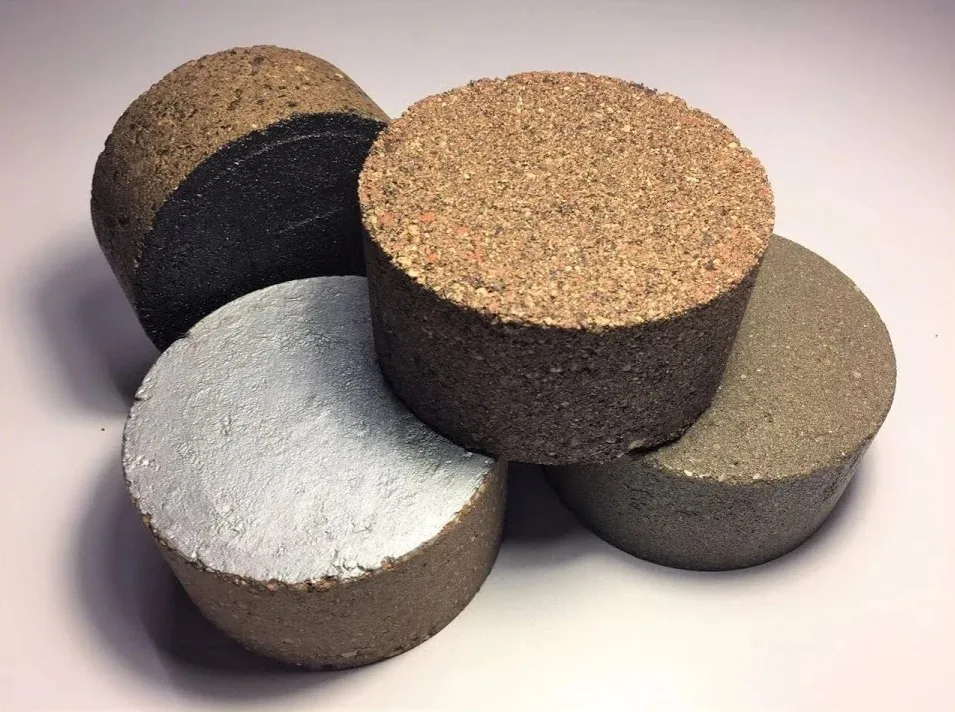
The same test cylinder. Two opposite behaviors.
Portland cement binds particles by rigid crystallization: the layer hardens into a brittle slab that must be segmented by expansion joints and tied by dowels at repairs. At failure, the material gives way abruptly.
LL-TEQ binds particles by ductile polymer cohesion across the full depth of the layer. No joints, no dowels, no abrupt rupture: the layer absorbs deformation and stays continuous.
Same ASTM C39 specimen, two material classes — and the test does not reward them in the same way. That is why the raw numbers tell less than how you read them.
Key figures · Signed dataset
What the ASTM tests measured
The compression test explained
Why an unconfined cylinder does not say the same thing about both materials
Portland Cement — brittle binder
The cylinder fails by brittle rupture at peak load. The lab UCS value matches in-service strength: a slab, confined or not, essentially behaves like the specimen.
On site: expansion joints required, dowels at repair joints, full demolition at end of life.
LL-TEQ — ductile cohesive binder
The LL30 cylinder shows lateral expansion before peak load. On the small unconfined specimen, the material can expand freely — the reported UCS value is therefore a floor, not a ceiling.
In service, the treated layer is laterally confined by the surrounding treated material that shares the same cohesion mechanism. The in-service strength of the LL30 layer exceeds the laboratory value.
Conclusion — direct UCS-to-UCS comparison understates the in-service gap: Portland cement’s performance is bounded by its lab value; LL-TEQ’s is not. The 2× from the lab is the floor, not the ceiling.
Side-by-side comparison
Portland Cement vs LL-TEQ — on the criteria that decide
Beyond ASTM testing
A pavement built cold, with no calcined clinker
Where Portland cement requires a 1,400 °C kiln, LL-TEQ is placed at ambient temperature with standard road equipment. EPA acute-toxicity testing on simulated runoff: no acute toxicity detected (Coastal Bioanalysts, EPA Methods 2000.0 / 2002.0).
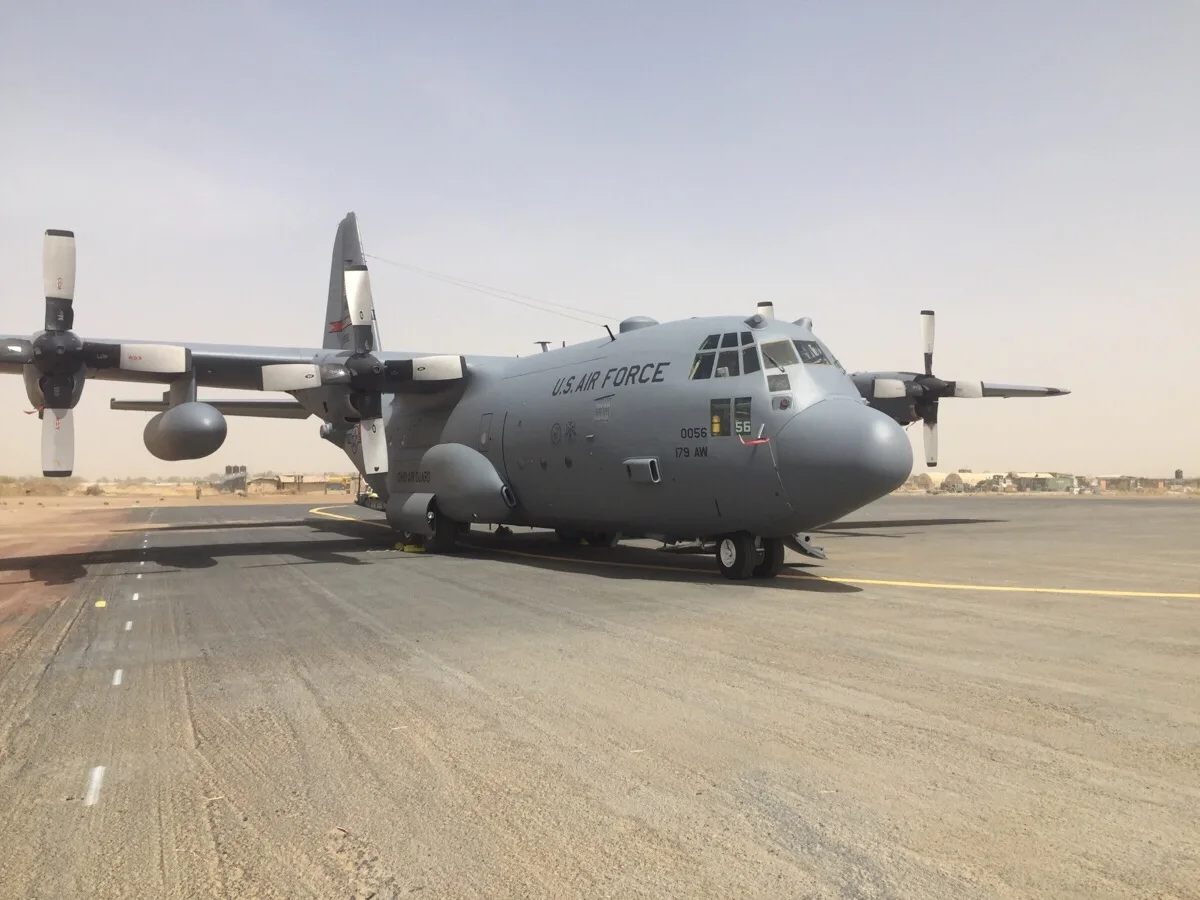
Where Portland concrete is not authorized as a wearing course
Field-validated by U.S. military engineers
Mocoron, Honduras (USAF AFSOC, 22 STS Blue Team) — operational airstrip validated under PCASE 2.09: C-17 Globemaster at 204,000 kg × 2,470 passes, C-130 at 70,300 kg × 23,847 passes. Field measurements, not lab projections.
ALZ Sandhill, Twentynine Palms (USMC MAWTS-1) — KC-130J at 79,400 kg × 10,000+ passes. DCP testing: rod refusal after 60 blows, Surface CBR ≥ 60.
- Per-tire contact pressures exceed those of standard road traffic.
- Structural acceptance under UFC 3-260-01 and UFC 3-260-02 (military aviation).
- Sustained performance, not a single application — each aircraft pass is documented.
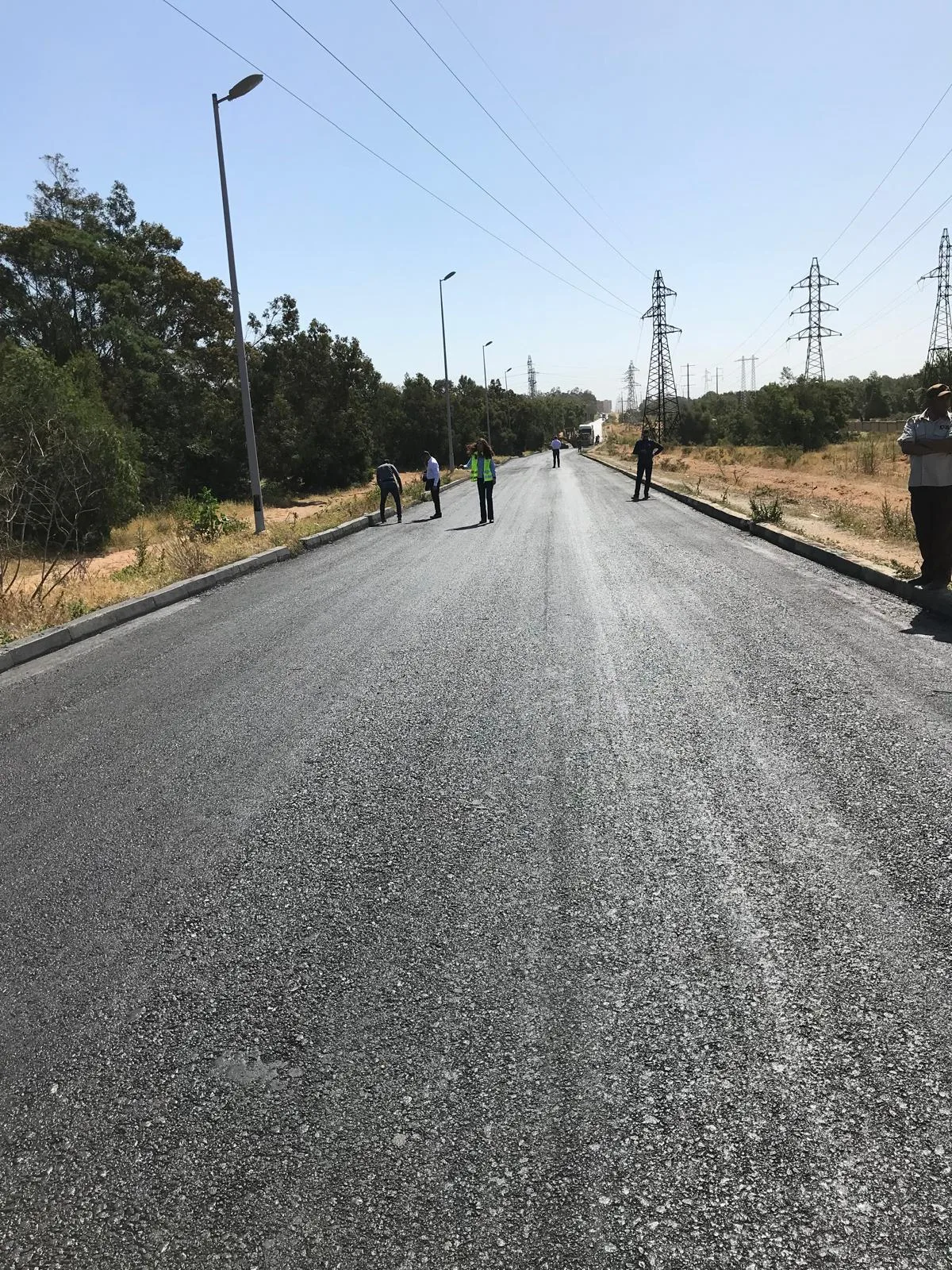
Get the technical documentation
The detailed technical dossier behind the numbers on this page is available on demand.