
By profile · Military
Operational airstrips in days, not months
Your requirement is expeditionary capability: certified load-bearing surfaces, built fast, on austere sites, from in-place soils. Deployed with the U.S. military since 2012 under the OPSDIRT military brand, LL-TEQ™ technology has built runways, taxiways, FARPs and haul roads on four continents.
Your top requirement
Certified load capacity, on austere sites
No asphalt plant, no aggregate import, no specialized fleet: the polymer integrates into in-place soils with a grader, reclaimer, water truck and compactor — operable by troop labour after on-site training. Verification relies on established military references: DCP readings converted to CBR, PCASE processing, 95% compaction, and a minimum 300% strength gain on in-place soil per the manufacturer's specification.
Air operations
44,600 m² of FARP stabilized — MCAS Yuma, 2022
Forward arming and refueling point (FARP) and helicopter base: 75% native sand and 25% asphalt millings integrated by reclaimer into a hardened, dust-free maneuvering surface sized for taxiing and refueling MV-22s and rotary-wing aircraft.
What changes for engineers
Build with what the theatre provides
Execution timelines
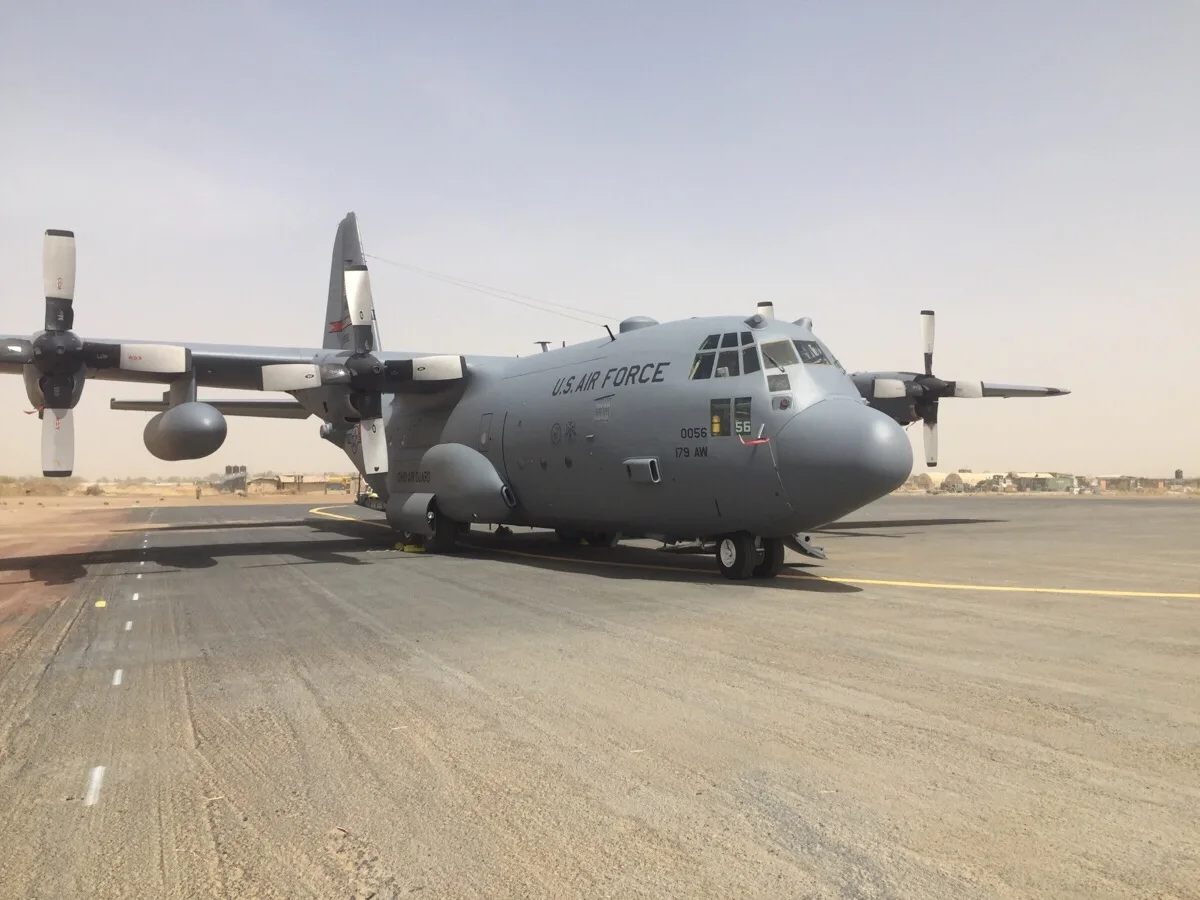
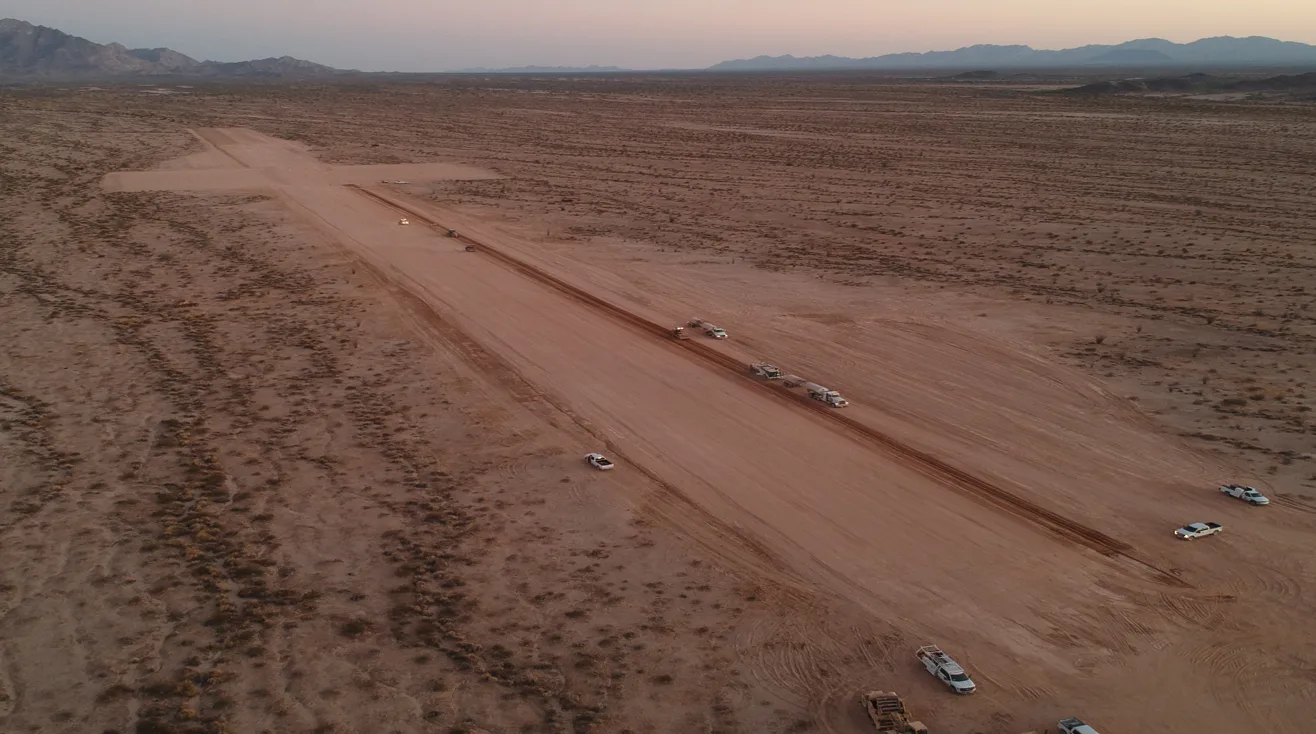
A 35,300 m² expeditionary landing field (taxiway, apron, refueling) delivered in 4 days at Twentynine Palms (2024) — roughly 2 months conventionally. N'Djamena taxiway and apron delivered in 2.5 days for Operation Flintlock 2017.
Theatre soils
100% native soil (Twentynine Palms, Yuma), pure sand and "moon dust" (Kuwait), laterite (Niger), local crushed base (Chad): the formulation adapts to the soil at hand — zero imported aggregate, zero hot-mix logistics chain.
Load data
Niamey (ERF, 2014): CBR ≥ 20 in the treated layer at day 21 — the threshold required for 500 C-130 passes at 79 t. Cherry Point (2017): CBR 36 under an 18 t live load, surface intact.
Reference case · Mocoron, Honduras
A C-17 runway built with a grader, in the soil at hand
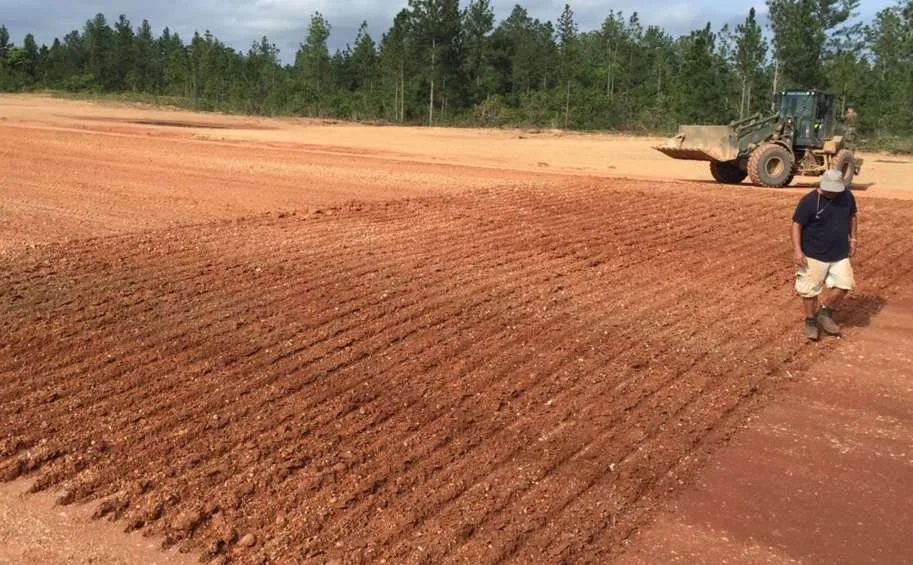
About 46,000 m² of runway built in 2015 by SPMAGTF-SC: in-place sand, clay, rocks and gravel, grader-integrated over 150 mm. The Air Force Special Operations Command survey — 28 DCP soundings to 90 cm, processed under PCASE 2.09 — certified the surface for 2,470 C-17 passes and 23,847 C-130 passes.
The same process has delivered landing zones, haul roads and storage pads for the USMC, USAF and U.S. Army — from Camp Al Jaber (Kuwait) to Djibouti, with troop labour trained on site at every deployment.
Let's talk about your operational requirements
Specifications, DCP/CBR/PCASE data, execution sequence and troop-labour training plan — documentation available on demand.
Contact LL-TEQ™ Case studies